

Soffit and Fascia Installation and Repair in New Jersey
Local Soffit and Fascia Experts in New Jersey Providing Reliable Roofline Repair and Installation Solutions.
- Soffit Repair and Fascia Repair
- Soffit Installation and Fascia Board Repair
- Roof Edge Repair and Attic Ventilation Improvements
Why Choose Us
When soffit or fascia begin to deteriorate, the vulnerable edge of the roof becomes exposed to moisture and structural stress. Damaged exterior trim can allow water to reach rafter ends, loosen gutter brackets, and reduce airflow within the attic. Our team specializes in roofline and exterior trim repair to restore protection along the roof perimeter.
Rather than replacing boards blindly, we evaluate how soffit panels, fascia boards, the gutter system, and attic ventilation work together. This diagnostic approach helps identify hidden moisture issues, airflow restrictions, and drainage problems that basic roof inspections often overlook.
What we offer with every inspection:
- Free roofline inspection and measurement
- Soffit ventilation and attic airflow evaluation
- Detection of hidden moisture damage
- Clear recommendations for soffit and fascia repair
Warranty Protection
Written labor warranty provided for all completed soffit and fascia work
Certified Roofing Specialists
Experienced installers with expertise in modern soffit systems and fascia board repair
Licensed & Insured
Fully licensed and insured contractor serving homeowners throughout New Jersey
What Are Soffit and Fascia?
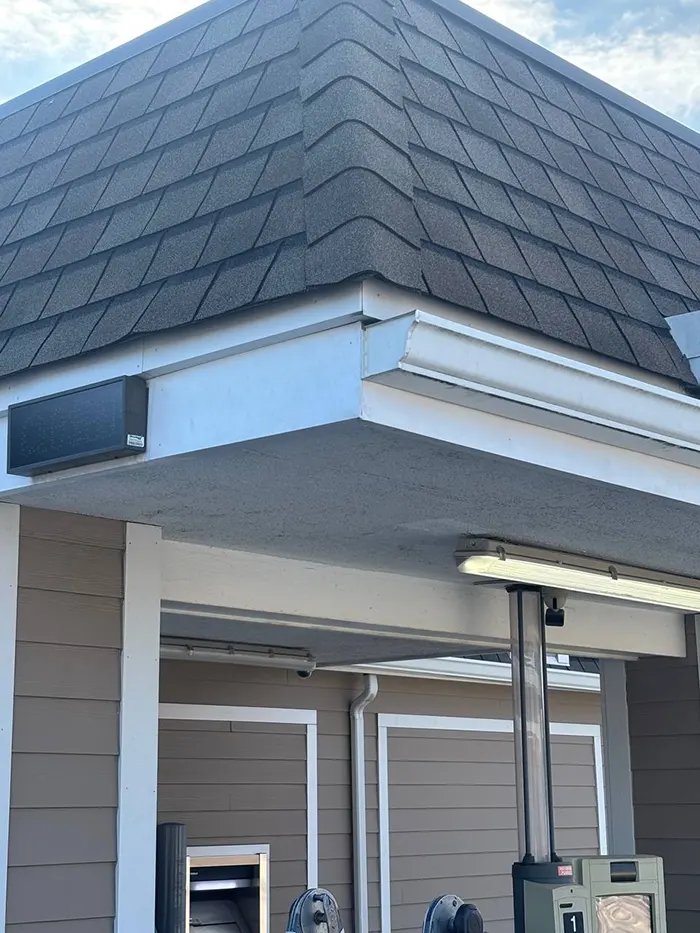
Soffit and fascia are edge components that close, support, and protect the transition between the roofing system and the exterior walls. They are not merely cosmetic elements. Each one serves a practical role in managing exposure along the roof’s eaves.
The soffit covers the underside of the overhang and helps control air intake into the attic. The fascia board runs along the perimeter edge and serves as the fastening surface for the gutter line. Together, these components reduce exposure of framing ends, help manage drainage, and keep the roof edge looking finished.
If either element begins to fail, the problems usually spread beyond appearance alone. Moisture can reach framing members, insects can exploit openings near the eaves, and ventilation performance may drop. That is why soffit and fascia condition should be evaluated as part of the full roof edge system.
What Is a Roof Soffit?
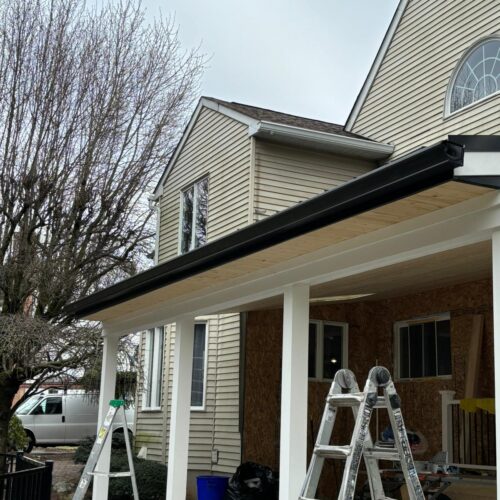
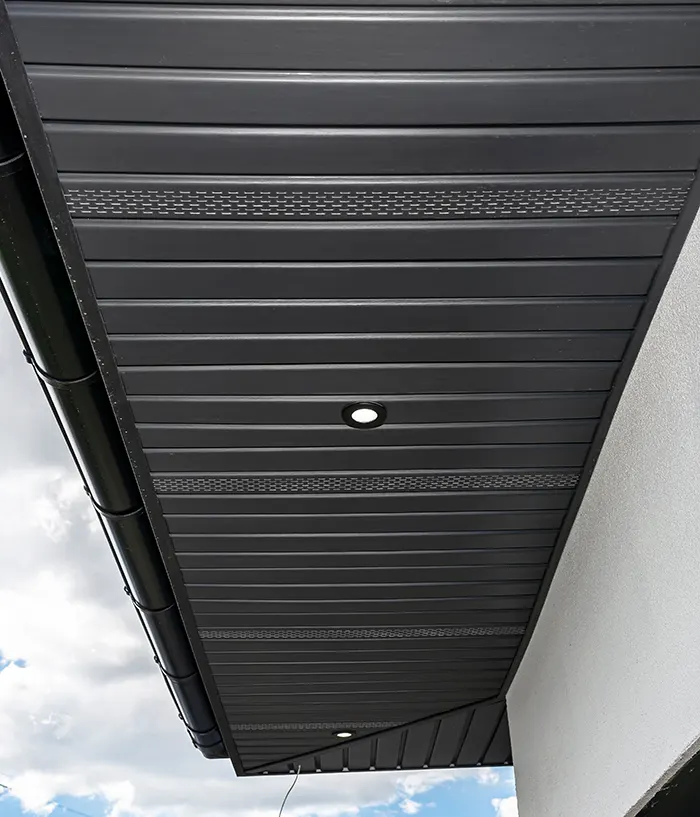
Soffit is the underside panel installed beneath the overhang where the roof extends past the wall. These soffit panels close off open framing at the eaves and create a finished lower surface along the roof perimeter.
A major purpose of soffit is ventilation. In many homes, the underside includes intake openings or vented soffit panels that allow outside air to enter the attic. This incoming air supports proper attic airflow and helps reduce trapped humidity and heat concentration near the roof deck.
When the intake path is blocked, attic conditions can become less stable, especially during humid summers and seasonal temperature swings. Properly functioning soffit ventilation helps the roof system perform more consistently over time.
Key functions of soffit:
- Protect roof rafters from weather exposure
- Prevent pest and insect entry
- Support balanced attic airflow
- Improve exterior appearance of the roofline
What Is Fascia?
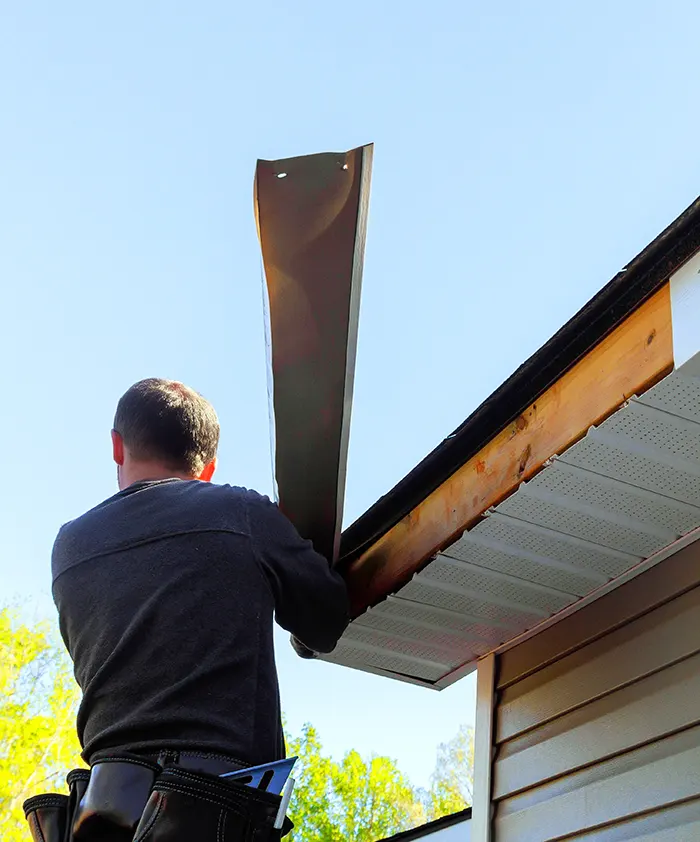
Fascia is the finish board installed along the exposed edge of the roof framing. The fascia board closes the front face of the eaves and provides a reliable attachment point for the gutter system.
This component must stay straight, sound, and securely fastened because it carries the hardware that supports the gutter run. If water repeatedly spills behind the gutter or sits along the edge, the fascia board can begin to soften, split, or lose holding strength.
Fascia also gives the roofline a defined outline. It covers the ends of the framing, improves the appearance of the edge detail, and helps separate the roofing assembly from the rest of the exterior cladding.
Functions of fascia boards:
- Support gutters and drainage systems
- Protect rafters from water damage
- Seal the roof edge from moisture intrusion
- Provide structural reinforcement along the roofline
Signs Your Soffit Needs Repair
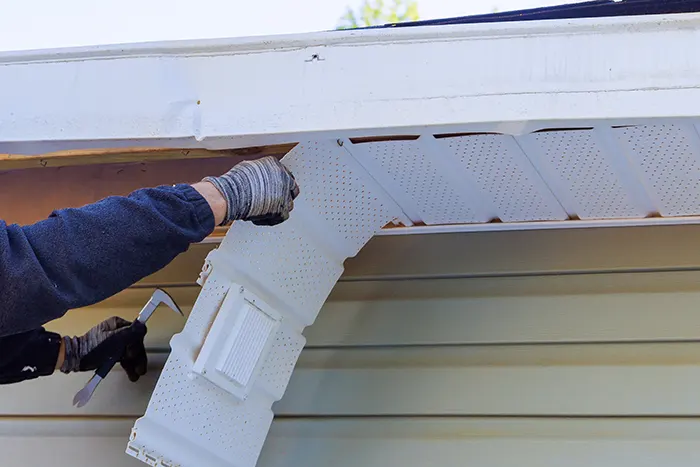
Homeowners often begin searching for soffit repair near them after noticing unusual changes beneath the roof overhang. Because soffits are installed under the eaves, damage can remain unnoticed until moisture stains or ventilation problems begin to appear.
Over time, trapped humidity, weather exposure, and small openings can lead to soffit deterioration.
Common indicators of soffit damage include:
- Cracked or broken soffit panels
- Water stains or discoloration under the eaves
- Pest entry holes or insect nesting
- Poor attic ventilation and excessive heat buildup
- Peeling paint or warped materials
When these conditions appear, prompt soffit repair prevents further deterioration. In many cases, selective soffit replacement of affected sections can restore the system without replacing the entire soffit assembly.
Common Fascia Board Problems
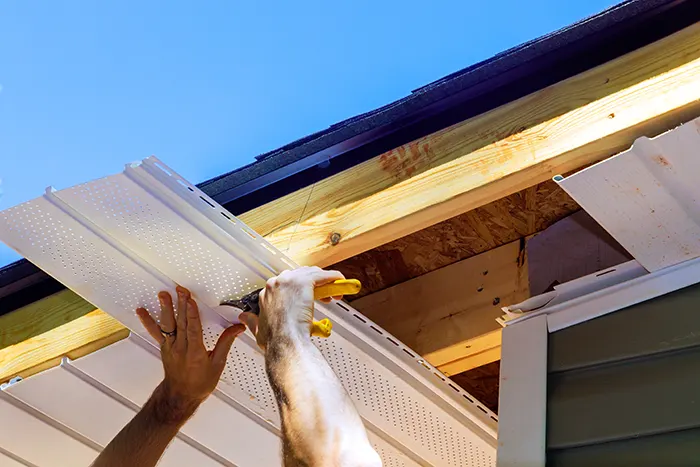
Fascia boards handle constant exposure to runoff, splash-back, and gutter stress. When water is not carried away correctly, the front edge of the roof becomes one of the first areas to show deterioration.
In many cases, homeowners begin searching for fascia repair near them only after gutters start shifting, the trim line appears uneven, or soft spots develop in the fascia board itself.
Typical issues requiring fascia board repair include:
- Rotting fascia boards caused by trapped moisture
- Sagging gutters pulling away from the roofline
- Water damage from clogged or leaking gutters
- Mold growth and persistent moisture buildup
If the board has lost structural strength, fascia replacement is often the better option. A weakened fascia can no longer hold fasteners properly, which affects drainage performance and the stability of the entire edge detail.
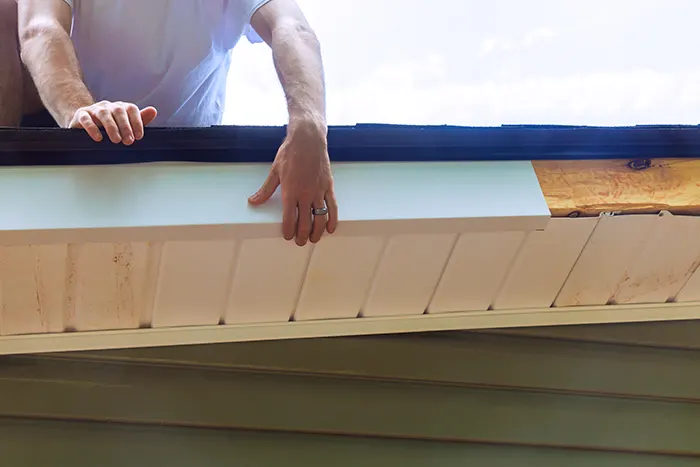
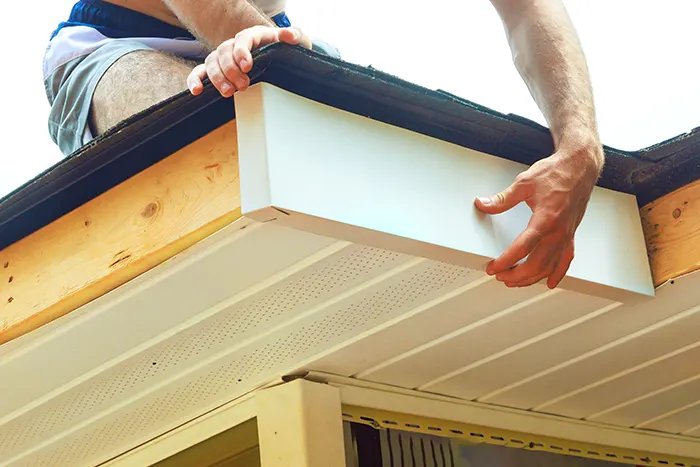
Professional Soffit and Fascia Repair
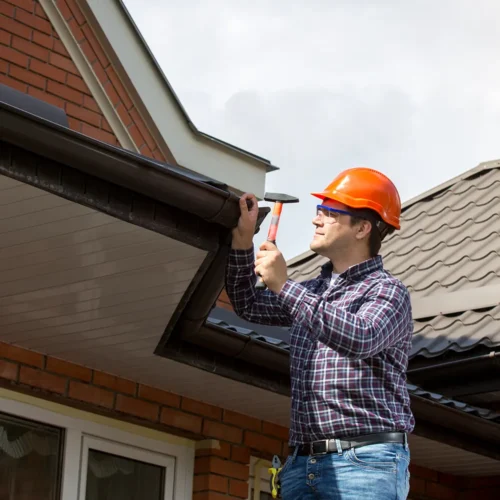
Our company handles soffit and fascia repair as part of a complete roof edge correction, not as an isolated cosmetic patch. We inspect the visible trim, but we also check attachment points, ventilation intake areas, drainage behavior, and adjacent edge materials.
That matters because surface damage is often only part of the problem. A stained soffit may indicate poor airflow or water entry from above. A loose fascia section may point to recurring gutter overflow or failed fasteners. Repair work should address the source, not just the symptom.
Our services include:
- Soffit panel replacement
- Fascia board repair
- Fascia installation
- Soffit installation
- Ventilation improvements for attic airflow
Many projects also involve roofline repair and exterior trim repair so that the rebuilt edge performs properly as one connected assembly.
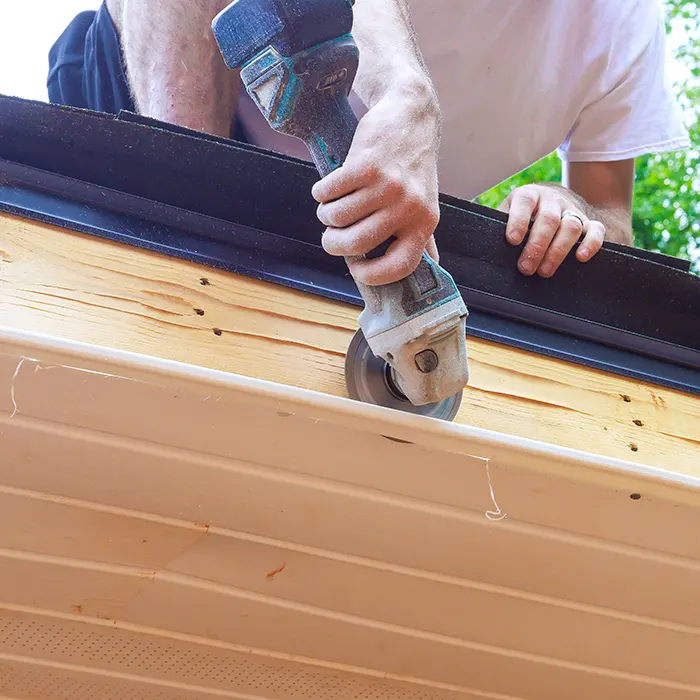
Fascia Board Repair After Tree Damage
Falling branches and storm debris can cause significant damage to roof edges. In one recent project, a tree struck the side of a home and damaged multiple fascia sections along the roofline.
The impact fractured several fascia boards and partially dislodged the gutter brackets. Our crew carefully removed the damaged trim and examined the rafter tails beneath the fascia to confirm that the structural framing remained intact.
Fortunately, the rafters were undamaged and capable of supporting new fascia installation.
The repair process included:
- Removal of damaged fascia sections
- Inspection of rafter tails and roof structure
- Installation of new fascia boards
- Reinforcement of gutter mounting points
- Restoration of the roofline appearance
After installation, the gutter system was reattached and properly aligned to restore normal drainage. The repaired roof edge regained both structural integrity and a clean exterior appearance.
Soffit and Fascia Replacement
Sometimes repairs cannot fully restore deteriorated roofline components. Extended moisture exposure or years of neglect can compromise both soffit panels and fascia boards.
When damage spreads into structural areas, replacing the affected materials becomes the most dependable solution.
Situations requiring soffit replacement or fascia replacement include:
- Severe wood rot
- Structural damage to the roof edge
- Old ventilation systems that restrict airflow
During replacement projects we often perform roof edge repair simultaneously so the new soffit and fascia integrate properly with gutters, trim components, and the attic ventilation system.
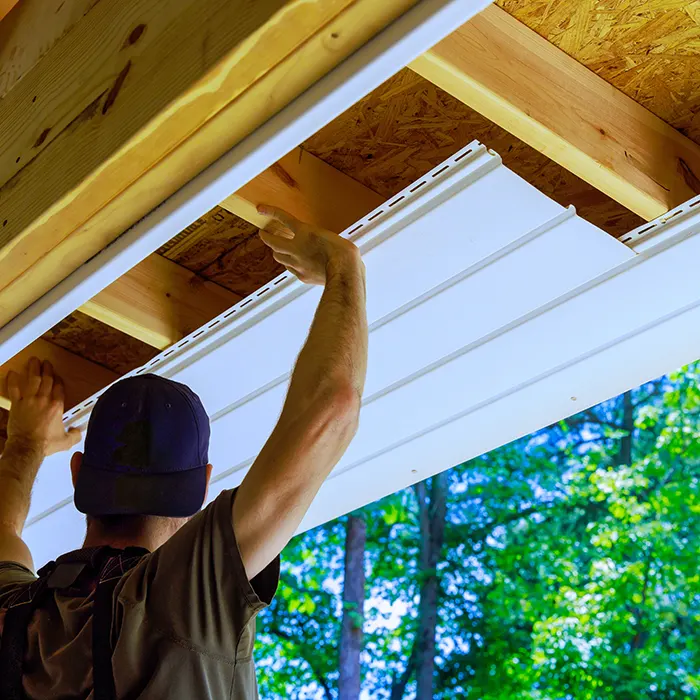
Materials We Install
Different homes call for different edge materials depending on exposure levels, design preferences, and maintenance goals. We install soffit and fascia products selected for durability, clean fit, and long-term performance in New Jersey conditions.
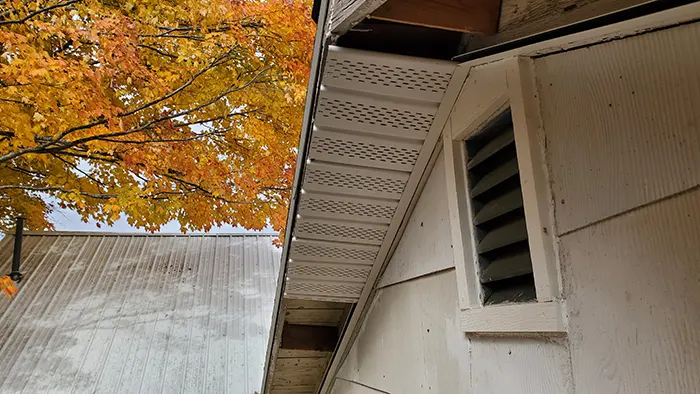
Vinyl Soffit
Vinyl soffit remains a practical option for many residential properties because it is lightweight, moisture-resistant, and relatively easy to maintain. It works well on projects where consistent appearance and low upkeep are priorities.
Many systems use vented soffit panels to keep intake air moving into the attic without leaving the eaves exposed.
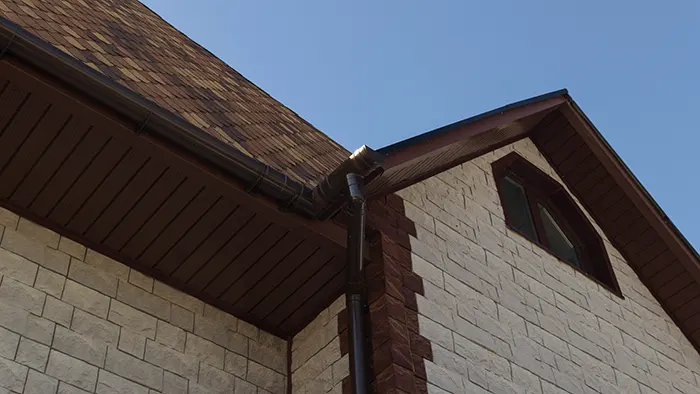
Aluminum Soffit
Aluminum soffit is commonly selected where homeowners want a crisp finish and strong resistance to weather exposure. It does not absorb moisture and performs well in locations where long-term dimensional stability matters.
It is also a good choice for roof edges that need a durable, low-maintenance cladding material.
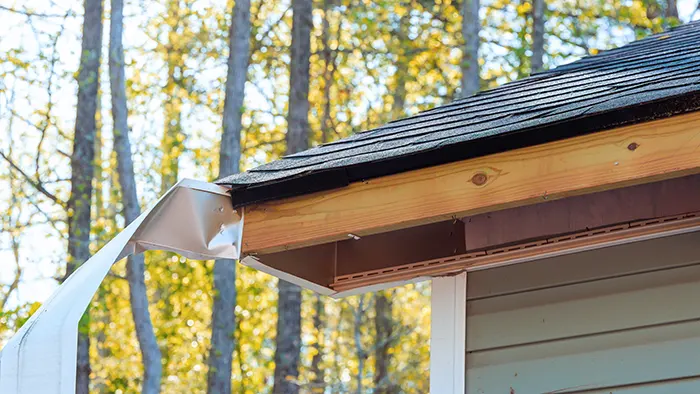
Wood Fascia
Wood fascia is still used on many homes because it offers a traditional look and solid attachment strength. It fits well with classic trim packages and can be painted to match surrounding exterior details.
To remain serviceable, wood fascia must be sealed and maintained so moisture does not break down the material over time.
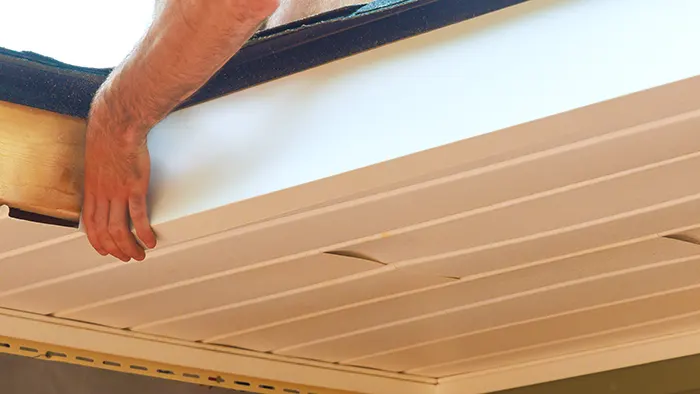
Aluminum Fascia
Aluminum fascia is widely used where long-term durability and resistance to moisture are priorities. Aluminum trim does not absorb water, resists corrosion, and maintains its shape even in areas exposed to frequent rain and temperature changes.
Because aluminum fascia is lightweight yet strong, it provides reliable support for gutter systems and protects the roof edge without requiring constant maintenance. It is often selected for replacement projects where homeowners want a long‑lasting solution with a clean, modern finish.
Why Soffit Ventilation Matters
Attic ventilation works best when air has a clear intake path at the eaves. That is why soffit design matters. Without enough incoming air, heat and moisture can remain trapped inside the attic and place extra stress on the roofing system.
A properly planned intake setup often includes vented soffit or vented soffit panels that feed outside air into the attic space while exhaust vents release warmer air higher up. This airflow pattern supports more stable attic conditions throughout the year.
Benefits of proper roof ventilation include:
- Prevention of moisture buildup and mold growth
- Reduction of attic temperatures during summer
- Increased lifespan of roofing materials
- Improved energy efficiency and indoor comfort
Well-balanced attic ventilation helps protect insulation, reduces moisture-related deterioration, and supports longer service life at the roof edge and across the roofing system.
Service Areas
In addition to Crosswicks, NJ, we serve nearby communities including:
Our specialists perform thorough inspections and implement repair solutions designed to restore roof edges and maintain proper attic ventilation.
Related Exterior Repair Services
Soffit and fascia damage is often connected to other exterior issues. Problems along the roof edge frequently involve gutters, siding panels, flashing, or drainage components.
Related services include:
Addressing these elements together ensures that the entire exterior envelope of the home remains sealed and protected from weather exposure.
FAQ – Soffit and Fascia Repair
Pricing depends on how much material is affected, how accessible the eaves are, and whether the issue is limited to panels or involves deeper roof edge repair. Small localized repairs cost less than projects where damaged sections must be removed and rebuilt.
Yes. In many cases the gutter run can be detached, the fascia board repair completed, and the gutters reinstalled afterward. The exact approach depends on the condition of the fasteners, brackets, and surrounding edge materials.
Simple soffit repair may be completed in one day, while larger areas or projects involving multiple elevations can take longer. The timeline depends on access, extent of deterioration, and whether ventilation corrections are also required.
The most common cause is repeated moisture exposure. Overflowing gutters, improper slope, leaks at joints, and chronic wetting along the roof edge can all cause the board to break down over time.
Yes. When intake openings at the eaves are properly sized and kept clear, they help supply the air needed for the attic ventilation system to work effectively.