




Gutter Installation & Replacement in New Jersey
We install, replace, and repair gutters for homes across New Jersey, focusing on effective drainage, clean curb appeal, and reliable performance during heavy storms.
We provide services across Ewing, Princeton, Trenton, Hamilton, Robbinsville, Pennington, Mercer County, and throughout most of New Jersey.
- Seamless gutter installation for residential homes
- Gutter replacement for old, leaking, or sagging systems
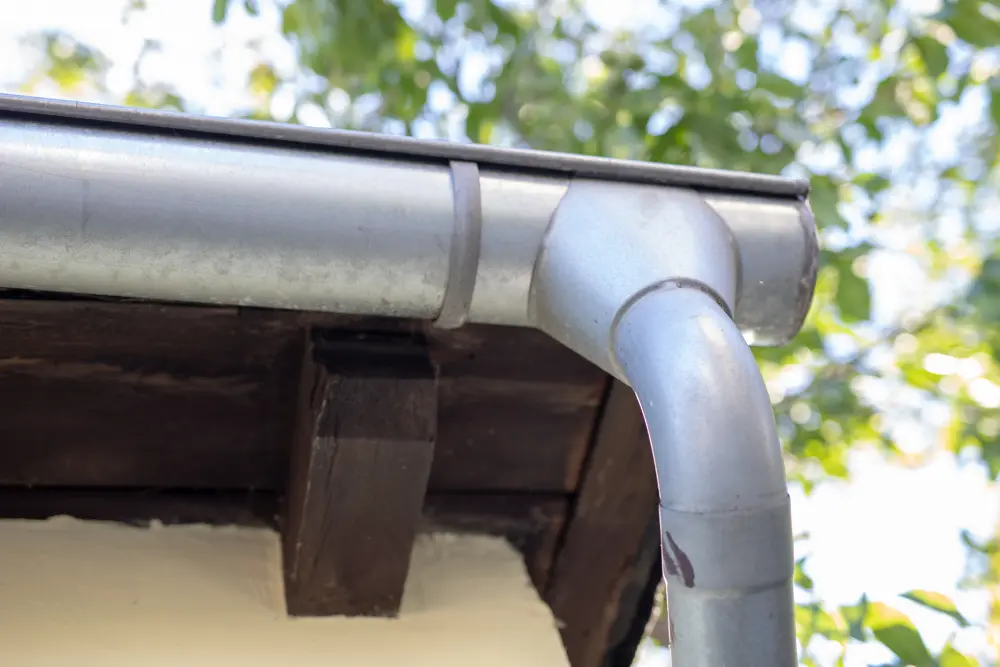
- Aluminum and copper gutter options
- Downspout layout improvements and drainage corrections
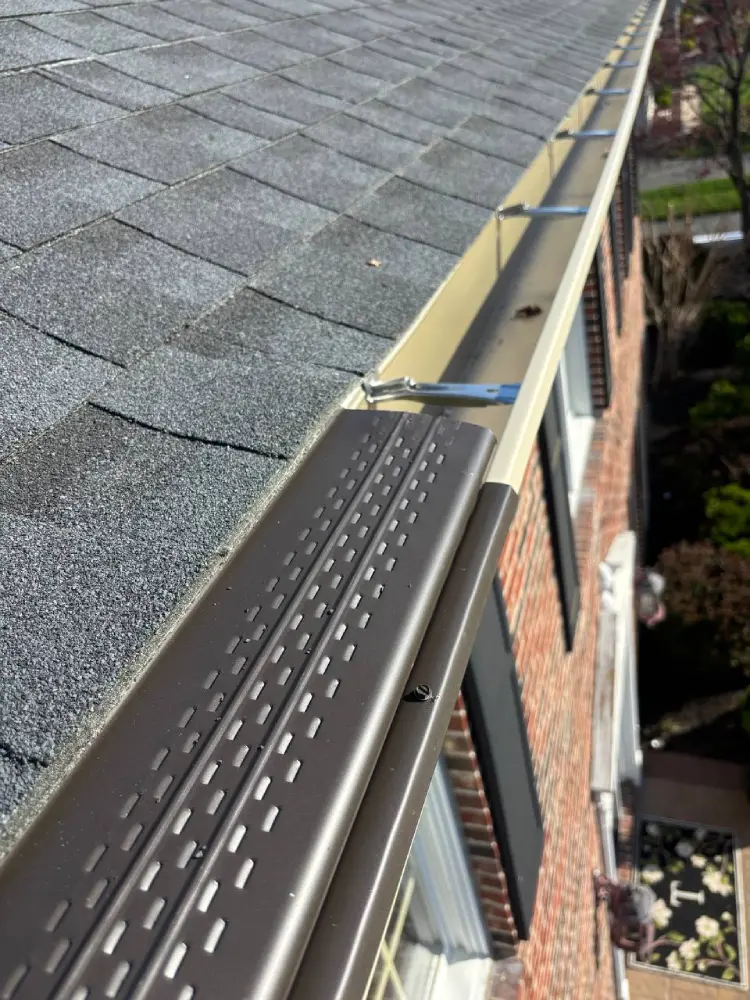
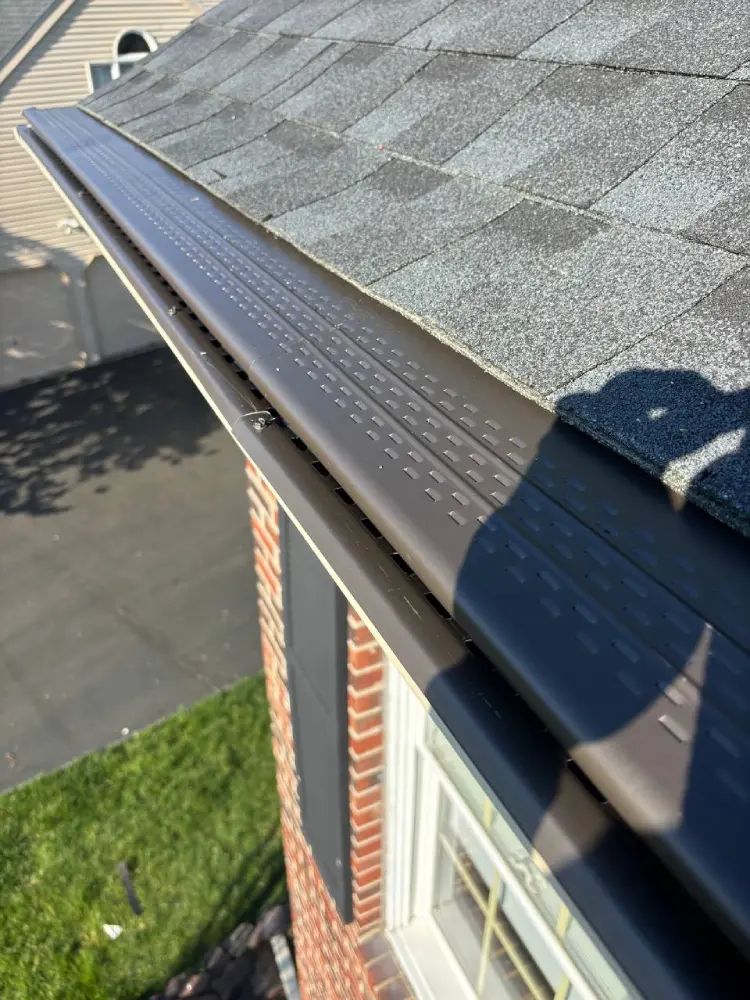
- Gutter guards for homes with leaves, trees, and recurring clogs
Why Homeowners Choose Us
Gutters may seem like a small exterior detail, but poor installation can create expensive problems. We focus on what homeowners actually care about: proper drainage, clean installation, and recommendations that genuinely fit the property.
What homeowners can expect:
- Licensed and insured service
- Local New Jersey exterior experience
- Seamless gutter installation options
- Repair and replacement guidance
- Aluminum and copper material choices
- Downspout and discharge-point corrections
- Gutter guard installation when appropriate
- Complimentary estimates
- Clean work areas and careful installation
We treat gutters as part of the home’s water-control system, not just a trim piece under the roofline.
Homeowners searching for professional gutter installers often need more than a basic installation. They require a system designed around real drainage conditions, roof layout, and long-term exterior protection.
Residential Gutter Services Built Around Real Drainage Problems
Gutters are easy to overlook until water starts showing up in the wrong place. A small drip at one corner, a loose section above the porch, or a puddle near the basement wall can signal that the system is no longer moving runoff correctly.
Our work starts with the actual behavior of water around the home. We look at the roofline, gutter pitch, fascia condition, downspout locations, ground slope, and areas where water already leaves marks. This helps us recommend the right fix instead of giving every homeowner the same generic answer.
We help with common gutter and drainage issues such as:
- Rain spilling over the gutter edge
- Loose or dipping gutter sections
- Water stains below corners or end caps
- Soft fascia boards or damaged trim
- Downspouts releasing water too close to the house
- Clogged channels caused by leaves and roof grit
- Soil washout near walkways, steps, or planting beds
- Older gutters that no longer match the home’s drainage needs
Depending on the condition of the system, the right solution may be a repair, partial replacement, new seamless gutters, added gutter guards, or improved downspout routing.
Seamless Gutter Installation in NJ
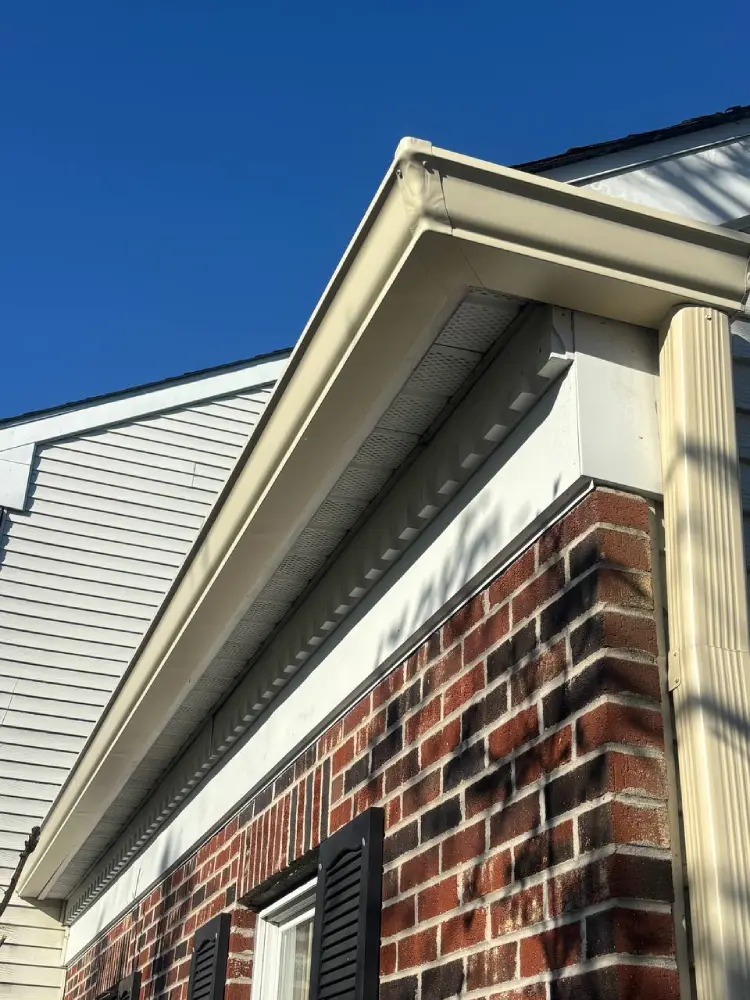
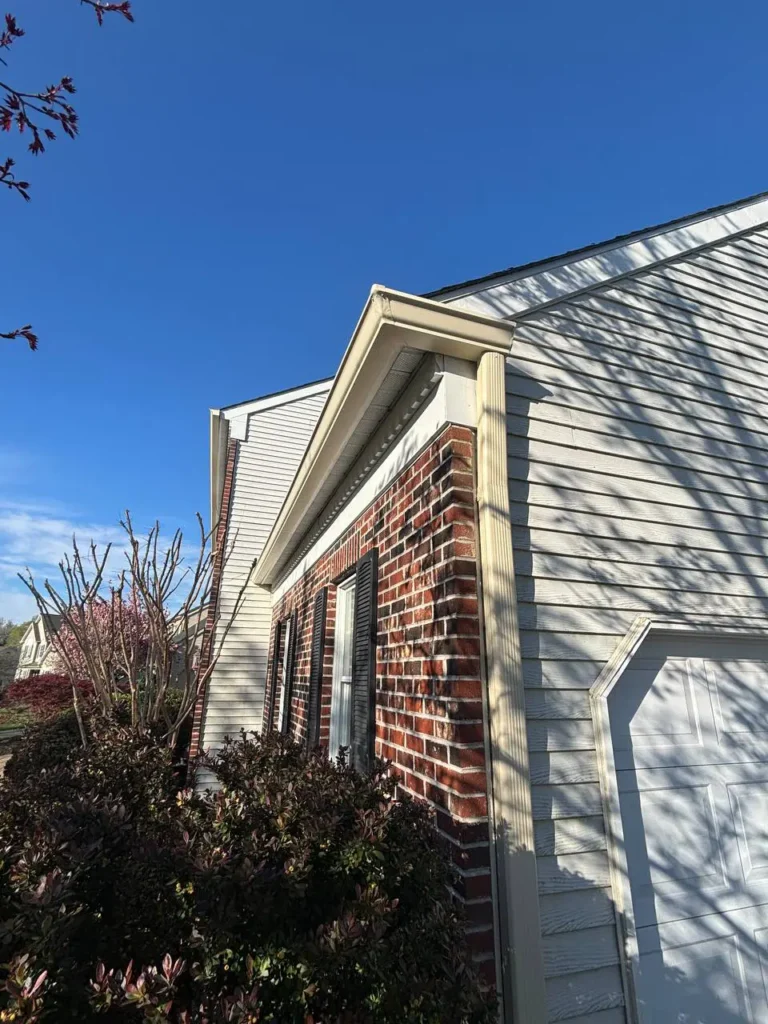
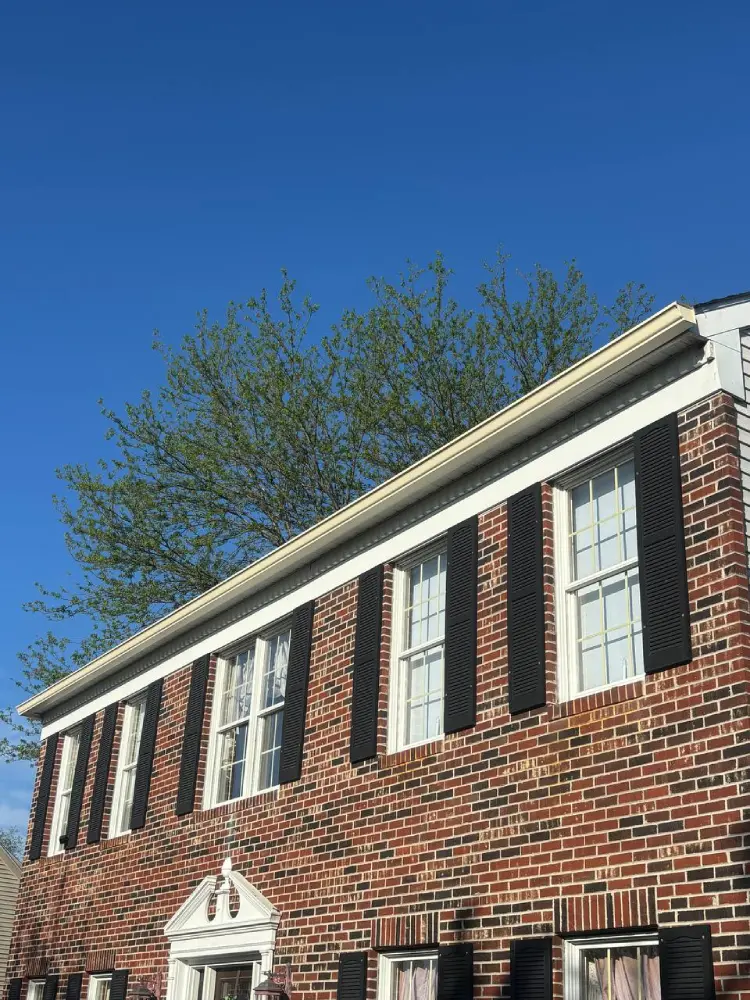
Seamless gutters are formed in long runs so they fit the roofline with fewer breaks than older sectional systems. This gives the home a smoother exterior line and reduces the number of connection points that can separate, drip, or collect debris.
For homeowners, the main advantage is not just appearance. A seamless system can handle runoff more consistently when it is measured correctly, pitched correctly, and paired with the right downspout layout.
Our seamless gutter installation includes attention to:
- Accurate measurements for each roof section
- Proper slope toward drainage points
- Secure fastening to the fascia
- Correct downspout placement
- Clean transitions at corners and end points
- Water flow that matches the home’s roof shape
This is especially important for New Jersey homes exposed to heavy rain, snow, falling leaves, and seasonal freeze-thaw conditions. A gutter system that looks good but drains poorly will still cause problems. We build the layout around performance first.
Gutter Replacement Services
Old gutters usually fail gradually. One section starts to sag, another begins leaking at the corner, and eventually water starts running behind the gutter or down the siding. By the time the problem is noticeable from the ground, the system is often past the point where a simple repair makes sense.
Gutter replacement is usually recommended when the system has widespread wear, poor pitch, repeated leaks, damaged attachment points, or drainage problems that keep returning after repair.
You may need new gutters if you notice:
- Multiple leaking areas instead of one isolated spot
- Sections pulling away from the fascia
- Gutters that hold water after rain stops
- Water running behind the gutter
- Visible holes, cracks, corrosion, or bent areas
- Overflow during moderate rain, not only severe storms
- Exterior staining below the roof edge
- Washed-out soil or mulch near the home
- Moisture near basement walls or crawl space areas
A new gutter system can improve the roofline appearance, reduce water exposure around the home, and give the property a more reliable drainage path during storms.
Gutter Repair Services
Not every gutter issue means the whole system has failed. In many cases, the problem comes from one trouble area – a separated seam, loose attachment point, improper slope, or a section where water no longer drains correctly.
Before recommending any work, we inspect how the gutter behaves during rainfall, where moisture escapes, and whether the affected area can realistically be restored. Some systems only require localized correction, while others have underlying wear that keeps causing the same issue to return.
Our gutter repair services may involve:
- Reinforcing sections that have shifted out of alignment
- Correcting low spots where water remains trapped
- Reworking leaking connection areas
- Replacing worn hardware or support components
- Repairing sections affected by storm or ladder damage
- Improving drainage performance near corners and outlets
- Updating downspout sections with poor flow
- Addressing runoff problems near siding or foundation areas
A successful repair is not just about stopping a visible drip. The system also needs to drain properly afterward. We focus on fixing the underlying issue so the same problem does not keep coming back after every storm.
Aluminum & Copper Gutters
The best gutter material depends on the home, the budget, and the overall look the homeowner wants. We install both practical everyday systems and more premium exterior options.
Aluminum Gutters
Seamless gutters are formed in long runs so they fit the roofline with fewer breaks than older sectional systems. This gives the home a smoother exterior line and reduces the number of connection points that can separate, drip, or collect debris.
For homeowners, the main advantage is not just appearance. A seamless system can handle runoff more consistently when it is measured correctly, pitched correctly, and paired with the right downspout layout.
Our seamless gutter installation includes attention to:
- Accurate measurements for each roof section
- Proper slope toward drainage points
- Secure fastening to the fascia
- Correct downspout placement
- Clean transitions at corners and end points
- Water flow that matches the home’s roof shape
This is especially important for New Jersey homes exposed to heavy rain, snow, falling leaves, and seasonal freeze-thaw conditions. A gutter system that looks good but drains poorly will still cause problems. We build the layout around performance first.
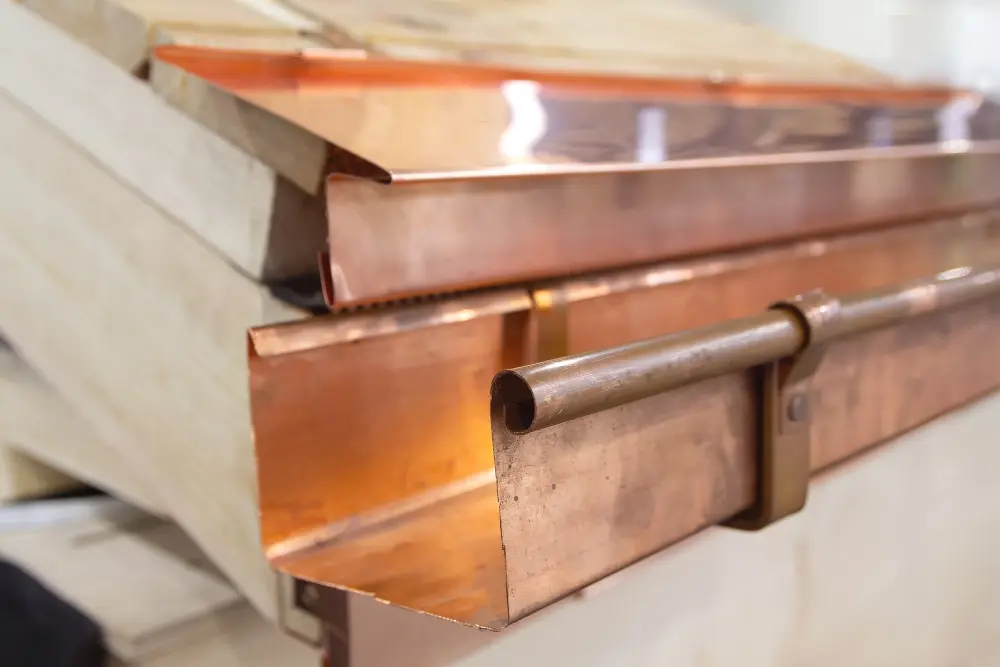
Copper Gutters
Copper gutters are chosen when the drainage system is also part of the home’s architectural character. They are often used on custom homes, older properties, and exterior upgrades where visual detail matters.
Copper may be the right option for homeowners who want:
- A distinctive high-end appearance
- Long-term durability
- Natural aging and patina over time
- A material that complements traditional or historic designs
- A gutter system that adds character instead of blending in completely
Copper costs more than aluminum, but for the right home, it can be both a functional drainage upgrade and a strong exterior design feature.
Gutter Guards & Leaf Protection
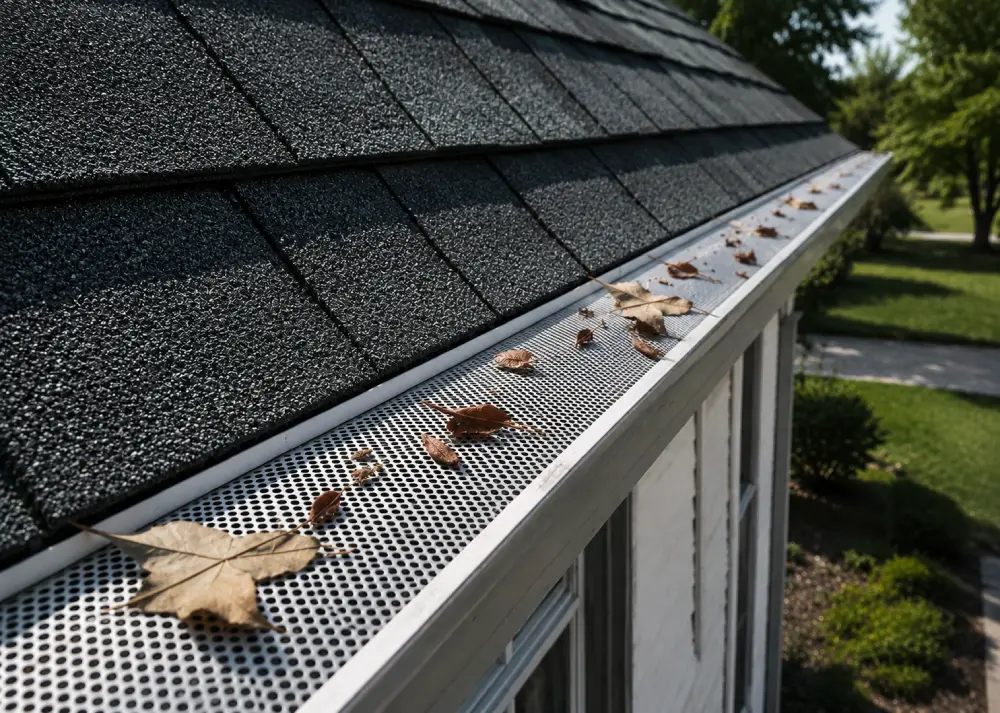
A gutter can be installed correctly and still struggle if it fills with leaves, pine needles, roof granules, or small branches. This is common on homes with mature trees, roof valleys, or areas where debris collects after storms.
Gutter guards are not a magic solution, and they do not make a system completely maintenance-free. Their purpose is to reduce the amount of debris entering the gutters, allowing water to flow more freely during rain and helping homeowners deal with fewer cleaning issues.
Gutter guards may be useful if your home has:
- Trees close to the roofline
- Clogs that return every season
- Overflow near downspouts
- Heavy leaf buildup in fall
- Roof grit collecting inside the gutters
- Hard-to-reach gutter sections
- Repeated cleaning needs after storms
We choose gutter protection based on the home’s roof shape, nearby tree coverage, existing gutter condition, and how water currently moves through the system. The right guard must fit the gutter properly and allow rain to enter without creating new overflow problems.
Downspout Layout and Water Flow Adjustments
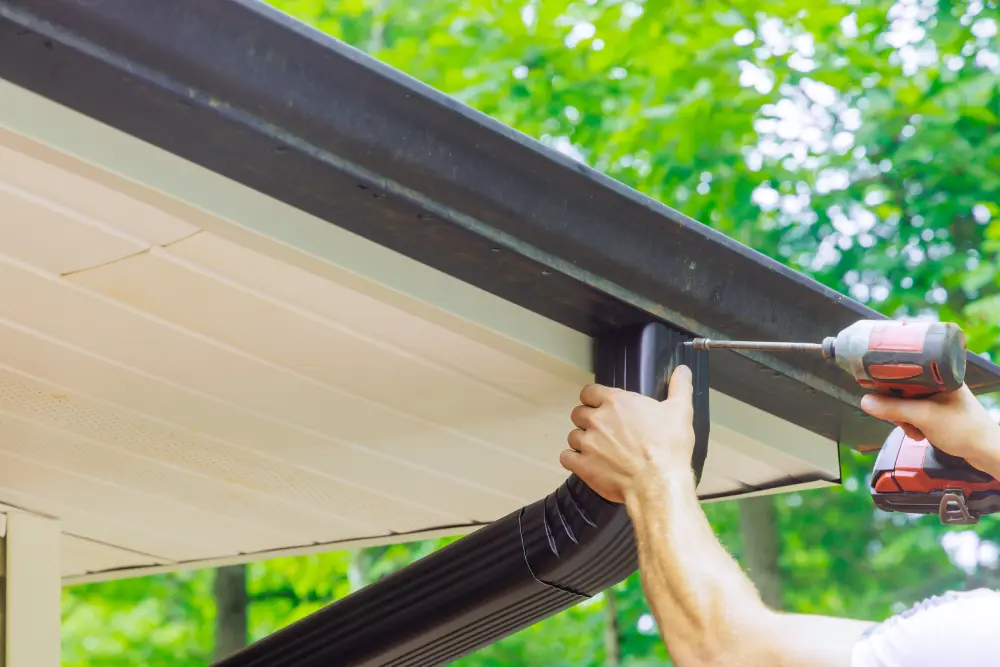
Even a well-installed gutter system can struggle if water is released in the wrong area after it leaves the roof. In many cases, the real issue is not the gutter itself, but the way runoff exits near the ground.
We look at how water behaves after storms – where it travels, where it collects, and whether it stays too close to the structure. Homes with short downspouts, overloaded corners, or poor runoff direction often develop recurring wet areas around foundations, steps, mulch beds, or lower siding sections.
Our drainage-related gutter work may involve:
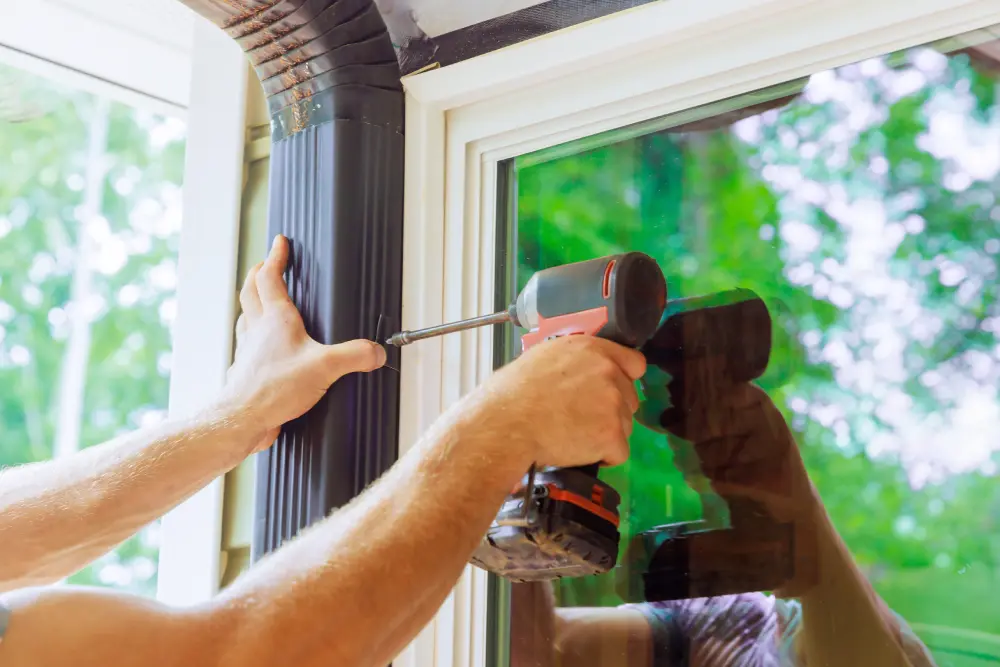
- Repositioning downspouts that release water in problem areas
- Adding extra outlets on long gutter sections
- Updating damaged or undersized downspout components
- Extending runoff farther from the structure
- Redirecting water away from walkways and entry areas
- Improving water movement around landscaping features
- Correcting sections where rain backs up during heavy storms
Every home sheds water differently depending on roof size, slope, landscaping, and grading. The goal is to create a layout that controls runoff more predictably and reduces repeated moisture exposure around the property.
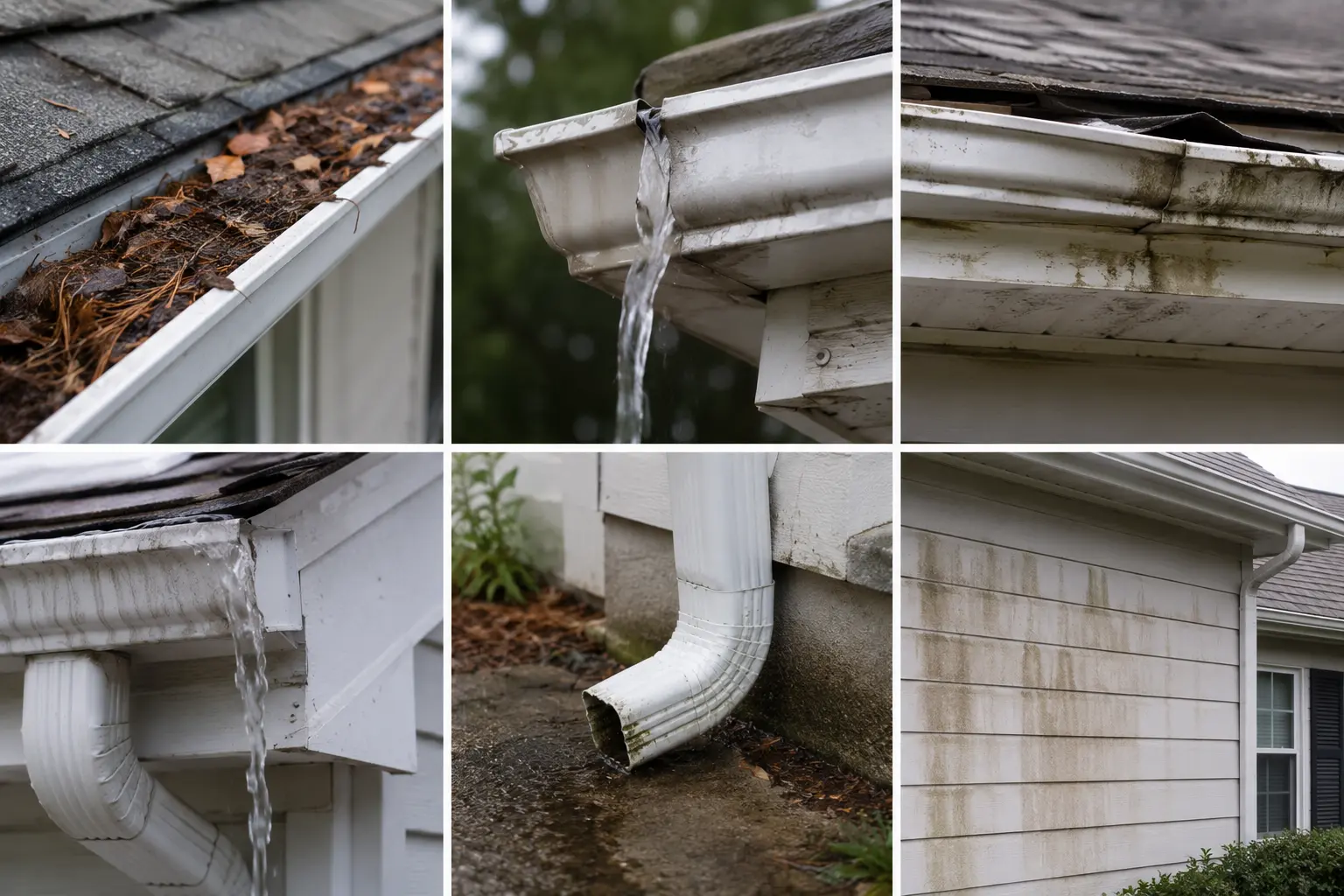
Signs Your Gutter System May Not Be Working Properly
Drainage problems usually appear outside long before they create serious interior damage. The earlier these warning signs are addressed, the easier it is to prevent larger repairs around the roof edge, fascia, siding, or foundation.
Common signs homeowners notice include:
- Water escaping over the front edge during rain
- Dripping seams or corners after storms
- Sections that appear twisted, uneven, or separated
- Dark streaks beneath the gutter line
- Trim boards showing moisture damage or peeling paint
- Washed-out gravel, mulch, or soil below roof edges
- Persistent damp areas near the base of the home
- Gutters pulling away from attachment points
- Overflow near downspouts during moderate rainfall
- Repeated debris buildup in the same section
- Excess moisture near basement walls or crawl spaces
These effects can come from multiple causes, including clogged channels, poor slope, damaged fasteners, undersized gutters, or incorrect runoff direction. A proper inspection helps determine which part of the system is actually failing.
Our Installation and Replacement Process
We keep the process simple, but the evaluation is detailed. A gutter system should be designed for the home’s roofline and drainage conditions, not installed as a one-size-fits-all product.
Exterior Review
We inspect the existing gutters, roof edges, fascia boards, downspouts, and areas where water currently collects or leaves marks.
Drainage Recommendation
We explain what the home needs: repair, replacement, added downspouts, gutter guards, or a new seamless system.
Clear Estimate
You receive a straightforward estimate based on material, home size, project complexity, and any needed drainage corrections.
Installation or Repair Work
Our team completes the approved work with proper attachment, pitch, water flow, and cleanup in mind.

Service Areas
We provide gutter installation, repair, replacement, guards, and downspout improvements in:
FAQ
That depends on the overall condition of the system. Isolated issues such as a loose section, minor separation, or a small leaking area can often be repaired. Replacement is usually the better option when multiple areas are failing, drainage problems keep returning, or the gutter structure itself has started deteriorating.
For many homes, yes. Seamless gutters reduce the number of joints along the straight runs and create a cleaner exterior appearance. Their performance still depends on correct measurement, slope, and downspout layout.
No. Gutter guards reduce debris entering the gutter, but they do not eliminate all need for maintenance. They are most helpful for homes with trees, repeated clogs, or difficult-to-reach gutter sections.
Sometimes, yes. Certain drainage issues are caused by slope, outlet placement, or downspout configuration rather than the gutter material itself. In those situations, adjustments to the layout may improve water movement without requiring a full replacement.
Aluminum is the more common choice for everyday residential projects because it is practical, durable, and cost-effective. Copper is a premium material chosen for appearance, longevity, and architectural character.
Schedule Gutter Installation or Replacement in New Jersey
If rainwater is escaping from the gutter system, collecting near the home, or creating visible drainage issues around the exterior, it is best to address the problem before moisture begins affecting other parts of the property. Our team can inspect the system and recommend the most practical option based on its condition and drainage performance.
Contact us today to schedule a free estimate for professional gutter services in New Jersey. If you are looking for gutter installers near you, our team provides gutter installation, replacement, repair, and drainage solutions for homes throughout the region.