How to Extend the Life of Your Roof in New Jersey: 5 Proven Maintenance Tips
Many serious roof issues begin as small, easily fixable problems.
The good news: proper maintenance can extend your roof’s lifespan by 5–15 years. Even if your roof is already 12–15 years old, it can still be preserved – as long as regular upkeep is performed.
Here are five methods that truly work in New Jersey conditions, where Atlantic humidity, snowfall, hurricane-force winds, and frequent temperature swings all combine.
1. Keep Your Roof Clean and Free of Debris
Leaves, pine cones, moss, and even snow – these aren’t just debris. They trap moisture on the roof surface. And moisture is the main enemy of roof covering.
What actually happens?
- Moisture gradually washes away the protective granules – the mineral layer that shields the bitumen from UV rays. Without granules, the covering becomes brittle and cracks in wind or frost.
- If the gutters are clogged, water accumulates at the eaves and seeps under the roofing felt. As a result, the sheathing starts to rot.
- In New Jersey, ice dams are especially dangerous – they form when snow melts over a warm attic, but the water freezes at the roof's edge. New meltwater builds up behind the ice barrier and starts seeping under the roofing.
These are classic causes of leaks in Ewing, Trenton, and Princeton.
What to do:
-
1. Clean the gutters twice a year – in the fall and spring.
-
2. Remove branches and moss from the roof surface.
-
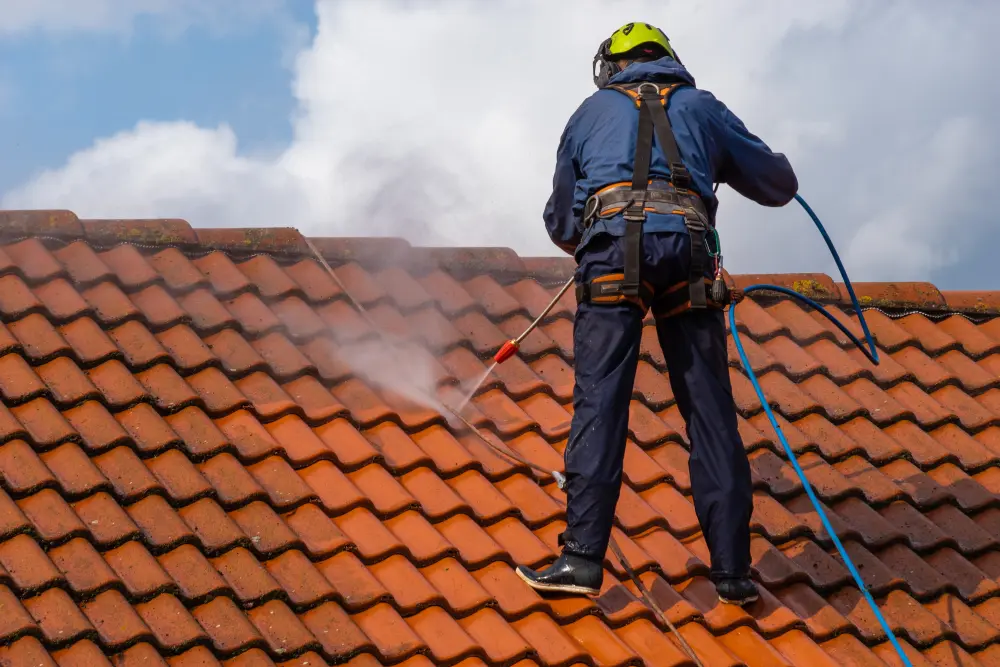
3. Never wash the roof with high pressure – it damages the granules and can void the manufacturer's warranty.
It's better to entrust the cleaning to professionals who use soft brushes or air blowers. They won't harm the roofing material and will quickly handle all types of dirt, even in hard-to-reach places.
2. Inspect Your Roof at Least Once a Year
You won’t see lifted shingles, rusted flashing around the chimney, or deteriorating roof decking from the ground – but water will find these vulnerable areas.
According to the Insurance Institute for Business & Home Safety (IBHS), an annual inspection reduces the risk of emergency repairs by 65%.
When Is It Especially Important to Inspect Your Roof?
- After hurricanes (like Ida in 2021),
- Before winter,
- If you're planning to sell or rent out the house.
During the inspection, pay attention to:
- The condition of the shingles (granules, cracks),
- The integrity of the sheathing,
- The functioning of the gutters,
- Attic ventilation,
- Signs of leaks.
At Yukor Construction, we follow a clear five-step system – and the basic inspection for new clients is free. If your roof is in good condition, we’ll tell you. No pushy sales.
3. Improve Attic Ventilation and Insulation
A damp attic poses a serious risk to your roof. Condensation can damage the wooden sheathing from the inside. In winter, attic overheating causes snow to melt, which can lead to the formation of ice dams.
How should ventilation and insulation function?
-
Cold air enters through soffit vents (located under the roof overhang) – typically perforated trim panels.
-
Warm, humid air exits through the ridge vent or exhaust fans.
How can you tell if your attic has poor ventilation?
A musty odor, frost forming on the rafters during winter, or wet spots appearing on the top-floor ceiling are all common warning signs.
Check whether your home has this issue:
What should you do?
As soon as possible, redirect the exhaust duct to the exterior – through a wall or the roof – using a check valve and properly insulated ductwork.
It’s best to have this work completed by a qualified contractor to prevent leaks, freezing, or disruptions to the home’s ventilation system.
4. Fix Small Problems Before They Become Big Ones
One damaged shingle seems like a minor issue. But water can seep in even through a microcrack.
Pay attention to:
- Shingles without granules (looks smooth or dark),
- Lifted or detached elements,
- Rust on metal flashings around pipes,
- Dried-out sealant in joints.
-
Don't wait for spring – repairs can be done in fall, or even winter if temperatures are above freezing.
-
Don't use "temporary" solutions like tape or nails – they make the problem worse.
-
Hire licensed contractors with a written warranty. We offer an official contract and warranty on all work.
5. Trim Trees to Protect the Roof from Impacts and Moisture
Overhanging branches don’t just spoil the view – they rub against the shingles in the wind and remove granules, and during storms, they easily break and puncture the roofing. Also, moisture accumulates under branches, leading to moss and fungus growth.
In New Jersey, with its many old oaks and pines, this is one of the most common causes of localized damage.
Recommendations:
- There should be at least 2 meters between branches and the roof.
- Trim trees every 2–3 years (especially conifers), and don't do it yourself – working at height with a chainsaw is extremely dangerous.
Why Yukor Construction is the Right Choice for Roof Maintenance in New Jersey?
- Diagnosis – A comprehensive inspection of the roof, attic, gutters, and ventilation system.
- Problem Explanation – We provide photos and an honest assessment: repair now or monitor and wait.
- Site Preparation – We protect your lawn, windows, and surrounding property before any work begins.
- Repair or Maintenance – All work is completed by licensed craftsmen using materials from trusted suppliers, in full compliance with New Jersey standards.
- Final Inspection & Cleanup – You review and approve the completed work with us, and we leave your yard cleaner than when we arrived.
- Before starting – An official contract with a clear, detailed estimate.
- After completion – A written warranty covering workmanship, plus manufacturers’ warranties on materials.
- No verbal promises. Only documentation you can rely on – even years later.
- Final Inspection & Cleanup – You review and approve the completed work with us, and we leave your yard cleaner than when we arrived.
Frequently Asked Questions
Can you extend the life of a roof that's already 15 years old?
How much does a roof inspection cost in New Jersey?
Why is it important to work with a local company?
Don’t Wait for a Leak — Take Action Now
The roof is one of the most expensive parts of your home, second only to the foundation. But it doesn’t need to be replaced every 15 years if proper preventive maintenance is performed.
Schedule a free consultation with Yukor Construction — we’ll come at a convenient time and conduct a comprehensive inspection of your roof.