

TPO vs. EPDM: Which Is Cheaper to Repair?
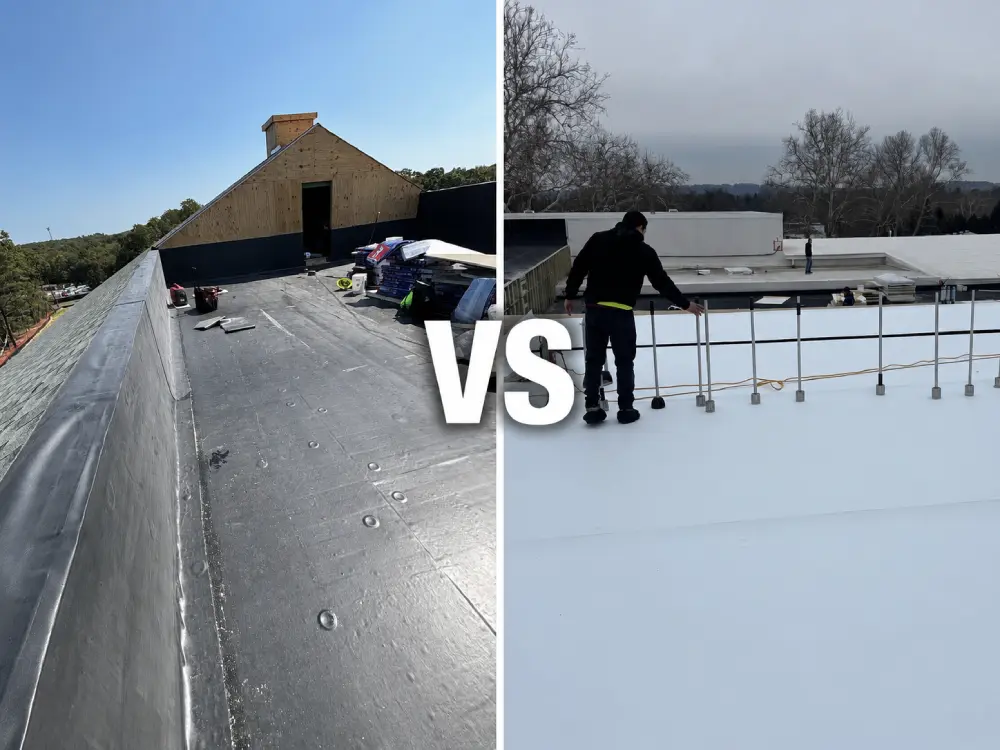
Even reliable flat roofing systems may eventually require repairs because of punctures, damaged seams, weather exposure, drainage problems, or natural aging. TPO and EPDM are two of the most common single-ply membranes used on flat and low-slope roofs. Both provide dependable protection against moisture, UV exposure, and changing temperatures, but they are repaired using different methods.
EPDM repairs typically rely on compatible primers and pressure-sensitive repair materials, while TPO repairs usually require hot-air welding. As a result, EPDM may be less expensive to repair in some situations, particularly when the damage is small and easily accessible. However, the most cost-effective option depends on much more than the membrane type.
The final repair cost is influenced by the size and location of the damage, the age of the roof, roof accessibility, the condition of the insulation, and whether moisture has entered the roofing system. A professional inspection is therefore necessary before deciding whether a localized repair, partial restoration, or complete membrane replacement will provide the best value.
What Is an EPDM Flat Roof?
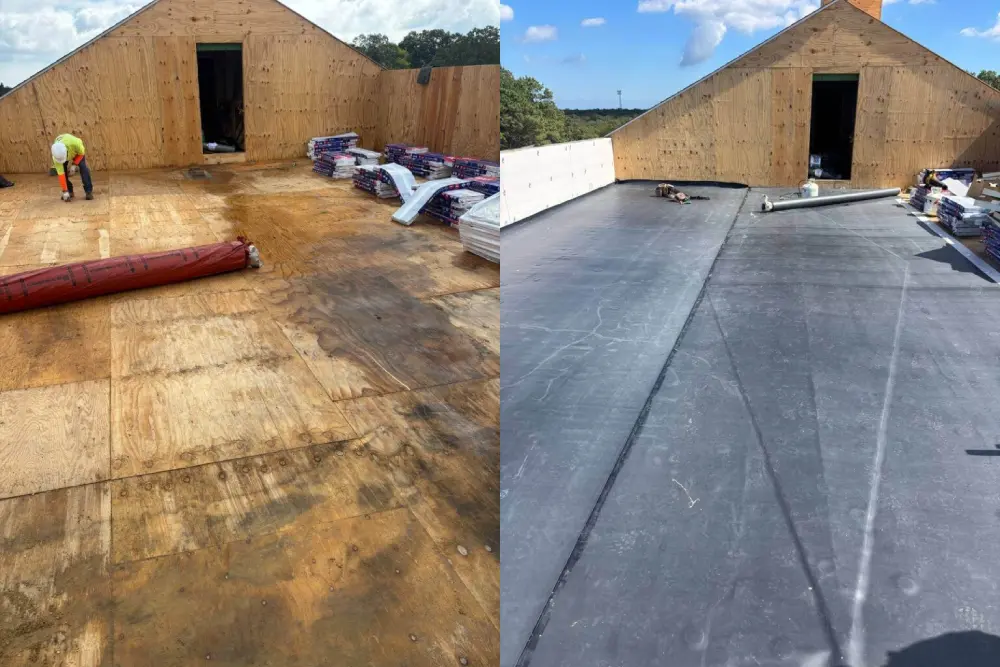
EPDM, or ethylene propylene diene monomer, is a durable synthetic rubber membrane used on flat and low-slope roofs. It is widely installed on residential additions, garages, commercial properties, and other buildings that require a flexible waterproof roofing system.
Advantages of EPDM Roofing

EPDM remains flexible during seasonal temperature changes and can accommodate normal building movement without cracking. It performs well during hot summers, freezing temperatures, and repeated freeze-thaw cycles.
The material provides reliable resistance to UV exposure, ozone, rain, snow, and wind when it is properly installed and maintained.
A professionally installed EPDM roofing system can remain in service for more than 20 years, depending on membrane thickness, installation quality, drainage, maintenance, and exposure conditions.
Many small punctures and cuts can be repaired using compatible EPDM primer and pressure-sensitive flashing or patch material. Standard EPDM patching does not usually require a hot-air welding machine.
EPDM is valued for its flexibility, relatively low maintenance requirements, and practical repair options. Property owners searching for epdm roofers near me should still choose a contractor who understands membrane compatibility, surface preparation, seam details, and moisture detection rather than selecting a company based only on the lowest estimate.
Learn more about our EPDM and TPO flat roofing solutions in New Jersey.
What Is a TPO Flat Roof?
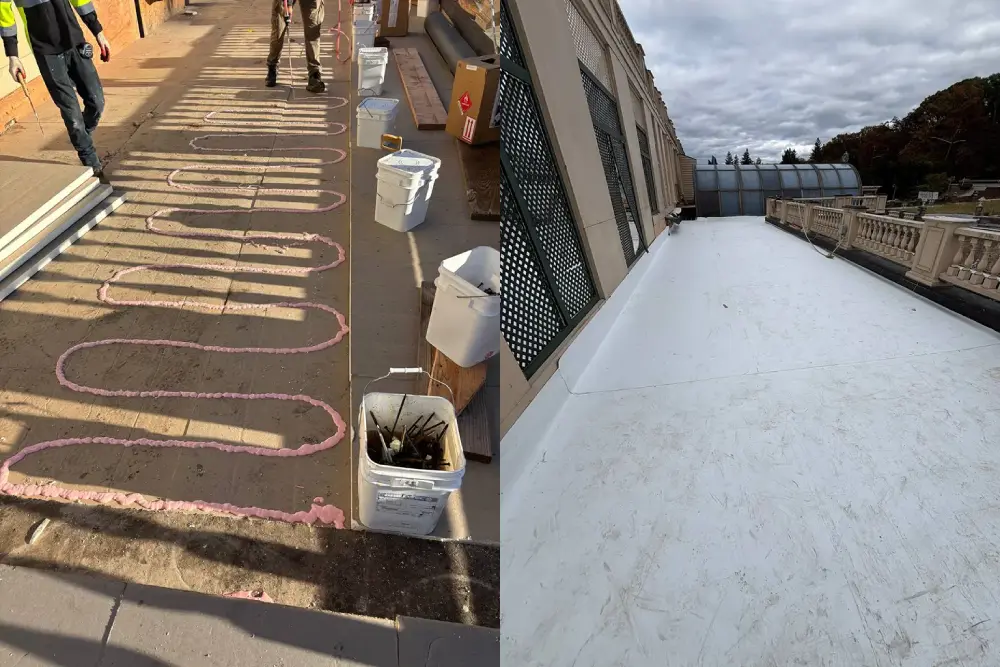
TPO, or thermoplastic polyolefin, is a reinforced single-ply thermoplastic membrane used on flat and low-slope roofing systems. It is commonly selected for commercial properties, modern homes, additions, and other buildings where reflectivity and welded seams are important.
Advantages of TPO Roofing
-
Solar reflectivity.
TPO membranes are commonly manufactured in white or other light colors that reflect a significant portion of solar energy. This can reduce heat absorption and help limit cooling demand during hot weather.
-
Reinforced construction.
TPO normally includes a polyester reinforcing layer that increases resistance to punctures, tears, dimensional stress, and routine rooftop wear.
-
Hot-air-welded seams.
Adjacent sheets are joined using controlled hot-air welding. When the membrane is properly cleaned, welded, and tested, the resulting seam forms a continuous watertight connection.
-
Long-term performance.
A properly selected and professionally installed TPO roof can provide 20 years or more of service, depending on membrane thickness, system design, maintenance, exposure, and installation quality.
Unlike adhesive-only repair methods, TPO welding fuses the mating surfaces of the existing membrane and the repair patch along the repair perimeter. The patch remains a separate piece of membrane, but its edges are joined to the original roofing surface with a welded seam.
TPO vs. EPDM Material Comparison
|
Feature |
EPDM Rubber Roofing |
TPO Thermoplastic Roofing |
|---|---|---|
|
Material base |
Synthetic rubber |
Reinforced thermoplastic polyolefin membrane |
|
Typical seam type |
Pressure-sensitive seam tape used with compatible primer; some details may use additional adhesives or sealants |
Hot-air-welded seam |
|
Repair equipment |
Cleaner, primer, compatible patch material, scissors, and pressure roller |
Hot-air hand welder, silicone roller, cleaner, seam probe, and an appropriate power source |
|
Professional skill required |
Correct product compatibility, cleaning, priming, positioning, and pressure application |
Training in membrane preparation, temperature control, welding technique, and seam testing |
|
Solar performance |
Standard black EPDM absorbs more solar heat, although white EPDM products are also available |
White and light-colored membranes reflect more solar energy and reduce heat gain |
|
Repair bond |
Depends on proper cleaning, priming, compatible repair materials, and thorough rolling |
Depends on membrane weldability, surface preparation, welding parameters, and seam testing |
|
Repair durability |
Can provide a reliable long-term repair when compatible materials are installed correctly |
Can provide a durable long-term repair when the existing membrane remains weldable and the seam is completed correctly |
|
Common repair advantage |
Does not normally require hot-air welding for a standard pressure-sensitive patch |
Creates a welded perimeter rather than relying only on an adhesive bond |
|
Common repair limitation |
Poor preparation, contamination, trapped moisture, or incompatible materials can weaken adhesion |
Requires specialized equipment and an experienced roofing technician |
Both membranes can be repaired successfully. Neither system is automatically more reliable in every situation. The quality of the repair depends on the surrounding membrane, the condition of the roofing assembly, the products used, and the contractor’s workmanship.
How EPDM and TPO Flat Roofs Are Repaired
Before repairing either membrane, the contractor should determine whether the visible defect is the only problem. A small puncture may conceal wet insulation, damaged cover board, loss of adhesion, or deterioration around a drain, penetration, or flashing detail.
A professional flat roof and roof leak inspection helps identify the source and extent of the damage before repair materials are installed.
The EPDM Flat Roof Repair Process
The technician examines the puncture, cut, seam, or flashing detail and checks the surrounding membrane for contamination, shrinkage, trapped moisture, and loss of adhesion. The condition of the insulation and substrate may also need to be evaluated.
The repair area is cleaned to remove dirt, biological growth, oils, moisture, oxidation, and incompatible repair products. An aged membrane may require a manufacturer-approved weathered membrane cleaner and more extensive preparation than a recently installed roof.
The membrane must be completely dry before primer or repair material is applied.
A compatible EPDM repair patch is cut to cover the damaged area with the overlap required by the roofing system manufacturer. Patch corners are rounded to reduce stress concentrations and minimize the risk of the edges lifting.
A compatible EPDM primer is applied to the prepared area. The primer must be used at the correct coverage rate and allowed to flash off according to the manufacturer’s instructions.
Pressure-sensitive flashing or another approved EPDM repair material is positioned over the defect. The patch is then rolled firmly to create full contact and eliminate wrinkles, voids, and trapped air.
Depending on the repair system and detail, lap sealant may be required at designated edges, overlaps, or exposed reinforced membrane cuts. The completed repair is inspected to confirm that the entire patch is properly bonded.
When correctly completed with compatible materials, an EPDM patch can remain watertight for many years. Its actual durability will still depend on drainage, roof movement, surrounding membrane condition, and ongoing maintenance.
Homeowners comparing rubber roofing contractors near me should ask whether the contractor will inspect for moisture below the membrane and follow the repair specifications for the existing roofing system. Applying an unidentified patch over a wet or poorly prepared surface is not a permanent repair.
The TPO Flat Roof Repair Process
The contractor identifies the puncture, tear, open seam, or damaged flashing and checks the surrounding area for hidden membrane separation, contamination, or moisture below the roofing system.
The repair area must be cleaned of dirt, moisture, grease, biological growth, and other contaminants. Aged or weathered TPO may require a manufacturer-approved weathered membrane cleaner and mechanical scrubbing before a new patch can be welded to it.
The contractor may perform a test weld to confirm that the existing membrane remains suitable for welding.
A compatible TPO patch is cut large enough to extend beyond the damaged area in every direction. The corners are rounded to create a cleaner, more reliable welded perimeter.
A professional hot-air welder heats the mating surfaces of the original membrane and the TPO patch. The welding temperature, airflow, and speed are adjusted according to:
- the membrane manufacturer’s specifications;
- membrane thickness;
- the type of welding equipment;
- ambient temperature;
- sun or shade;
- wind conditions;
- the roof substrate.
After the seam has cooled, the technician probes the complete welded perimeter to detect cold welds, voids, or incomplete bonding. Any deficient area must be cleaned and rewelded before the repair is considered complete.
When the existing membrane remains weldable and the repair is completed correctly, a TPO patch can provide durable long-term protection. Its service life will depend on the condition and remaining lifespan of the surrounding roof.
When Is Flat Roof Repair No Longer Sufficient?
Localized membrane damage can often be repaired successfully. However, continuing to patch an extensively deteriorated roof may eventually cost more than a partial restoration, roof overlay, or complete membrane replacement.
Repair may no longer be the most practical option when an inspection reveals:
- multiple damaged areas across the roof;
- wet or saturated insulation;
- widespread open or failing seams;
- extensive membrane shrinkage;
- damaged cover board, substrate, or roof deck;
- widespread flashing failure;
- recurring leaks in different areas;
- a membrane near the end of its service life.
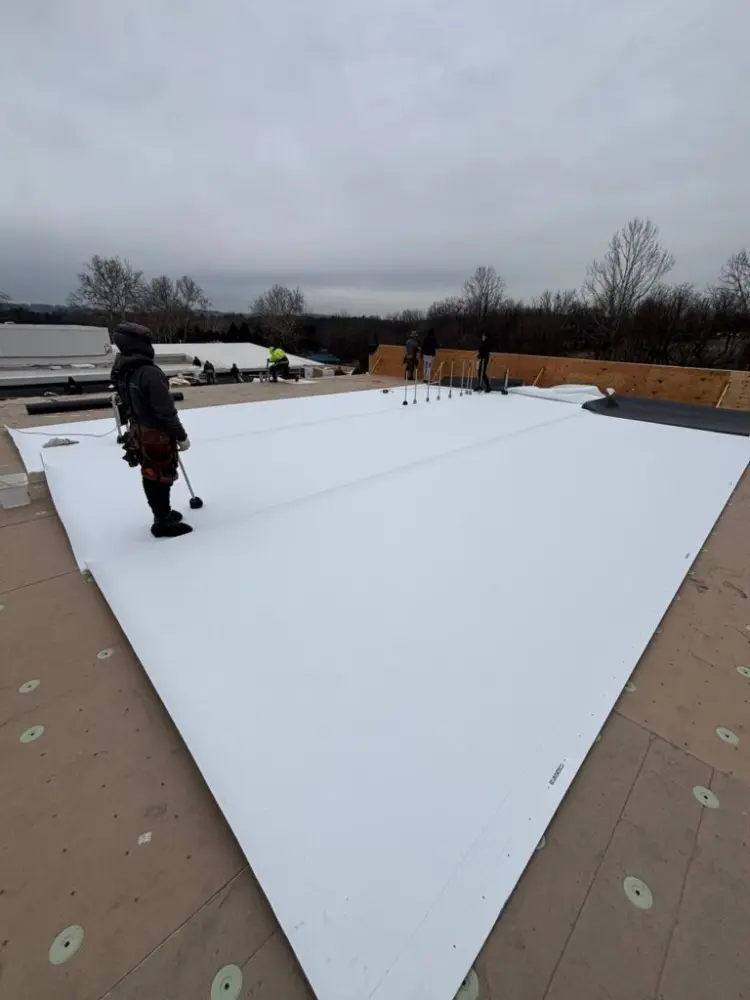
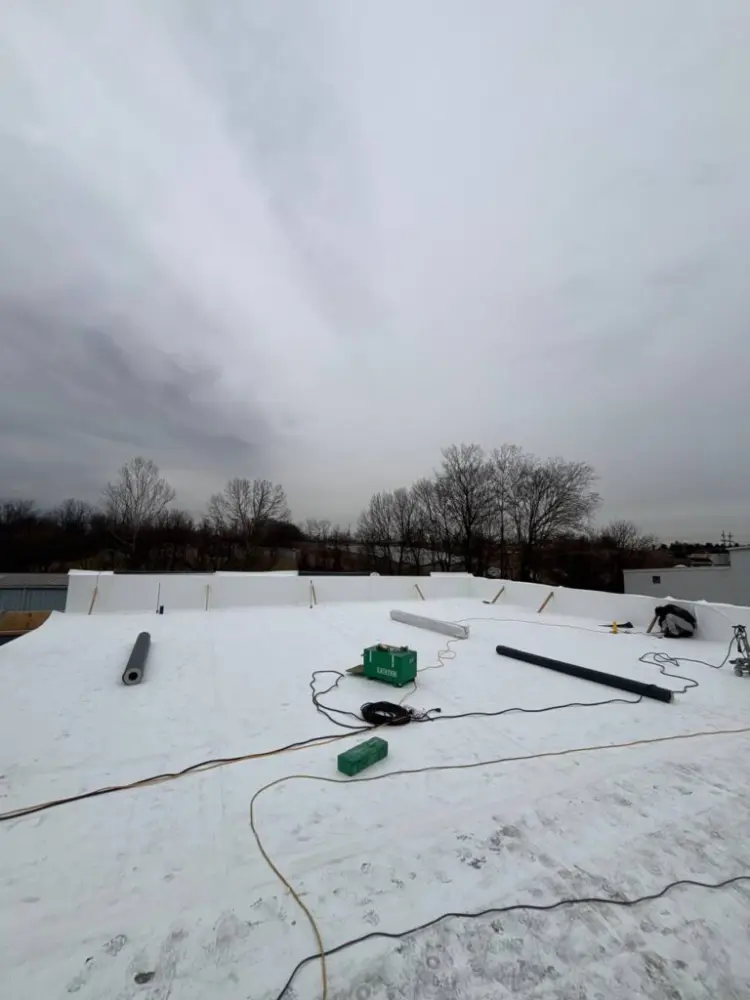
The correct recommendation should be based on the condition of the entire roofing assembly rather than the appearance of one visible leak.
For commercial buildings, our commercial roofing services include flat roof inspections, leak detection, localized membrane repair, storm damage restoration, maintenance, and larger roofing projects.
Which Flat Roof Is Cheaper to Repair?
For a small and accessible puncture, EPDM may have a lower upfront repair cost because a standard pressure-sensitive patch does not normally require hot-air welding equipment. The necessary repair materials may also be less expensive than arranging a specialized TPO welding repair.
However, neither membrane is always cheaper to repair.
EPDM Repair Costs
- the damage is limited to a small membrane area;
- the surrounding rubber remains in good condition;
- the insulation below the membrane is dry;
- the repair is located away from a complex flashing or penetration;
- compatible repair materials are readily available.
The durability of the repair depends on cleaning, correct primer application, compatible pressure-sensitive materials, proper overlap, and thorough rolling. Poor preparation, contamination, trapped moisture, or incompatible products can cause the repair to fail prematurely.
TPO Repair Costs
TPO repair normally requires more specialized equipment and professional expertise. This may increase the initial labor or service cost, especially for a small isolated repair.
However, a properly welded and tested TPO patch creates a strong watertight seam around the damaged area. When the surrounding membrane is still in serviceable condition, this can provide a reliable long-term repair.
TPO may become more difficult or expensive to repair when:
- the aged surface requires extensive cleaning;
- the membrane has lost weldability;
- several seams or flashing details have failed;
- insulation or substrate replacement is required;
- rooftop equipment obstructs access to the repair area.
The Verdict
EPDM is often less expensive for a small, uncomplicated localized repair. TPO may cost more initially because it requires hot-air welding equipment and a trained technician.
That does not mean EPDM is always the cheaper roofing system to maintain or that every TPO repair will last longer. The actual value of either repair depends on the roof’s condition, the source of the damage, the quality of the workmanship, and whether the underlying roofing assembly remains dry and structurally sound.
The best comparison is therefore not simply EPDM versus TPO. It is:
- localized repair versus extensive restoration;
- dry insulation versus saturated insulation;
- accessible damage versus a complex flashing detail;
- a serviceable membrane versus a roof at the end of its useful life.
What Affects the Cost of Flat Roof Repair?
- the size and type of the damaged area;
- the location of the damage;
- the age and overall condition of the membrane;
- whether the defect is in the field, seam, drain, curb, edge, or penetration;
- membrane thickness and product compatibility;
- the number of areas requiring repair;
- roof height and accessibility;
- the need for safety equipment or special staging;
- the presence of wet insulation;
- whether cover board or substrate replacement is required;
- drainage problems or ponding water;
- the need to remove or relocate rooftop equipment;
- emergency service requirements;
- manufacturer warranty conditions.
A low estimate based only on the visible size of a puncture may not include the work required to locate hidden moisture or replace damaged insulation.
Property owners looking for rubber roof installers near me should ask for a written scope of work explaining the repair method, materials, moisture findings, warranty, and any conditions that could change the final price.
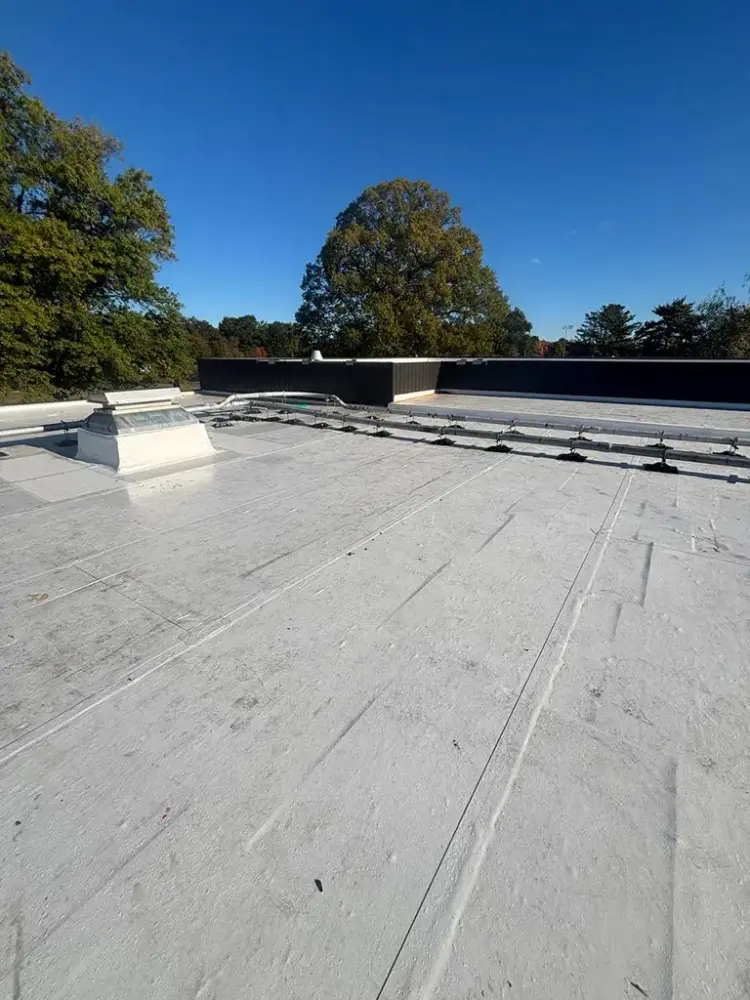
After evaluating the roof, Yukor Construction LLC can recommend a targeted repair, partial restoration, or replacement based on the actual condition of the roofing system. You can also review our complete range of roofing services in New Jersey.
How to Reduce Future Flat Roof Repair Costs
Preventive maintenance cannot eliminate every roofing problem, but it can help identify small defects before they cause insulation or structural damage.
To extend the service life of a flat roof:
-
schedule professional inspections at least twice a year;
-
arrange an additional inspection after severe storms or major rooftop work;
-
keep drains, scuppers, and gutters clear;
-
remove branches, leaves, and other debris;
-
address cuts and punctures promptly;
-
inspect seams, penetrations, and flashing details;
-
correct recurring ponding water and drainage problems;
-
limit unnecessary foot traffic;
-
install designated walkways around frequently serviced rooftop equipment;
-
keep records of inspections, repairs, and warranty documents.