

Vinyl Deck Restoration or Full Membrane Replacement: Which Should You Choose?
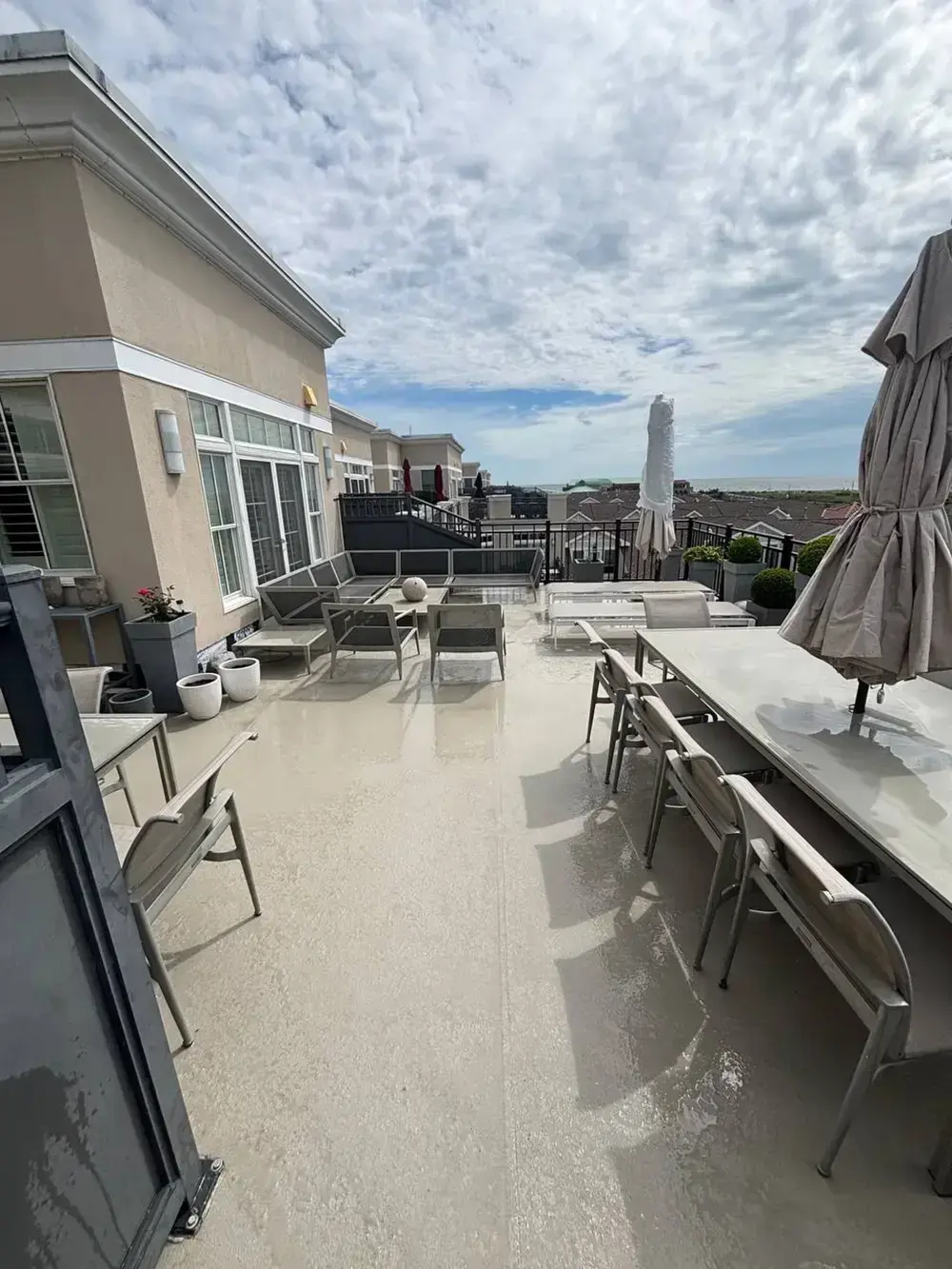
Vinyl decks can last for many years, but over time, sun exposure, moisture, and constant use can take their toll. Cracks, fading, and leaks begin to appear. The main question for any homeowner is simple: should you repair the damaged areas or replace the entire deck?
In this article, we’ll take a closer look at when vinyl deck repair and vinyl deck restoration are the right call, and when a full vinyl deck replacement is the better option.
When Is Vinyl Deck Restoration Enough?
- Small cuts and punctures. These can often be repaired with a compatible vinyl patch that is heat-welded to the existing membrane;
- Minor separation along the seams without significant water intrusion;
- Fading, light scuffs, or surface staining. If the membrane is still watertight, professional cleaning or a specially formulated, manufacturer-approved coating may improve its appearance;
- Localized issues around wall and threshold transitions.
A professional crew will deep-clean the deck, repair damaged areas, weld the seams, and apply a protective coating. The work typically takes 2–4 days.
- A clean, refreshed appearance;
- Restored waterproofing and sealed seams;
- A longer service life for the existing membrane system, depending on its age, condition, and the extent of the repairs.
When Is Full Vinyl Membrane Replacement the Better Option?
- Wood rot: soft or weakened areas can be felt underfoot;
- An aging vinyl membrane: after 15–18 years, the material may become brittle and develop cracks, tears, peeling and cracking;
- Extensive leaks: water is reaching the interior of the home, the lower level, or the basement;
- Recurring problems: the same areas continue to leak or fail after previous repairs.
Vinyl Deck Restoration vs. Replacement: Cost, Scope, and Timeline
| Factor | Restoration or Localized Repair | Full Replacement |
|---|---|---|
| What’s included | Deep cleaning, repair of cuts and punctures, seam welding, treatment of wall and threshold transitions, and protective coating | Removal of the old membrane, repair or replacement of damaged substrate and structural framing, surface preparation, installation of a new vinyl membrane, heat-welded seams, and new flashing |
| Typical Project Duration | 2–4 days | Usually 5–10 days, depending on the extent of the damage to the substrate |
| Expected result |
Restored waterproofing and appearance, with an extended service life of the existing system |
A new waterproofing system with comprehensive protection for the underlying structure |
| When to choose it |
Damage is limited to the membrane and the substrate remains dry and structurally sound |
Wood rot, extensive leaks, severe membrane deterioration, an aging membrane, or recurring problems after previous repairs |
| Typical Project Duration |
Faster, more affordable, and requires less disruption |
Addresses hidden substrate problems and provides a more predictable long-term result |
| Typical Project Duration |
Additional repairs may be needed later if the damage extends deeper than initially expected |
More extensive work, a longer project timeline, and higher upfront cost |
- Highly effective for minor surface damage, with a lower cost of deck repair and a faster turnaround;
- Additional repair may be necessary in the future if deeper problems are discovered.
- Addresses underlying structural problems and provides long-term protection;
- Requires a higher initial investment.
Restoration usually wins when the priority is lower cost and a shorter project timeline. Full replacement costs more, but it can resolve hidden problems in the substrate and structural framing while providing a more predictable long-term result.
Deck repair costs depend on the size of the deck, the condition of the vinyl membrane, the extent of the damage, and whether the plywood substrate or structural framing needs repairs.
Real Project in West Windsor, New Jersey
One of our clients faced a common problem. An open balcony had lost its waterproofing, the surface had cracked, and the underlying structure had begun to deteriorate.
Our Specialists’ Work Process
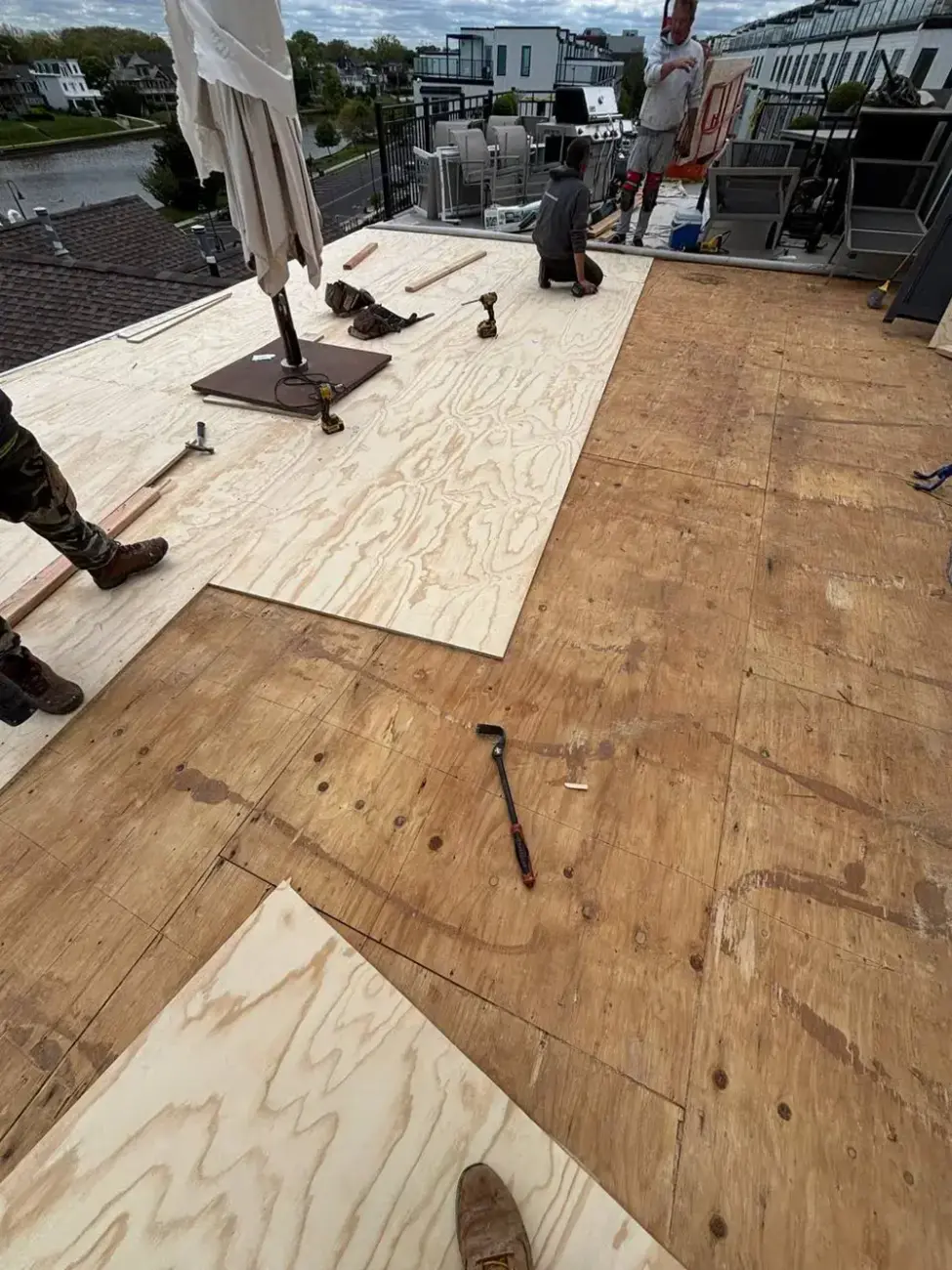
We completely removed the old surface. All rotten and damaged sections of the substrate were cut out and replaced with new moisture-resistant materials. The entire surface was carefully leveled, cleaned, and reinforced before the new vinyl membrane was installed.
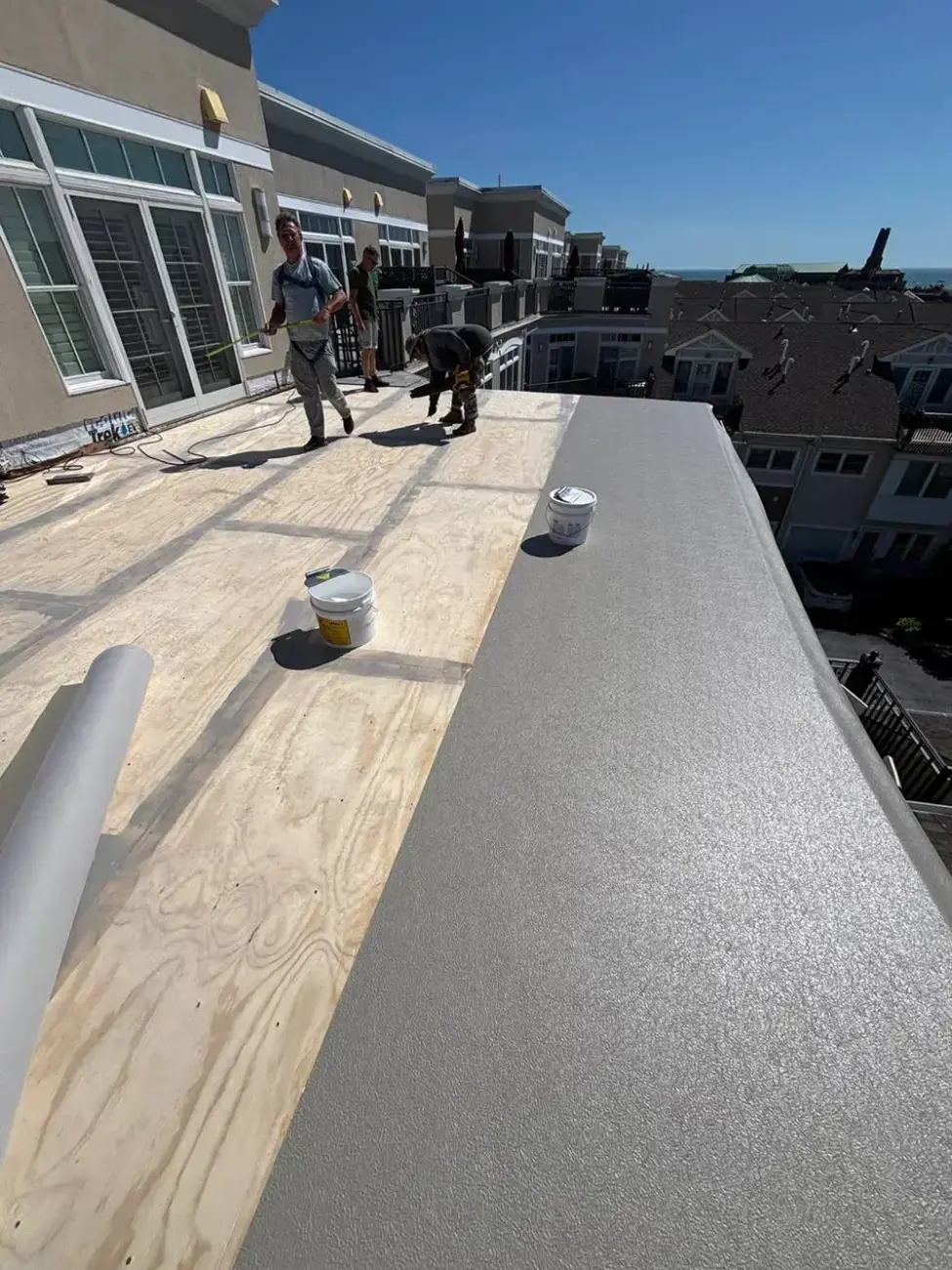
We replaced damaged sections of the plywood substrate with moisture-resistant panels. Each new panel was carefully leveled, secured, and treated with protective products to help prevent future moisture damage.
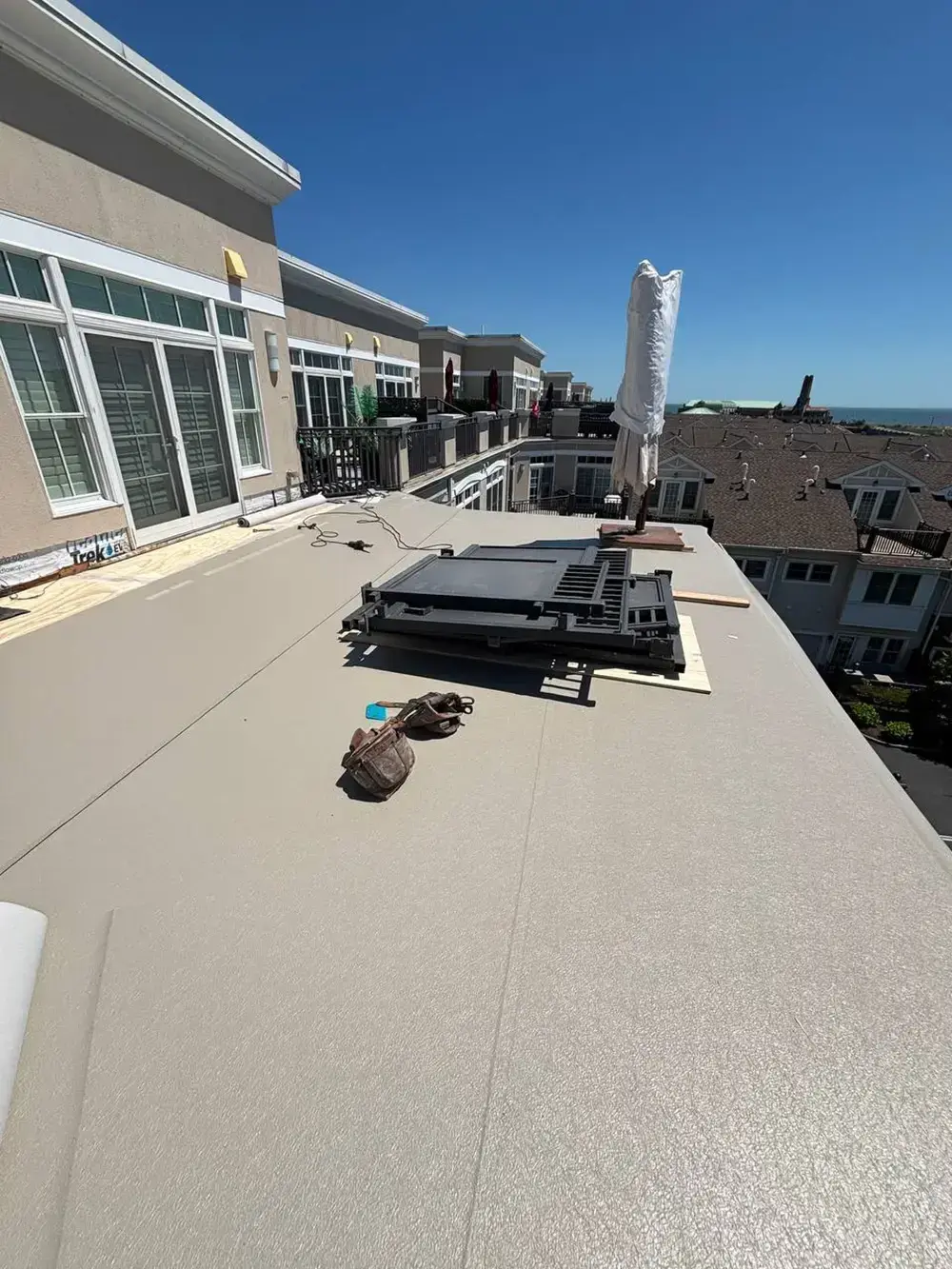
We installed a new textured vinyl membrane in a modern gray finish. The material was laid with manufacturer-specified overlap, and the edges were carefully turned up against the walls. The membrane was bonded with a high-strength adhesive, while all seams between membrane sections were sealed using hot-air welded seams.
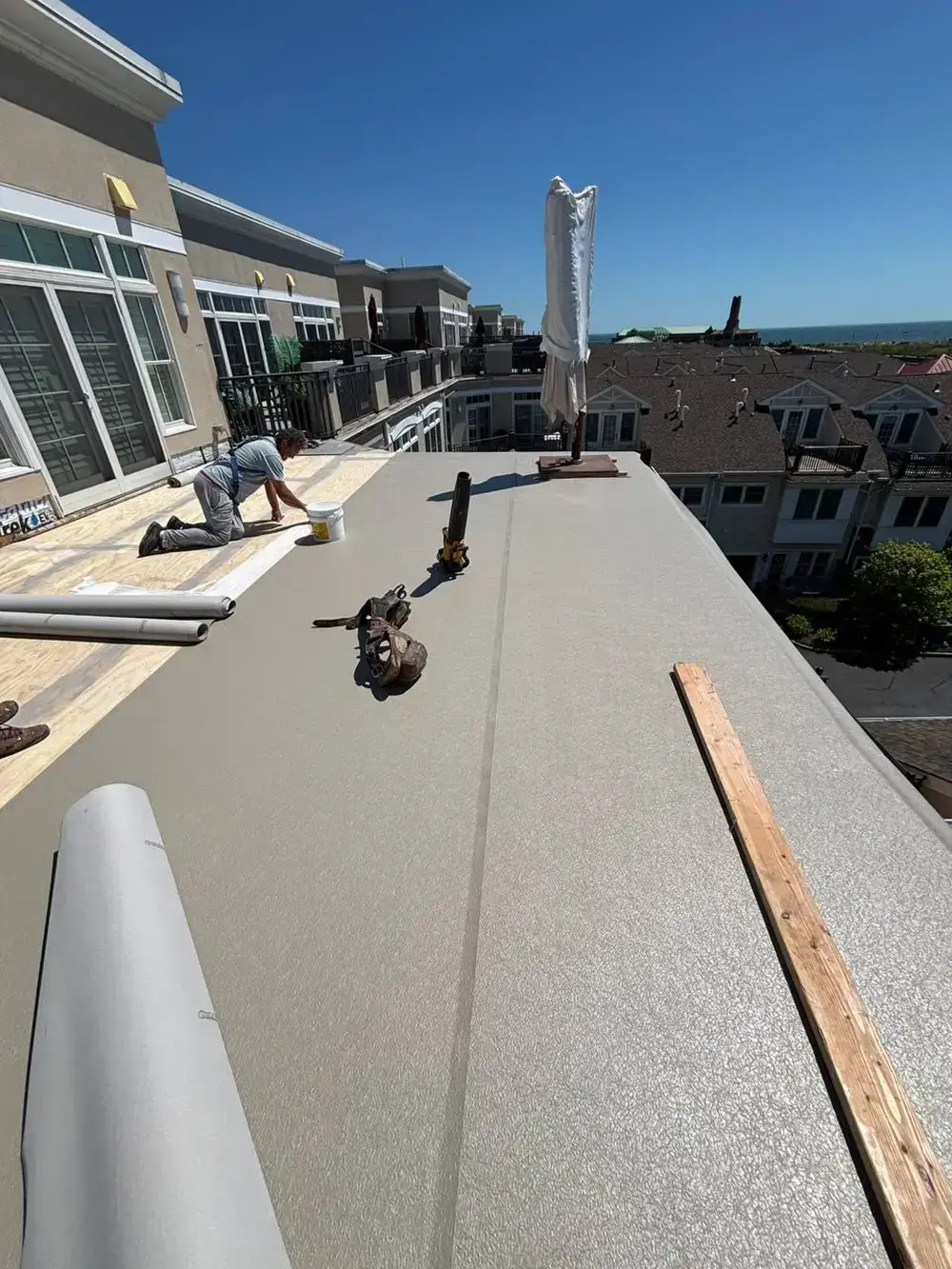
We carefully treated every transition and joint. Each seam was reinforced with sealing tape to create an additional barrier against water and prevent moisture from reaching the wood structure during heavy rain or snowmelt.
- The balcony now has a textured, slip-resistant surface that provides a textured, slip-resistant walking surface with improved traction in wet conditions;
- Water no longer penetrates through the surface or into the seams;
- The interior spaces are reliably protected from leaks.
The homeowners can now use the balcony without worrying about recurring leaks, regardless of the weather.
How to Make the Right Choice for Your Deck?
An accurate inspection matters more than generic advice. If the structure is sound, vinyl deck restoration may be the more cost-effective choice.
-
Structural framing and load-bearing beams
The contractor checks for darkened wood, soft spots, sagging, musty odors, and signs of mold or moisture damage.
-
The substrate
The inspection looks for bubbling, delamination, wet spots, soft areas, and voids beneath the vinyl surface. Soft spots, delamination, staining, elevated moisture readings, or loss of adhesion may indicate that water has reached the substrate.
-
The vinyl membrane
The specialist determines whether the damage is localized or whether the membrane has lost its flexibility and waterproofing across a larger area.
FAQ
Don’t Put It Off: Schedule Your Inspection Today
We can help you determine whether vinyl deck repair, vinyl deck restoration, or a full vinyl deck replacement makes the most sense for your property. The right solution can help extend deck lifespan while restoring reliable waterproofing and everyday usability.