

Silicone Roof Coating & Repair in New Jersey
Looking for a silicone roof coating contractor in New Jersey? Yukor Construction LLC restores existing EPDM and TPO flat roofs with silicone coating systems that protect the membrane and extend the life of roofs that do not yet require full replacement.
- Silicone coating for existing EPDM and TPO roofs
- Flat roof restoration without a complete tear-off
- Repairs and surface preparation before coating
- Residential and commercial flat roof projects
Silicone Roof Coating Services in New Jersey
An aging flat roof does not always need to be removed and replaced. If the existing EPDM or TPO system remains in suitable condition, silicone coating can restore and protect the roof while allowing the existing membrane to stay in place.
Our silicone roof coating services in New Jersey begin with an inspection. We evaluate the membrane, seams, perimeter details, penetrations, drainage areas, previous repairs, and visible deterioration to determine whether the roof is a good candidate for restoration.
Proper preparation is essential. Depending on the condition of the roof, the work may include:
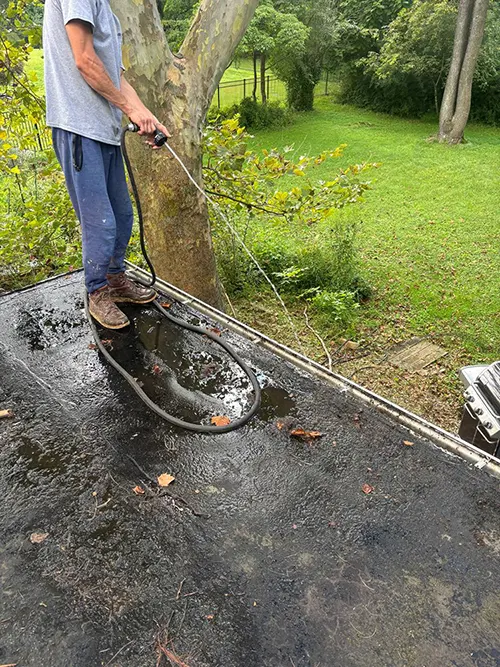
- removing leaves, dirt, and accumulated debris;
- thoroughly cleaning the existing roof surface;
- repairing damaged or vulnerable areas;
- reinforcing seams, edges, and transitions where needed;
- preparing the membrane for proper coating adhesion;
- applying the silicone coating across the prepared surface.
If localized damage needs to be corrected first, our roof repair services can address those problem areas before the restoration system is applied.
The result is a continuous protective surface without the extensive demolition that comes with a complete roof replacement.
Recent Silicone Roof Coating Projects in New Jersey
Real completed projects are one of the best ways to understand how silicone roof restoration works in practice. Our team restores aging flat roofs throughout New Jersey using silicone coating systems when the existing membrane is still suitable for repair and restoration.
Explore one of our recent silicone roof coating projects to see the original roof condition, preparation and repair process, project duration, cost, and completed result.
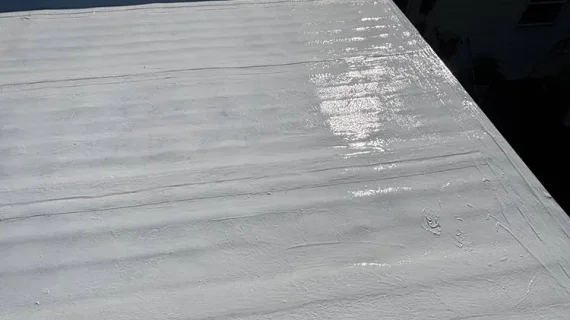
Flat Roof Silicone Coating – Montgomery, NJ
Problem: An aging flat roof had heavy debris buildup and vulnerable seams and edges, but the existing roofing system was still suitable for restoration.
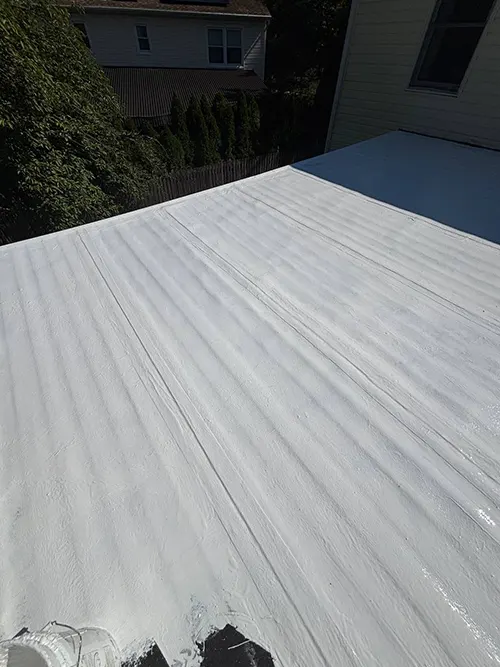
Solution: We cleaned and prepared the roof, repaired and reinforced problem areas, and applied a silicone coating across the surface to create a continuous protective layer without a full roof replacement.
Project Duration: 1 day
Project Cost: $1,500
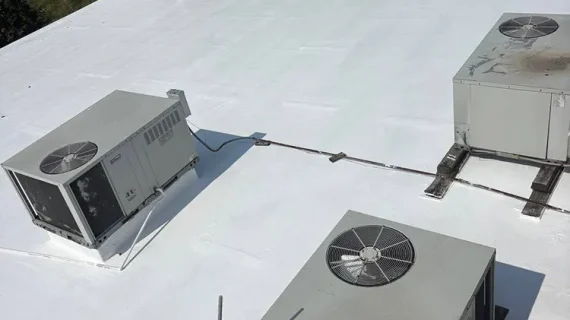
Torch-Down Roof Repair with Silicone Coating – Englishtown, NJ
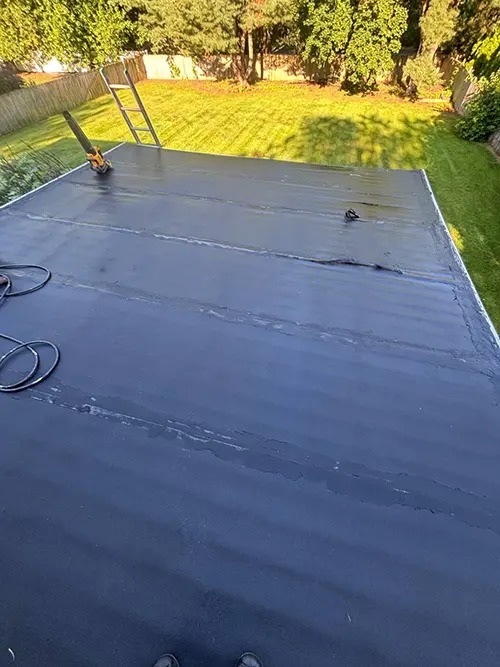
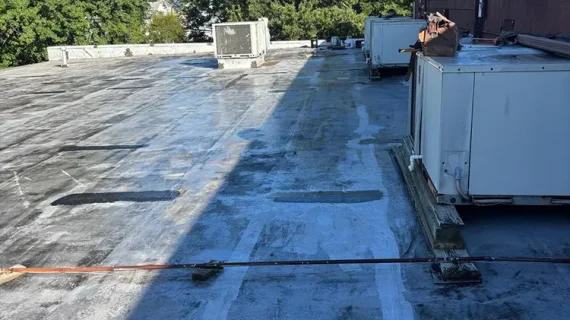
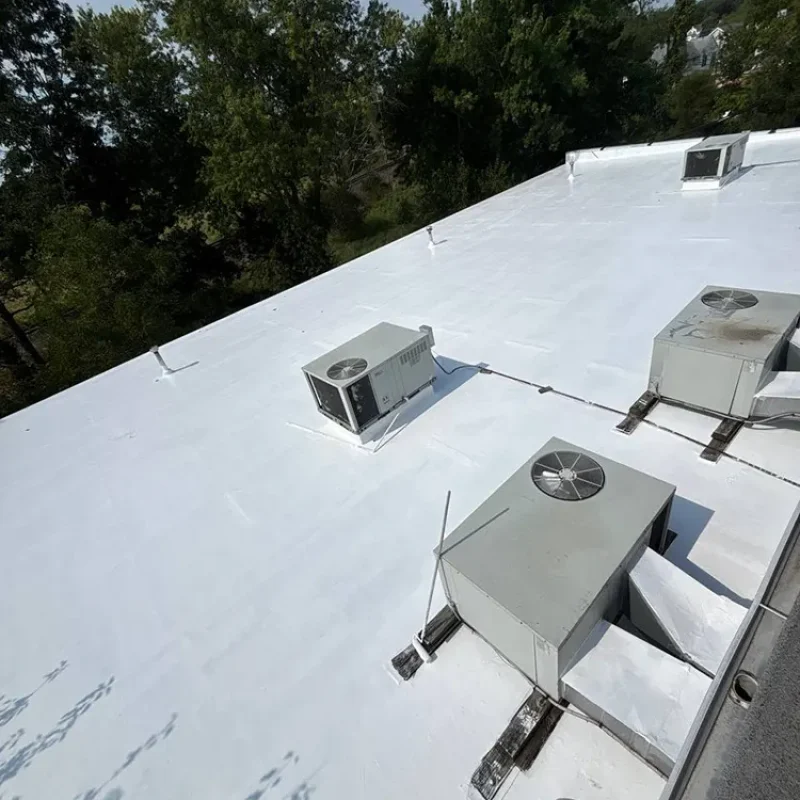
Problem: The existing torch-down flat roof had active leaks, worn areas, deteriorated seams, and multiple previous repairs. Several HVAC units, roof penetrations, and parapet transitions also required detailed sealing.
Solution: We repaired damaged areas, reinforced seams and transitions, sealed penetrations and sections around HVAC equipment, and applied a white silicone roof coating across the roof to create a continuous protective layer.
Project Duration: 3 days
Project Cost: $14,000
What Is Silicone Roof Restoration?
Silicone roof restoration renews an existing flat or low-slope roof instead of removing the entire roofing system and installing a new one.
The process combines inspection, cleaning, necessary repairs, detailed preparation, and silicone coating application. Once cured, the coating creates a continuous protective layer over the prepared roof surface.
Our silicone roof restoration services are intended for EPDM and TPO roofs where the existing membrane is still in good enough condition to stay in place. Restoration protects an aging surface and reinforces vulnerable areas while avoiding an unnecessary tear-off.
However, coating is not the right solution for every roof. Widespread membrane failure, extensive moisture damage, deterioration beneath the roofing system, or structural problems may make replacement the better option.
As a silicone roof restoration contractor in NJ, we evaluate the existing roof first and recommend restoration only when it is appropriate for its actual condition.
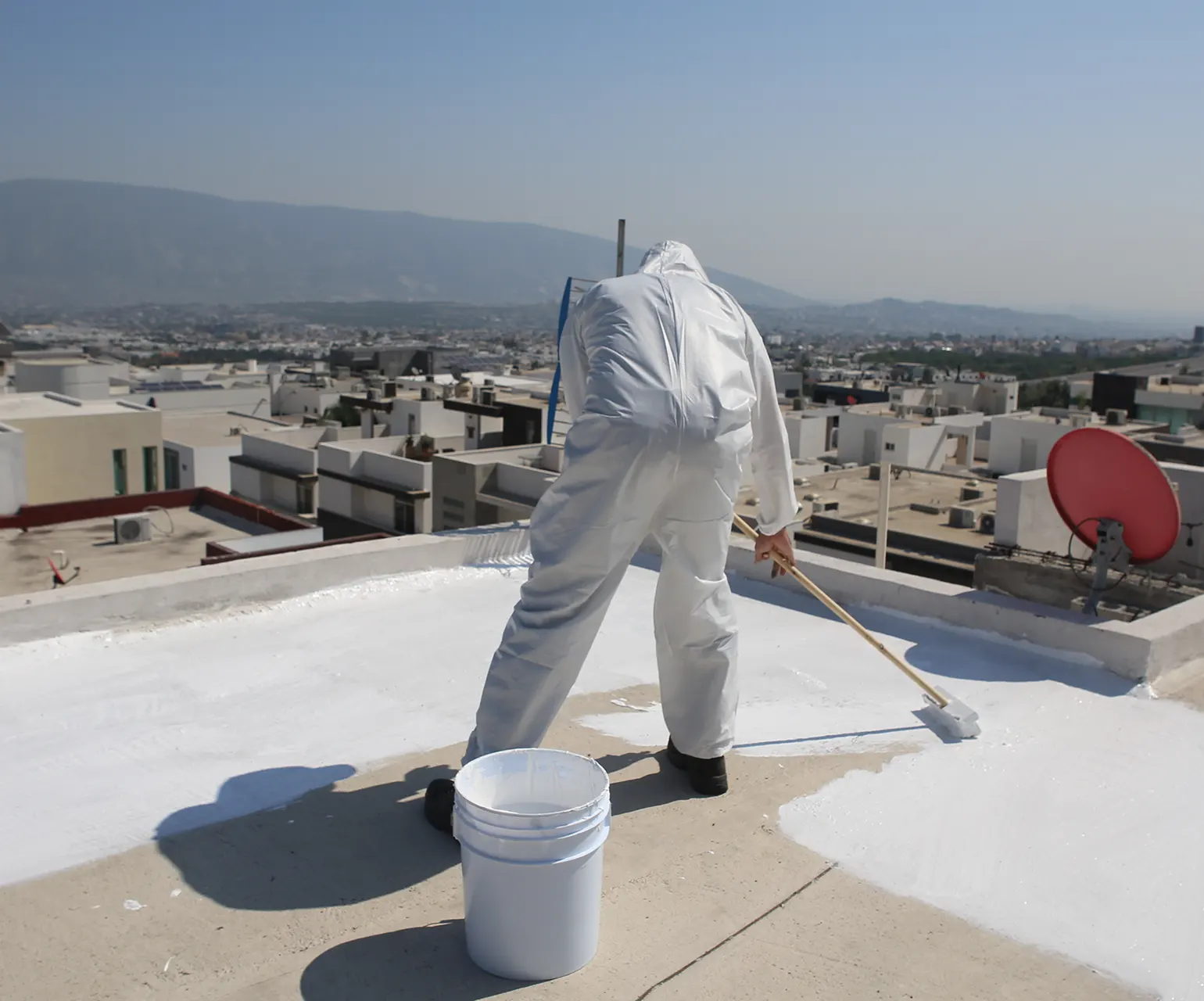
Flat Roof Coating Services in New Jersey
Flat and low-slope roofs have different maintenance and repair requirements from steep-slope roofing. Seams, penetrations, perimeter details, and drainage areas all require careful inspection before a coating system is installed.
A properly applied silicone coating creates a continuous protective surface over the prepared membrane. This makes it particularly useful for restoring existing flat roofs where the underlying roofing system is still serviceable.
Before applying the coating, we pay particular attention to:
- seams and previously repaired areas;
- roof edges and perimeter details;
- vents, pipes, and other penetrations;
- drains and low areas;
- cracks, openings, or damaged sections that require repair.
You can learn more about the membrane systems we work with on our EPDM and TPO flat roofing page.
A professional flat roof coating project is therefore much more than spreading a liquid product over an existing roof. The quality of the preparation and repairs directly affects the finished restoration system.
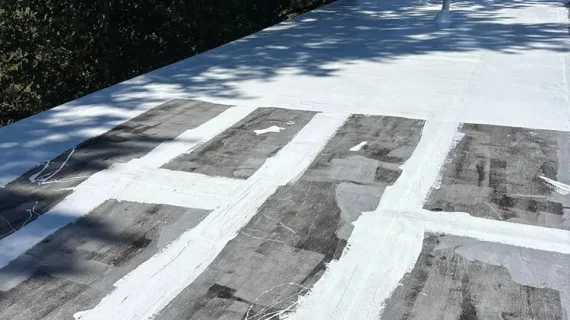
When Is Silicone Roof Coating a Good Alternative to Roof Replacement?
A complete replacement is necessary when the roofing system has deteriorated beyond the point where repairs and restoration can provide a reliable result. But age alone does not mean that a flat roof has to be torn off.
Silicone restoration may be a practical option when:
- the existing EPDM or TPO membrane is still generally serviceable;
- damaged areas are localized and repairable;
- seams or perimeter details need attention but the entire system has not failed;
- the roof can be properly cleaned and prepared;
- inspection does not reveal extensive underlying damage.
Keeping the existing membrane in place can reduce demolition and material removal while allowing worn or vulnerable areas to be repaired before the protective coating is installed.
If the roof is actively leaking, the leak should be located and corrected before coating. Our roof leak repair service focuses on finding the actual source of water intrusion rather than simply covering the affected area.
EPDM, TPO, and Torch-Down Roofs We Restore With Silicone Coating
Silicone Coating for EPDM Roofs
EPDM is a flexible rubber membrane commonly used on residential and commercial flat roofs. As the system ages, seams, edges, penetrations, and previously repaired areas may become more vulnerable.
When the membrane remains in serviceable condition, silicone restoration can protect the existing surface without requiring a complete tear-off.
Before coating an EPDM roof, we evaluate:
- the overall condition of the membrane;
- seams and transitions;
- penetrations and perimeter details;
- previous repairs;
- drainage conditions;
- areas that require repair or reinforcement.
Silicone Coating for TPO Roofs
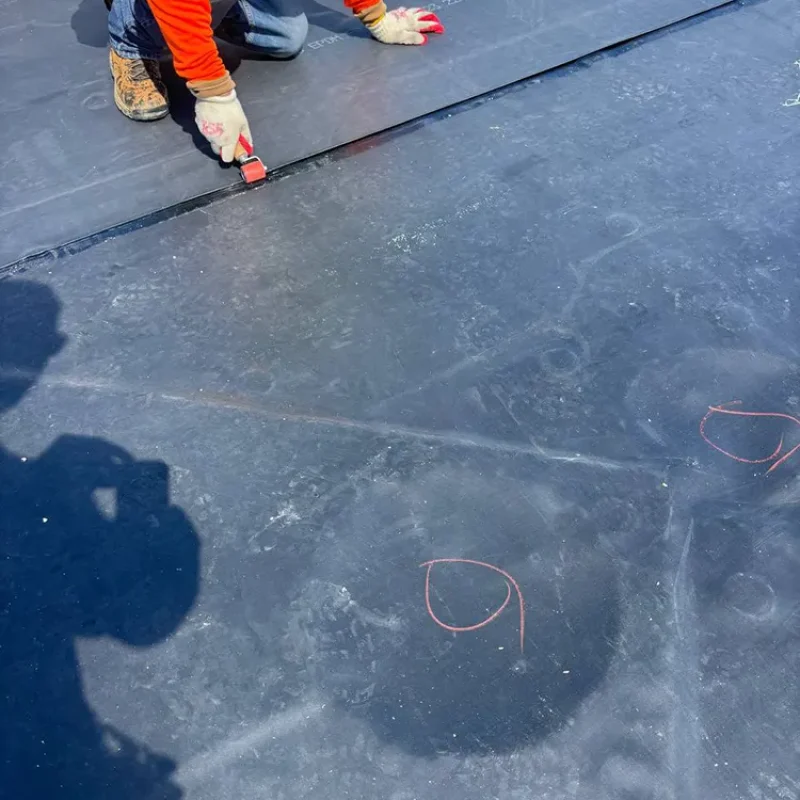
TPO is another widely used membrane for flat and low-slope roofs. Over time, seams, penetrations, transitions, and exposed areas may begin to show signs of wear even when the overall roofing system remains serviceable.
In these situations, silicone restoration may provide an alternative to replacing the entire roof.
Before coating TPO, we inspect the existing membrane, complete any necessary repairs, thoroughly clean the surface, and perform the preparation required for proper adhesion. Any primer or additional treatment is determined by the condition of the membrane and the specifications of the coating system being used.
Silicone Coating for Torch-Down Roofs
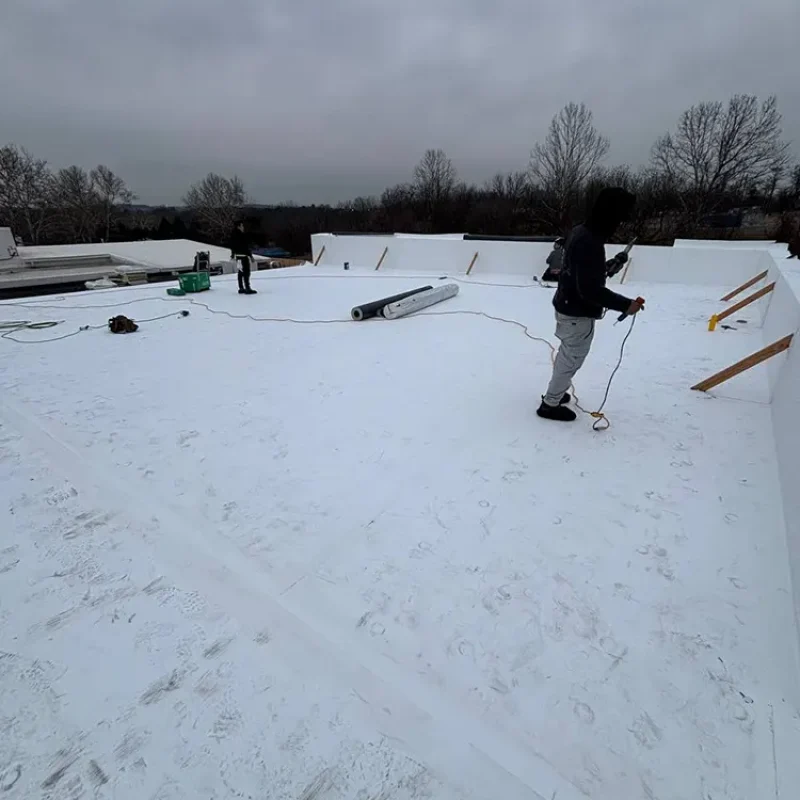
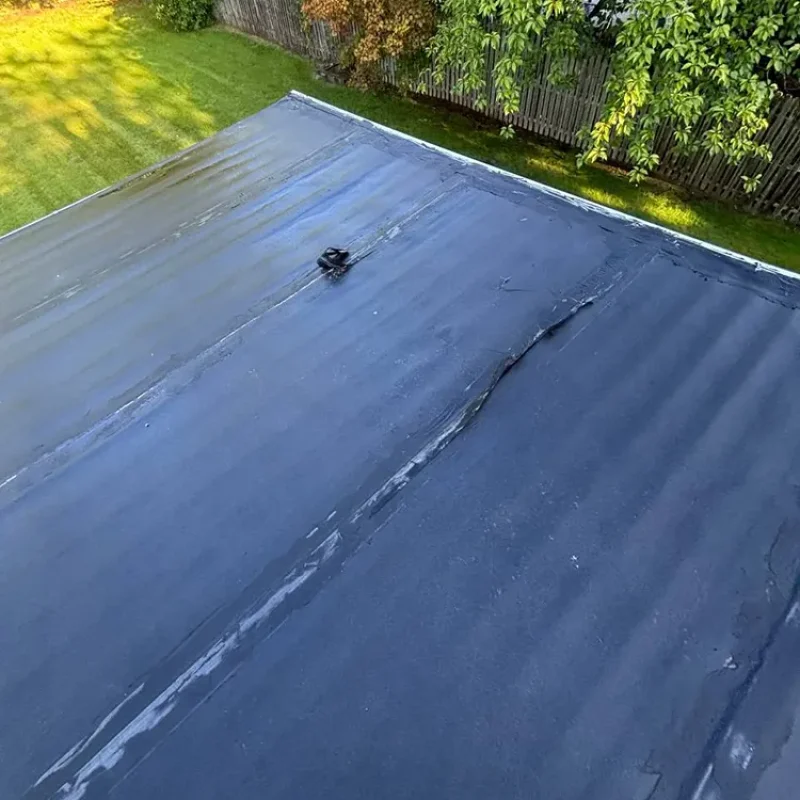
Torch-down roofing is a modified bitumen system commonly used on flat and low-slope roofs. Over time, the membrane can develop worn areas, deteriorated seams, cracks, previous repair patches, or other localized damage while the overall roofing system remains suitable for restoration.
When the existing torch-down roof is still in serviceable condition, silicone coating can be used as part of a restoration system to repair and protect the existing surface without a complete tear-off.
Before applying the coating, we inspect the membrane and address areas that require attention, including:
- damaged or deteriorated seams;
- cracks and vulnerable membrane areas;
- previous repairs that need additional work;
- roof edges, penetrations, and transitions;
- drainage areas and other potential leak points.
Our Silicone Roof Coating Process
Roof Inspection
We inspect the membrane, seams, roof edges, penetrations, drainage areas, previous repairs, and visible signs of deterioration. This helps us determine whether the roof is suitable for restoration and identify areas that require attention.
Debris Removal and Cleaning
Leaves, branches, dirt, and other debris are removed from the roof. The existing surface is then thoroughly cleaned so that contaminants do not interfere with repairs or coating adhesion.
Repairs and Detail Work
Damaged or vulnerable areas are repaired before the coating is applied. Seams, perimeter details, transitions, penetrations, and other critical areas receive additional attention. Reinforcement is added where needed.
Surface Preparation
After cleaning and repairs, the roof is allowed to dry and the membrane is prepared for coating. The exact preparation method depends on the existing roofing material and the requirements of the selected silicone system.
Silicone Coating Application
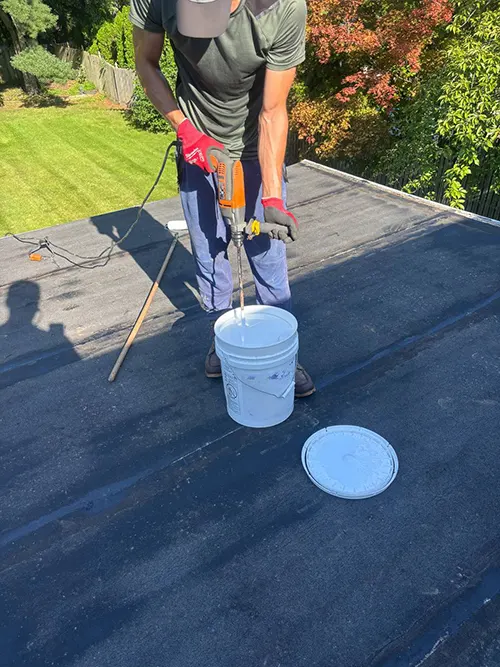
The coating material is properly mixed and applied across the prepared roof to create a continuous protective surface. Edges, repaired sections, and detailed areas are covered as part of the finished coating system.
Final Inspection and Cleanup
Once the application is complete, we inspect the finished roof and check coverage and detailed areas. The work area is then cleaned and project debris is removed.
Proper restoration is not simply about covering an old roof with a new layer. Each stage is important to the performance of the completed system.
Commercial Silicone Roof Coating
EPDM and TPO systems are widely used on commercial flat and low-slope roofs. When the existing membrane is still suitable for restoration, silicone coating can provide property owners with an alternative to a complete tear-off.
This can be particularly useful when the goal is to restore an aging roofing system while reducing demolition and disruption around an occupied property.
A typical commercial silicone restoration may include:
- inspection of the existing roofing system;
- cleaning and surface preparation;
- localized membrane and seam repairs;
- detailing around penetrations and drainage areas;
- silicone coating application;
- final inspection and site cleanup.
Why Choose Yukor Construction as Your Silicone Roof Coating Contractor in NJ?
The quality of a silicone restoration depends heavily on what happens before the coating is applied. A failed seam, damaged section of membrane, open transition, or existing leak should be corrected rather than simply covered.
With our silicone roof restoration service, you receive:
- inspection of the existing roof before work begins;
- preparation based on the actual condition of the membrane;
- necessary repairs before silicone application;
- experience with EPDM and TPO flat roofs;
- a clear recommendation on restoration versus replacement;
- a free project estimate;
- cleanup after the work is completed.
Not sure whether your flat roof can be restored instead of replaced?
Yukor Construction LLC brings 15 years of roofing and exterior construction experience to projects throughout New Jersey. We evaluate the existing roof, explain whether restoration is appropriate, and define the necessary preparation and repair work before coating begins.
FAQ About Silicone Roof Coating
The cost depends on roof size, membrane condition, repairs required, surface preparation, penetrations and the coating system used. We inspect the existing roof before providing an estimate.
Curing time depends on the specific product, temperature, humidity, coating thickness, and weather conditions during application. The manufacturer’s requirements determine when the surface can safely be exposed to weather or foot traffic. We plan the application around suitable conditions and allow the coating to cure for as long as needed before considering the restoration complete.
No. A coating follows the existing shape of the roof and does not correct inadequate slope or redesign the drainage system. If water is collecting because of drainage or structural issues, those conditions should be evaluated separately before restoration.
Periodic inspections help identify damage, debris buildup, drainage issues, or problems around penetrations before they become more serious. It is also sensible to inspect the roof after severe storms or whenever rooftop equipment has been serviced or modified.
In many cases, localized damage to a silicone-coated roof can be repaired without replacing the entire restored system. The affected area must first be cleaned and prepared so that the repair material bonds properly to the existing coating. The appropriate repair method depends on the type and extent of the damage.