

Metal Roofing vs Shingles: What’s the Best Choice for a New Jersey Home?
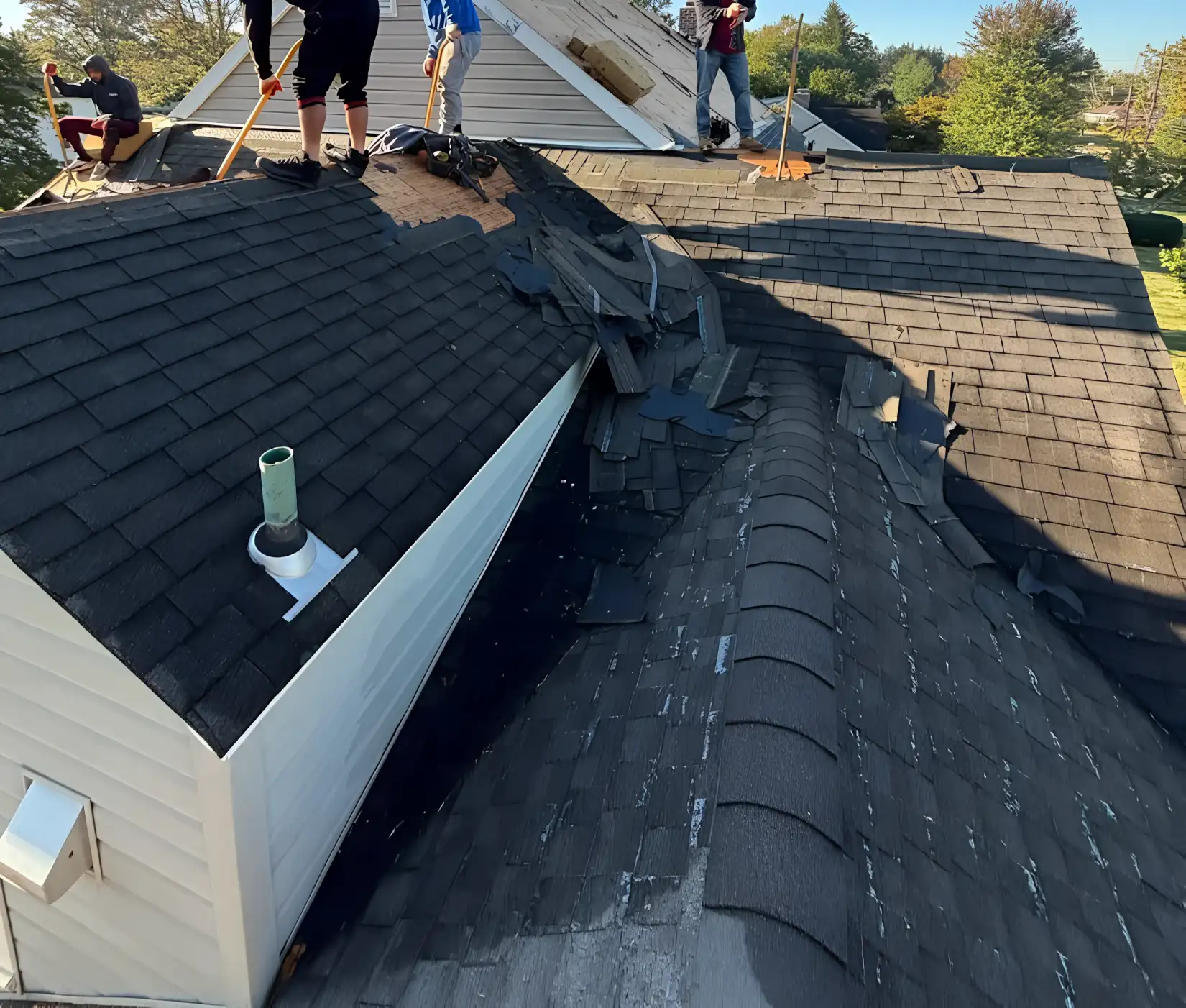
A smart roofing solution determines how long your roof will protect your home without costly repairs. How can you know which option is better?
Specialists at Yukor Construction LLC work with all types of roofing every day. They’ve outlined the key comparison points and explained in which situations each material performs best.
Why Roofing Material Matters
-
Hot, humid summers – overheat materials and accelerate aging.
-
Fall storms and strong winds – can lift weak roofs and tear off asphalt shingles.
-
Winter icing and freeze–thaw cycles – cause cracks, leaks, and ice dams.
-
Salt-heavy air in coastal areas – speeds up corrosion of fasteners and metal elements.
Up to half of a home’s heat loss goes through the roof as well. Materials that poorly reflect heat or retain warmth can increase heating and cooling bills year after year.
In New Jersey, your roof isn’t a design element – it’s climate protection. The wrong material can cost far more than any initial savings.
Asphalt Shingles: A New Jersey Classic
Asphalt shingle roofs handle moderate climate conditions well and work for complex roof shapes. Using high-quality materials can significantly increase the overall value of a home. Below are some of the pros and cons to consider if you are thinking about a tile roof:
Pros:
- Affordability. This is the most budget-friendly way to protect your home from sun and rain.
- Appearance. Dozens of colors and shapes fit almost any neighborhood style.
- Easy installation. Repairs are simple – one damaged shingle can be replaced without touching the rest.
Cons:
- Limited lifespan. In New Jersey’s climate, shingles age faster than expected. Heat, humidity, and snow reduce their lifespan to 15–20 years.
- Weather vulnerability. High winds lift shingles, storms loosen granules, and winter moisture causes cracks.
Cost & Maintenance in NJ:
- Cost. The initial price is low, but frequent minor repairs and early replacement raise the long-term cost.
- Maintenance. Regular inspections after storms, moss removal, and seam control are necessary.
Metal Roofing: A Modern and Durable Solution
Metal roofing eliminates constant repairs and performs more reliably during severe weather conditions. We previously wrote about how to prepare your roof for winter. Below are the advantages and disadvantages of a metal roof that are worth considering before choosing a roofing type:
Advantages
- Longevity (40–70 years). Metal does not fade, crack, or lose its shape after storms.
- Energy efficiency. It reflects solar heat better than most materials. Homes stay cooler in summer, reducing AC costs.
- Snow performance. Snow slides off on its own, reducing load on structural elements and preventing ice dams – a common issue for New Jersey homes.
- Wind & moisture resistance. Metal panels withstand winds over 100 mph and prevent water from penetrating horizontal seams. Coastal humidity and angled rain do not damage the coating, and anti-corrosion layers protect the metal from salt in the air.
Disadvantages
- Higher upfront cost. More expensive to install than asphalt shingles, but often cheaper over the long term since it doesn’t require replacement every 15–20 years.
- Noise. Heavy rain can sound louder on metal roofs. Proper insulation and underlayment significantly reduce noise.
- Professional installation required. Metal roofing demands precise sealing and fastening. Poor installation often leads to problems. That’s why it makes sense to work with a professional roofing contractor serving Trenton, NJ
Cost and Warranties
- Cost. Pricing depends on the type of metal: steel is more affordable, aluminum is more expensive, and copper is premium.
- Warranties. Metal roofing systems typically come with extended warranties – often 30–50 years – covering material durability, wind resistance, corrosion, and fading.
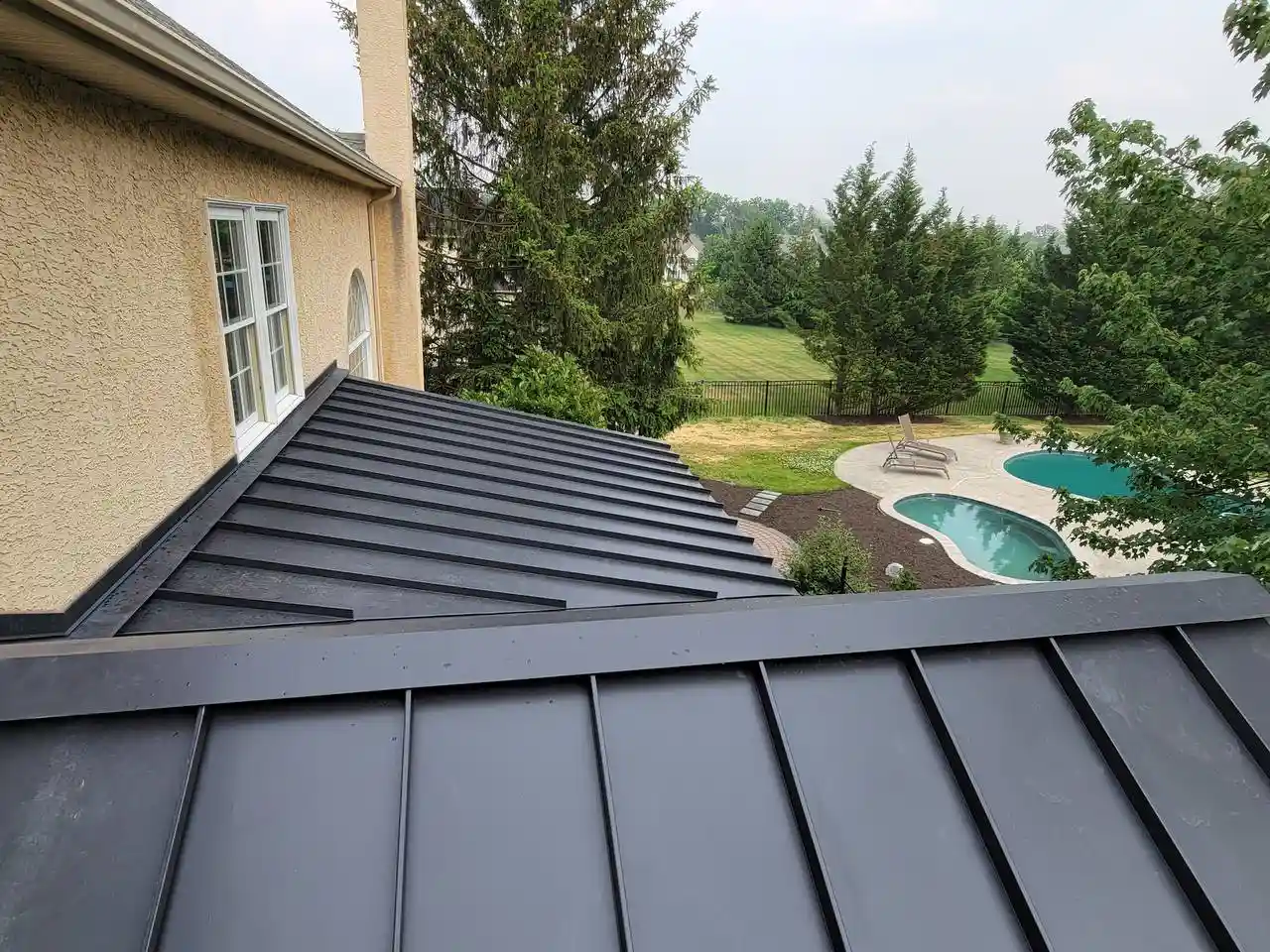
Metal roofing is an ideal choice for homeowners who want to avoid roof problems for decades.
Comparison Table: Metal vs Asphalt
|
Parameter |
Metal roof |
Shingle roof |
|---|---|---|
| Lifespan |
40–70 years (with quality installation) |
Typically 15–20 years in NJ climate for basic shingles |
| Cost (approx. with installation) | From ~$10–16/sq ft. For example, a ~1,700 sq ft home may cost ~$23,000–$46,000 | From ~$3.50–$8.50/sq ft for architectural shingles, or ~$9,000–$15,000 for a ~2,000 sq ft home |
| Maintenance | Minimal: inspections after storms, cleaning, snow/ice removal if needed | More frequent: replacing damaged shingles, checking sealing, removing moss/leaves |
| Energy Efficiency | High: metal reflects sunlight well; less heat gain in summer, better heat retention in winter | Medium: asphalt heats up more and loses efficiency as it ages |
| Noise Level | Rain/hail may be louder without proper underlayment/insulation | Quieter by default: the material absorbs sound better |
| Aesthetics | Modern look; complements the home's style | Classic: wide choice of colors and shapes, familiar to most homeowners |
How to Choose the Right Solution for Your NJ Home
Consider Your Local Microclimate
Expert tip: Review the weather history for your specific ZIP code – wind gust frequency, freezing rain, precipitation type, average humidity. You can check this through NOAA or WeatherSpark – both tools are free and accurate.
-
If you live in an area with strong winds (for example, closer to the coast), metal performs better thanks to solid panels.
-
If your property is shaded by trees and the roof stays damp – asphalt shingles will require more maintenance. This should be included in the budget beforehand.
-
In regions where ice crust forms frequently, choose roofing with minimal water absorption – metal performs better.
Budget and Longevity
-
Asphalt is cheaper upfront, but it requires regular minor repairs – hidden expenses that homeowners often overlook.
-
Metal is more expensive initially, but its lifespan is 2–3 times longer, and unexpected repairs are almost nonexistent.
Architectural Style
- Classic colonial homes in New Jersey often look more natural with architectural asphalt shingles.
- Modern homes and buildings with large roof planes fit metal roofing perfectly: clean lines, seamless panels, and a minimalist look.
- If the house has complex geometry (many transitions, curves, valleys), asphalt shingles may be easier to install – fewer offcuts and a lower risk of incorrect seams.
Solar Panel Compatibility
- Installing solar panels on metal roofs is easier: mounts do not require penetrating the roofing material, and the roof warranty remains intact.
- On asphalt shingles, solar installation is possible, but the roof should not be older than 5–7 years. Otherwise, the panels will need to be removed and reinstalled during roof replacement – doubling the cost.
- Metal roofs handle the weight of panels and snow‑retention systems better because panels are attached to the standing seam or profile without damaging the surface.
Would you like to know how to prepare your roof for winter?
Why a Local New Jersey Company Is Your Best Choice
-
We know the local climate
– we consider New Jersey wind loads, humidity levels, temperature fluctuations, ventilation requirements, and snow pressure on your property. This detailed assessment helps extend your roof’s lifespan and reduce the risk of leaks.
-
We are nearby and responsive
– unlike large nationwide companies, we’re local roofing contractors that arrive quickly, service your roof without delays, and stay in touch after installation. You never wait for specialists for weeks.
-
Guarantees and reliability
– we perform a final inspection, complete the project only after your approval, follow all warranty obligations, and use trusted materials. We take full responsibility for the quality of our work.
-
GAF and Owens Corning certification
– we work with premium materials, install them according to strict manufacturer standards, and offer up to 50‑year warranties on both materials and labor. This gives you confidence in your investment.
We’ll Calculate a Custom Estimate for Your Home
If you are choosing between a metal roof and asphalt shingles, we can prepare two cost scenarios for you:
-
installation cos
-
cost of ownership over 20–30 years
We will explain which option is more cost‑effective for your ZIP code.
Metal Roof Installation Examples
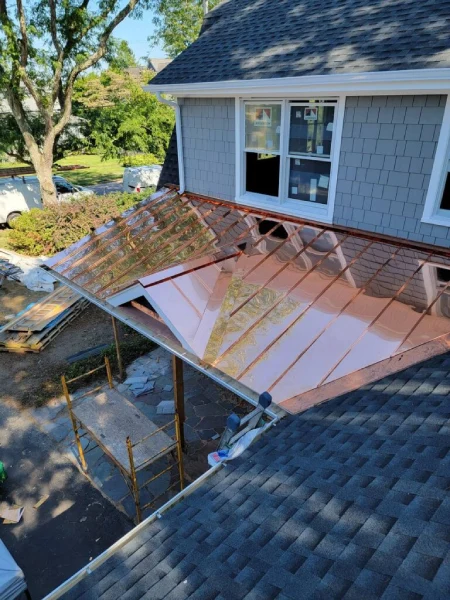
Case: Copper Porch Roof Installation in New Hope, Pennsylvania
In New Hope, Pennsylvania, we installed a roof over a wooden porch. Instead of standard materials, we offered copper panels – durable, corrosion‑resistant, and ideal for open structures exposed to moisture.
The metal roof reliably protects the wooden porch from moisture and precipitation. It will last more than 50 years with minimal maintenance.
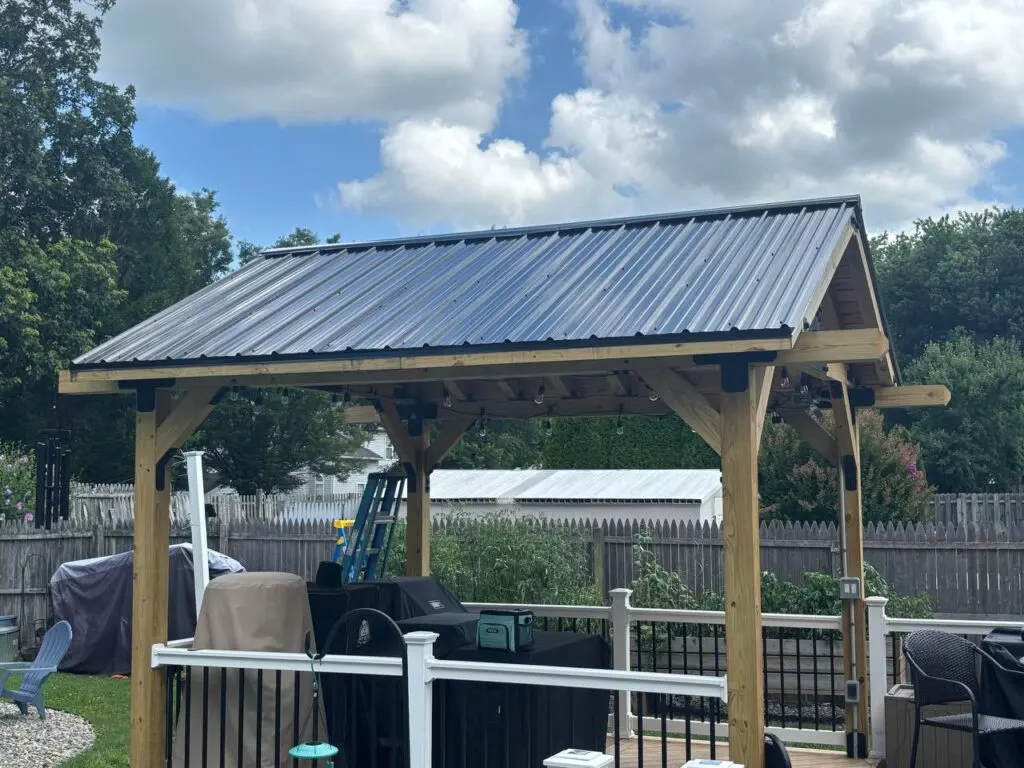
Case: Standing Seam Aluminum Roof Installation in Hamilton, NJ
In Hamilton, we selected an excellent solution for an open gazebo. We recommended a standing seam aluminum roof – it withstands sideways rain better, is resistant to corrosion, and provides reliable waterproofing.
We prepared the base, installed rubber waterproofing, and mounted the panels seam‑to‑seam. As a result, the gazebo received a strong, fully protected roof.
Shingle Roof Installation Examples
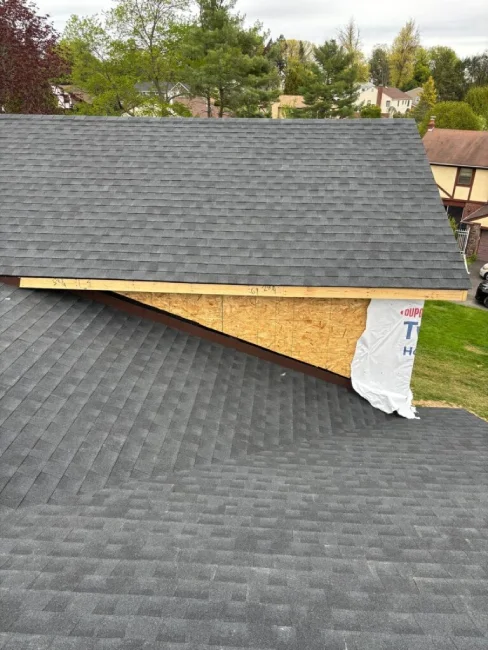
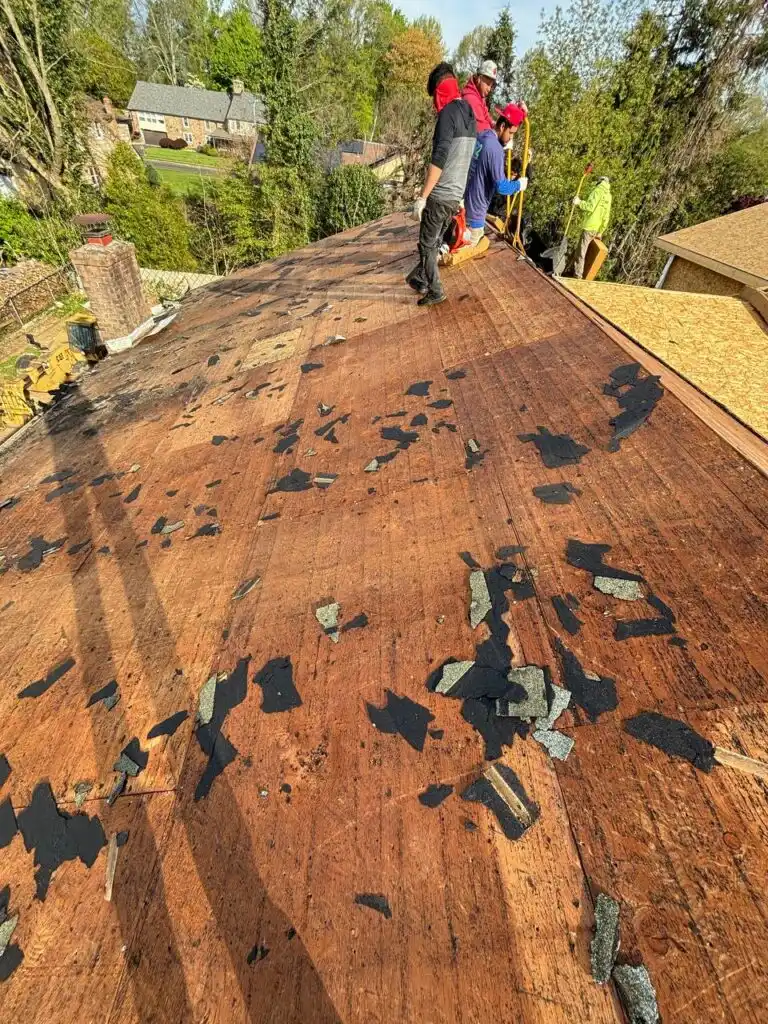
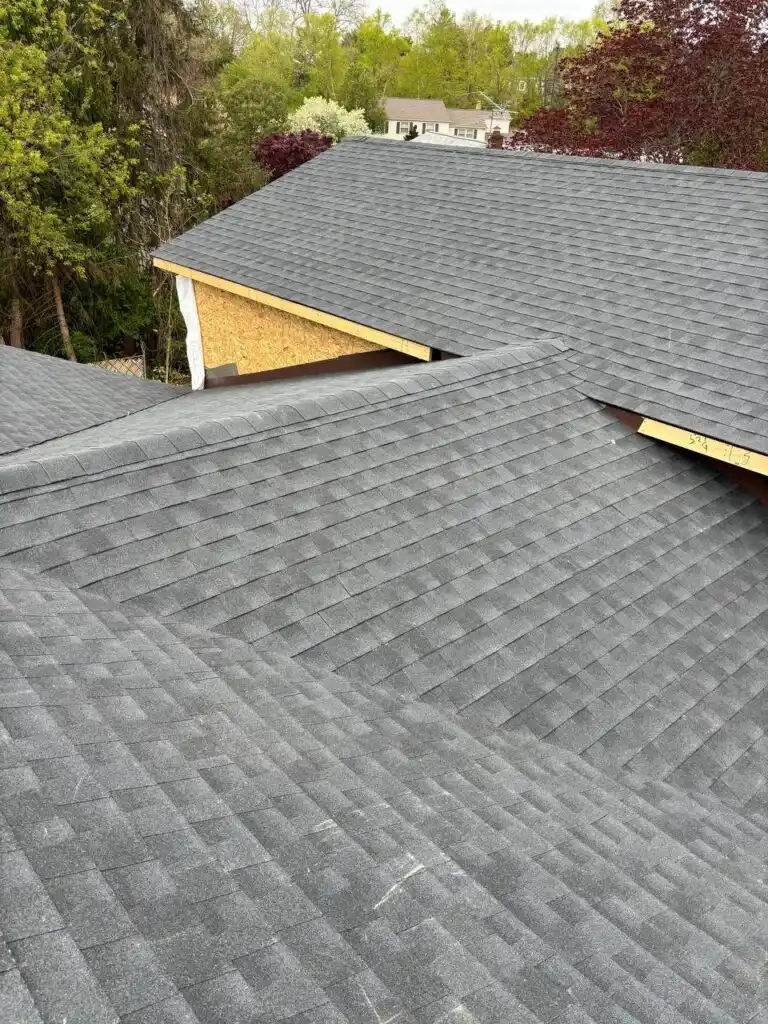
We recommended a complete replacement. Together with the client, we selected modern asphalt shingles that matched the home’s style.
We removed the old layers, inspected the decking, installed new waterproof underlayment, and added a ridge vent to extend the roof’s lifespan. Our client received a neatly installed, long‑lasting roof.
FAQ
Should I replace my asphalt roof with a metal one if I plan to live in the house for another 10–15 years?
Yes, if your current roof is nearing the end of its lifespan. Metal pays for itself through minimal repairs and higher energy efficiency. If your asphalt roof is only 5–7 years old and still in good condition, replacing it “just for metal” isn’t financially practical.
Can asphalt shingles be as energy‑efficient as metal?
No. Asphalt absorbs more heat, loses warmth faster in winter, and reflects far less solar radiation. Metal acts like a shield — reflecting 50–70% of solar heat and stabilizing indoor temperatures.
Which roof performs better in winter: metal or asphalt?
Metal. Snow does not accumulate on metal — it slides off naturally without creating ice dams. Asphalt shingles hold snow longer, absorb more heat from the home, and often contribute to ice buildup along the edges.
How do I know whether my home is architecturally better suited for metal or asphalt?
If your home is modern, recently updated, or has large roof planes, metal enhances the lines and looks more cohesive. For complex roofs (valleys, transitions), asphalt is often easier to install. It’s also a good choice if you prefer a more traditional or minimalist look. If you’re having trouble deciding, reach out to a reliable roofing contractor in Trenton, NJ — we’ll help you make the right choice.
Can roofing be replaced in winter or fall?
Yes, with some considerations. Metal can be installed almost year‑round — it doesn’t require high temperatures. Asphalt shingles need at least 40–50°F (5–10°C) so the adhesive layer can bond properly. Fall is ideal for both materials; in winter, metal installs easily, and asphalt can be installed on suitable dry days.