

Should You Repair Your Roof Before Installing Solar Panels?
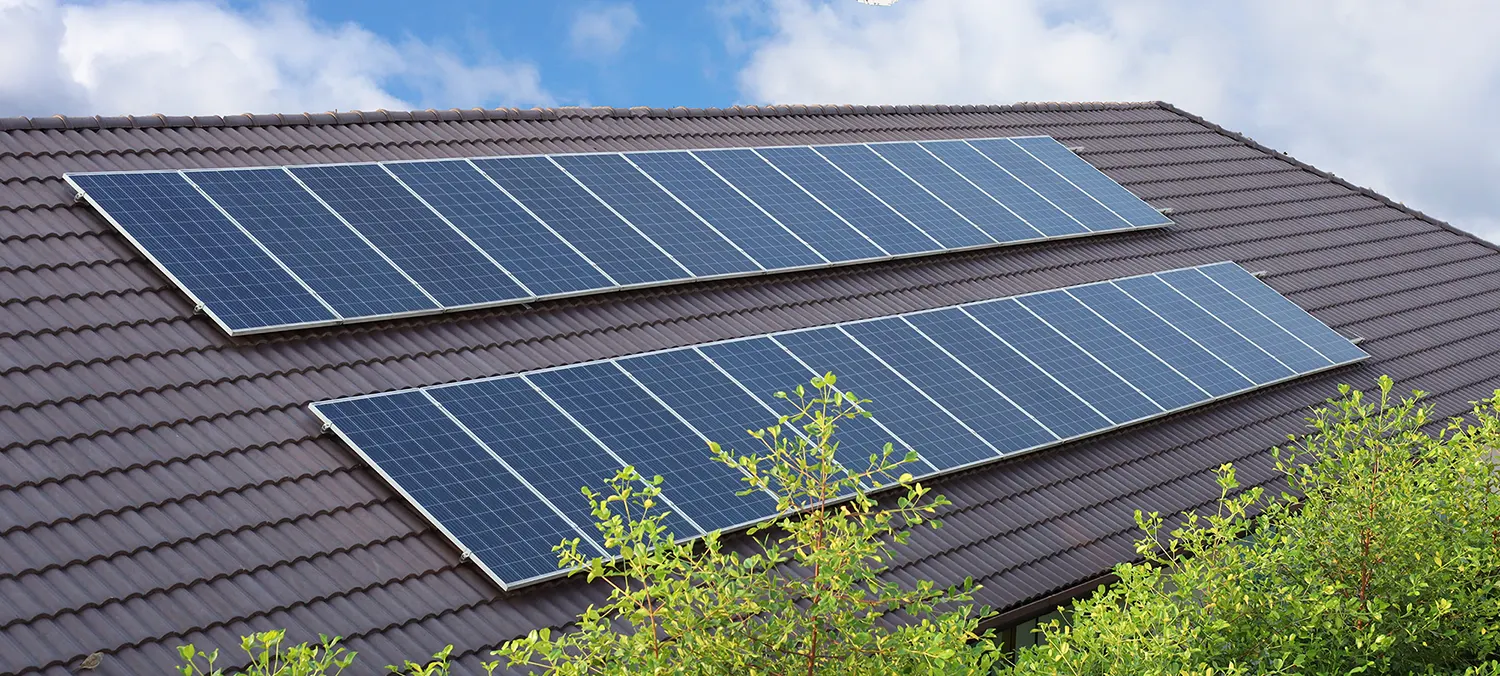
Many homeowners get excited about lowering electric bills and overlook the condition of the roof underneath the future solar array. That mistake can become extremely expensive later.
An older roof is not automatically a problem. Some 15-year-old roofing systems remain structurally solid for years, while newer roofs sometimes hide installation defects, moisture damage, or weak decking caused by poor workmanship.
The real question is not the roof’s age alone. What matters is whether the structure can remain reliable throughout the entire lifespan of the solar panel system.
If roofing problems appear after the panels are mounted, repairs become far more complicated and significantly more expensive.
This guide explains:
-
when roof repairs should happen before solar installation,
-
how to recognize warning signs early,
-
when repairs are enough and when a full roof replacement makes more financial sense,
-
how homeowners in New Jersey can avoid paying twice for the same project.
Why Roof Condition Matters Before Installing Solar Panels
A residential solar system is expected to stay in service for roughly 25–30 years. The roof beneath it should have enough remaining lifespan to support that investment without requiring major structural work during the same period.
Once the mounting hardware and panels are installed, direct access to the roofing surface becomes limited. If leaks later develop under the array, contractors usually must dismantle part or all of the system before roofing work can begin.
For homeowners, this turns a normal repair into a much larger project involving multiple crews, additional labor, and extra solar panel removal and reinstallation costs.
Fact:
Typical roofing repairs often range from $1,500 to $8,000. Similar work performed after solar panel installation can exceed $15,000 because the solar equipment has to be detached and mounted again afterward.
Can Solar Panels Be Installed on an Aging Roof?
From a technical standpoint, yes. In practice, however, older roofs frequently create unexpected expenses several years later.
Based on our roofing experience in New Jersey, homeowners commonly run into problems when panels are mounted on roofs already approaching the end of their usable life.
Most asphalt roofing systems last approximately 20-25 years. Solar projects in New Jersey typically recover installation costs within about 7-9 years. If the roof is already 18 years old when the panels go up, there is a strong chance major roofing work will become necessary long before the solar panel system reaches peak financial return.
At that point, the homeowner may need to:
- remove the solar array,
- repair or replace roofing materials,
- reinstall the entire system.
A practical followed by many roofing and solar contractors:
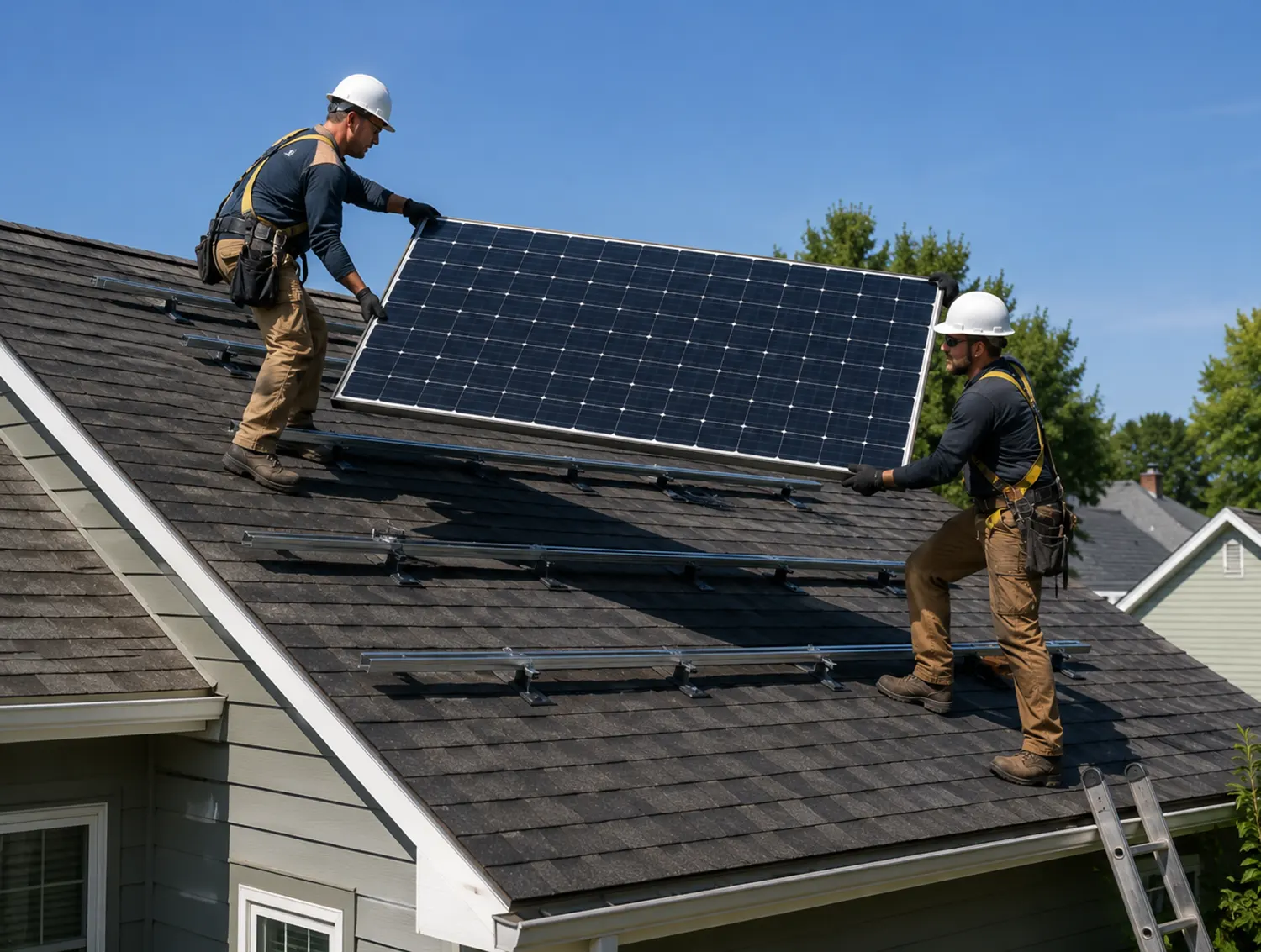
Signs Your Roof Should Be Repaired Before Solar Panel Installation
- the roof is less than 10 years old,
- there are no active leaks or structural concerns,
- shingles and flashing remain in good condition,
- the roof has enough remaining service life to support a 25+ year solar panel investment.
A professional roofing inspection is important because many problems remain hidden from ground level or are invisible during a basic maintenance check.
Roof repairs or replacement should strongly be considered when:
- the roof is 15-20 years old or older,
- shingles are curling, cracked, loose, or missing,
- attic areas show water staining, mold, or persistent moisture smells,
- roof sections appear uneven or sagging,
- wood framing or decking shows rot,
- flashing, fasteners, ridge components, or metal details show advanced corrosion.
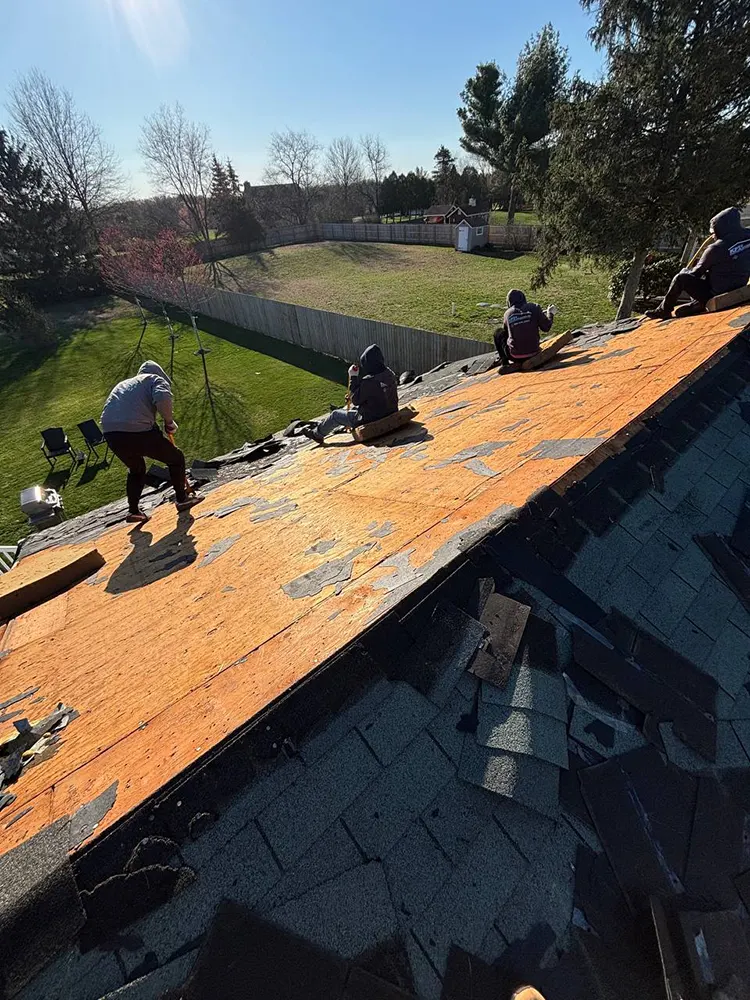
We provide:
- Wood soaks up water – swelling, cracking, and rot
- Splinters and chips appear over time (not great with kids or older family members)
- Needs regular sanding and sealing
- High risk of mold and mildew in our humid climate
- On elevated decks, leaked water often damages joists and the house structure below
What Can Happen If Roofing Problems Are Ignored Before Solar Installation?
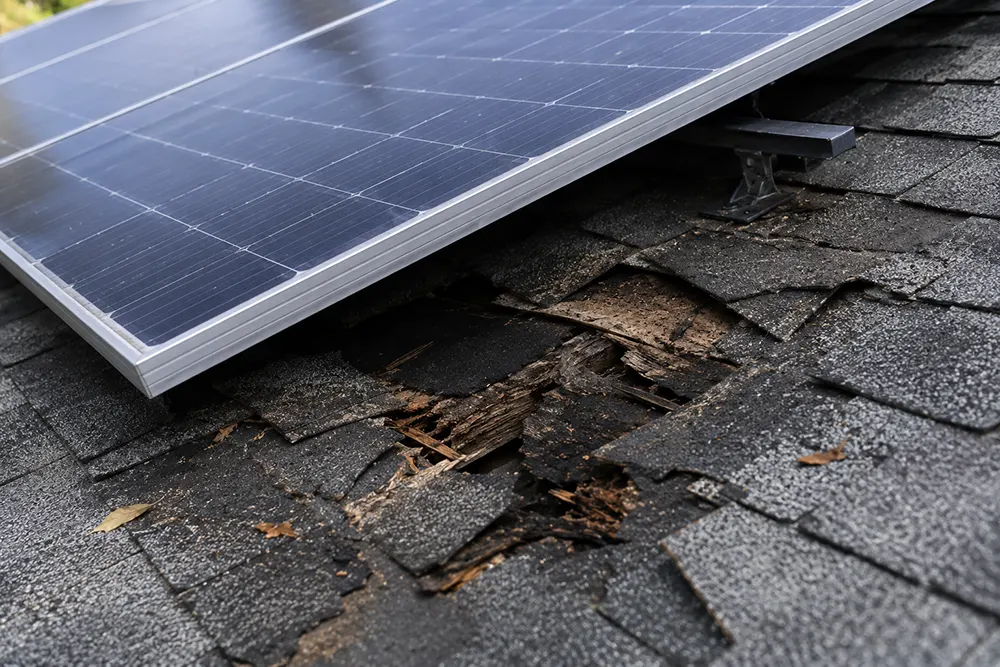
Warranty Limitations
Solar manufacturers warranty the panels themselves - commonly 10-25 years for product coverage and up to 25-30 years for power production performance.
Those warranties do not protect the roofing system.
Solar panel installers usually guarantee only the attachment points associated with their installation work. If the roof already had existing damage or deterioration, warranty coverage may become limited or completely void.
Interior Water Damage
Leaks around mounting penetrations can eventually damage:
- ceilings,
- insulation,
- drywall,
- electrical wiring,
- attic framing.
Repairing interior moisture damage often costs far more than fixing roofing problems before solar panels are installed.
The Cost of Solar Panel Removal
If hidden roof deterioration eventually causes leaks beneath the panels, the array typically has to be taken apart before contractors can access the damaged areas underneath.
Depending on system size and complexity, removal commonly takes 1–3 days and may cost approximately $4,500–$9,500.
Reinstallation Expenses
- electrical connections restored,
- panel positioning recalibrated,
- all penetrations resealed and tested.
The Financial Reality
- dismantling the system,
- repairing the roof,
- reinstalling the array.
Cost Comparison — Roofing Work Before vs. After Solar Installation
| Scenario | What the Project Includes | Typical Cost Range* |
|---|---|---|
| Roofing repairs prior to solar panel installation | Standard repair work performed while roofing areas remain fully accessible | $1,500-$8,000 |
| Roof replacement prior to solar panel installation | Full tear-off and installation of a new roofing system before solar mounting begins |
$8,000-$20,000 |
| Roofing work after solar panels are already installed | Solar panel removal, roofing work, system reinstallation, and coordination between multiple contractors | $15,000-$35,000+ |
Potential difference: homeowners may spend $20,000 or more by postponing roofing work until after solar installation.
The labor involved in removing and reinstalling solar equipment alone often costs $2,000–$5,000.
Additional expenses may include:
- temporary equipment storage,
- scheduling delays between roofing and solar contractors,
- lost energy production during solar system downtime.
Roof Repair or Full Replacement – Which Option Makes More Sense?
Situations Where Repairs Are Usually Enough
- damage affects only a limited section of the roof,
- the roofing system is under 15 years old,
- the structure itself remains stable,
- the issue is isolated to specific shingles, flashing sections, or a localized leak,
- there is no decking failure or structural rot.
Situations Where Full Replacement Is Smarter
- the roof is more than 20 years old,
- damage extends across 30–40% of the surface,
- leaks repeatedly return,
- rafters or decking show moisture deterioration,
- roof planes are visibly sagging or distorted.
In many cases, replacing the roof before installing solar panels lowers the risk of unexpected future expenses and simplifies insurance or permit approvals.
Most homeowners cannot accurately assess these conditions without a professional inspection. That is why roofing evaluations should happen before signing a solar installation contract.
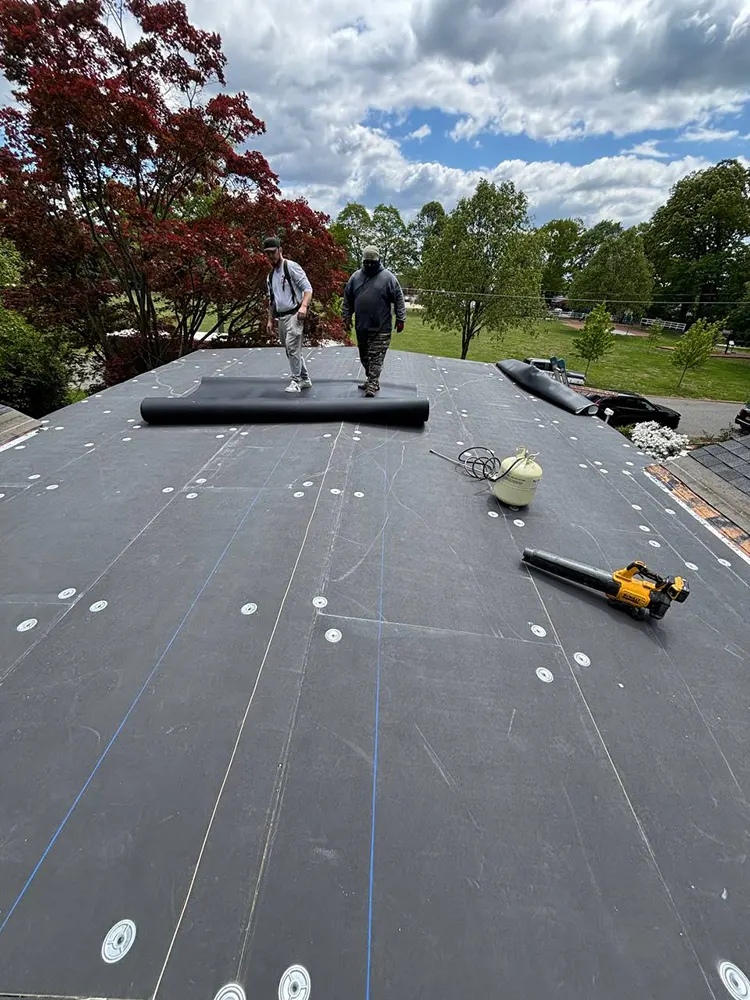
Will Solar Companies Warn You About Roofing Problems?
Most solar companies perform a preliminary assessment before installation. However, their main focus is usually:
- roof orientation,
- pitch angle,
- sunlight exposure,
- shading conditions,
- system layout efficiency.
Many providers rely heavily on satellite imagery or remote evaluation tools during early project planning. Those methods may overlook hidden roofing problems such as deteriorated decking, moisture intrusion, or failing flashing systems.
Solar contractors generally do not assume responsibility for the condition of the entire roof. Their warranty coverage is usually limited to the mounting penetrations created during installation.
Fact:
If the roof was already compromised beforehand, warranty disputes can become difficult for the homeowner.
Roof Inspections Before Solar Installation in New Jersey
In our experience working throughout New Jersey, many homeowners planning solar installation discover hidden roofing problems during inspection that were never visible from the outside.
Common findings include:
- moisture-damaged decking,
- weakened structural sections,
- shingle roofs that have already reached the end of their functional lifespan.
The eave area deserves particular attention.
In Ewing, winter ice buildup regularly affects roof edges and gutter lines. Over time, ice accumulation can weaken the eaves and make those sections more vulnerable to water intrusion.
Unfortunately, solar mounting brackets are often attached directly to these locations.
If the roof edge is already compromised, leaks may appear shortly after the panel system is installed.
We offer:
- free roof condition assessments with no hidden charges,
- same-day project estimates,
- local roofing expertise throughout Ewing, Trenton, Princeton, and all of Mercer County.
FAQ
About Roofing Before Solar Installation
Most standard roofing repairs require approximately 1-3 business days. Full roof replacement projects usually take 3-5 days depending on weather and project size.
Once the roofing work is completed, solar installers can begin immediately without additional waiting periods.
Not always.
Since 2018, replacement of roofing coverings on one- and two-family homes in New Jersey has generally been classified by New Jersey Department of Community Affairs (NJ DCA) as ordinary maintenance work.
However, replacing structural components such as rafters or roof decking may still require permits.
We stay updated on municipal requirements throughout Mercer County and verify local rules for each property individually.
Yes.
If an insurance company determines the panels were installed on a roof already showing serious deterioration, that condition could potentially affect claim approval depending on policy terms.
A written inspection report from a roofing contractor helps document that the roof was considered serviceable before installation.
Some companies market combined packages, but separating the work is often safer for the homeowner.
Roofing and solar installation involve different trades, different responsibilities, and different warranty obligations.
If leaks or structural movement appear later, determining liability becomes much more complicated when multiple services overlap.
A safer sequence is:
- complete all roofing work first;
- inspect and approve the finished roof;
- proceed with solar installation afterward.
This approach creates clear responsibility for each contractor and reduces future disputes.