
Blog

Why Waterproof Vinyl Decking is the Best Choice for Oceanfront Homes
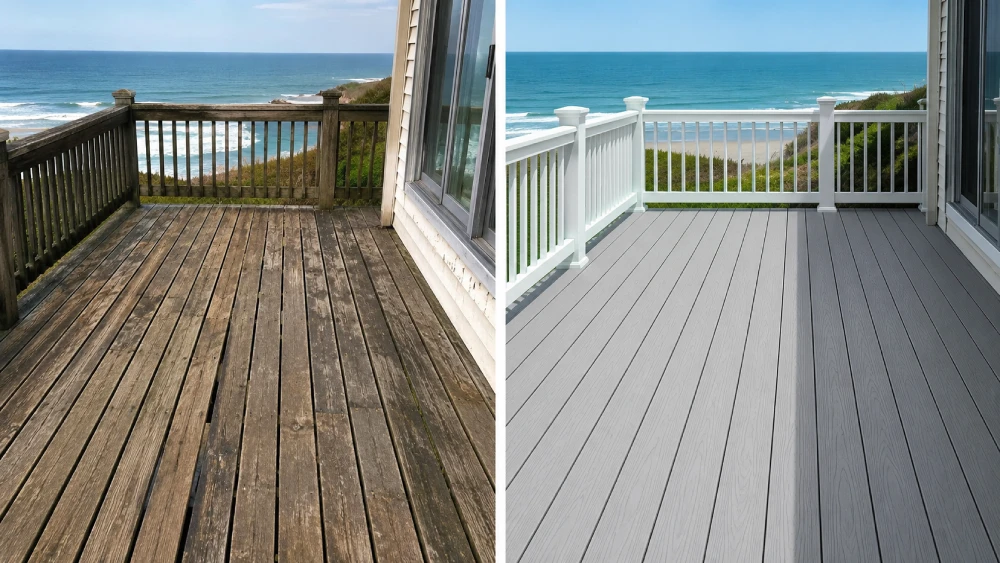
wood deck on a balcony

Living on the coast is the ultimate dream – a life defined by sweeping vistas, crisp sea breezes, and the rhythmic lull of the tide. Yet, for your home’s outdoor living spaces, this dream can quickly turn into a relentless battle against the elements. Salty air, gale-force winds, intense solar radiation, and driving rains put materials through a grueling daily test of durability.

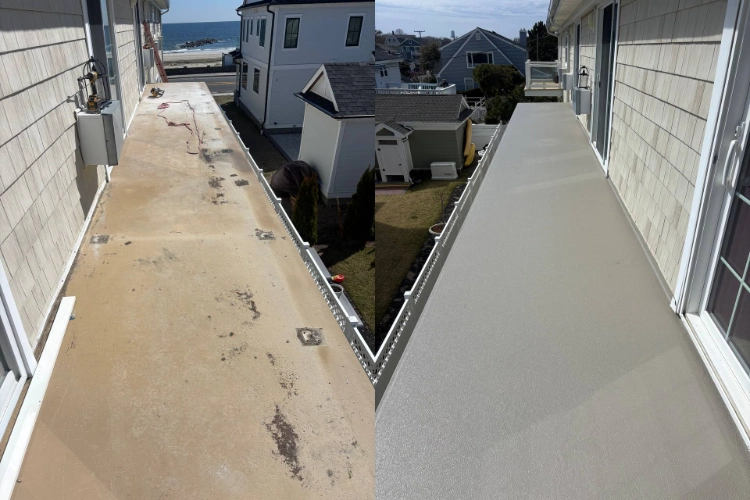
Under these punishing conditions, traditional wood decks can quickly deteriorate, rot, and warp, while composite materials may trap hidden moisture within the subframe. The definitive answer to these coastal challenges is modern waterproof vinyl decking. This innovative material serves two critical functions: a sleek, high-end finished surface and a fully watertight barrier that protects the entire deck structure.

The Coastal Elements vs. Your Deck: A Constant Battle Against the Environment

The coastal fringe subjects building materials to powerful environmental forces rarely encountered further inland. When evaluating options for beach house decking, homeowners face a complex range of environmental challenges:
  • Persistent Moisture & Heavy Rainfall – Constant airborne humidity slows down drying times, encouraging mold growth, deep structural rot in timber framing, and the accelerated deterioration of structural fasteners.

  • Extreme UV Radiation – Direct sunlight, amplified by glare reflecting off the ocean, fades the pigments in natural wood, dries out its fibers, and can lead to significant splitting and cracking over time.

  • Corrosive Salt Fog – Microscopic marine droplets carry high concentrations of salt that accelerate oxidation. Standard metal hardware rusts more quickly, and unprotected wood fibers become increasingly vulnerable to long-term deterioration.

As a result, oceanfront property owners often find themselves trapped in an expensive cycle of scraping, staining, and repairs just to keep their outdoor spaces safe, functional, and presentable.

Vinyl Decking vs. Traditional Wood: Head-to-Head Comparison

Vinyl Decking vs. Traditional Wood
To see exactly why coastal homeowners are moving away from classic lumber, let’s look at how these two materials stack up side-by-side in a harsh marine environment:

Feature

Traditional Wood Decking

Waterproof Vinyl Decking

Moisture & Waterproofing Absorbs water, leading to warping, structural rot, and deep-seated mold. 100% impervious to water; seals and protects the underlying framing.
Annual Maintenance Requires grueling, recurring cycles of sanding, staining, sealing, or painting. Zero hassle; requires nothing more than an occasional rinse with a garden hose.
Salt & UV Resistance Fades rapidly under intense sun; fibers break down from salt crystallization. Engineered with UV inhibitors; chemically inert to marine salt spray.
Surface Safety Splinters over time; becomes slick and treacherous when wet. Textured, slip-resistant finish; completely splinter-free for bare feet.
Under-Deck Utility Water drips straight through gaps, rendering the space underneath useless. Creates a bone-dry roof overhead, unlocking functional living space below.
Coastal Lifespan Highly limited; typically requires major repairs or replacement within 5–10 years. Exceptionally durable; easily lasts 15 to 25 years without losing its edge.

What is Waterproof Vinyl Decking and How Does It Work?

Modern waterproof vinyl decking is far removed from cheap residential linoleum; it is a heavy-duty, commercial-grade exterior membrane engineered for long-term durability.

The product consists of a thick, ultra-durable sheet vinyl (typically 60 mils thick) that features an internal reinforcement layer of fiberglass or polyester mesh to ensure exceptional dimensional stability.

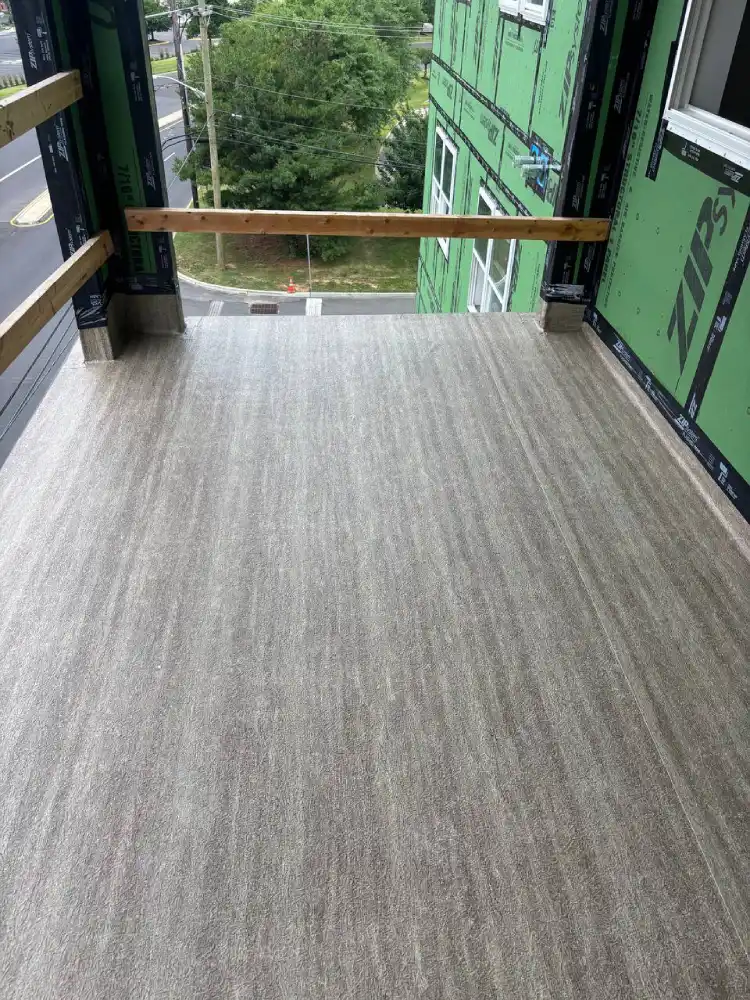
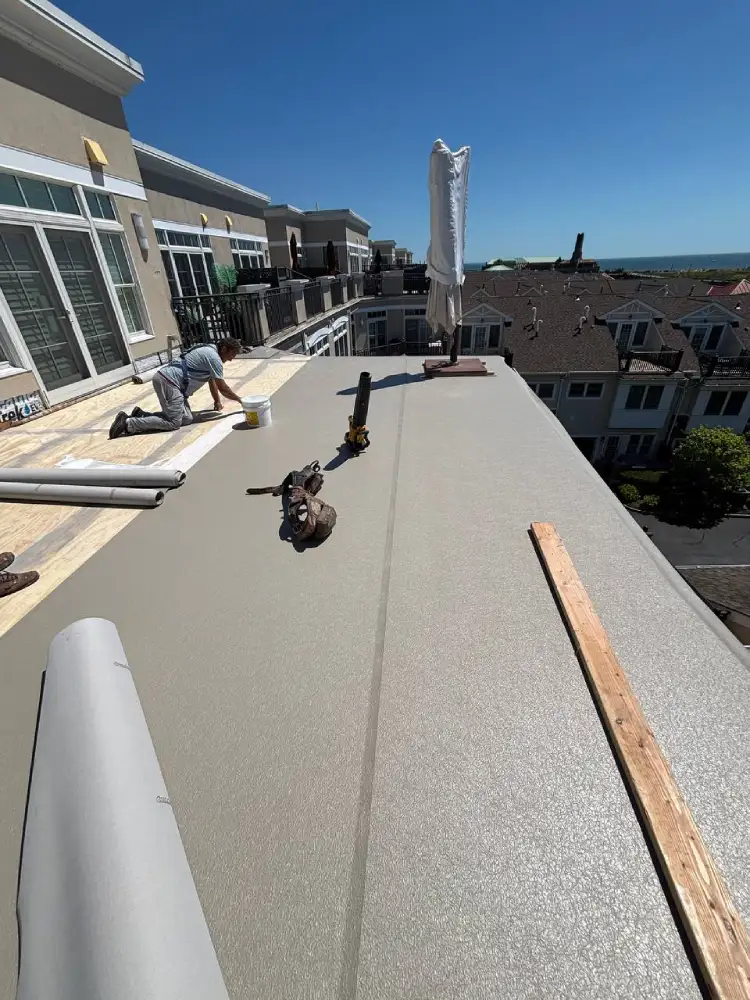
During installation, these heavy rolls are laid over a meticulously prepared substrate and permanently fused together using specialized hot-air welding equipment. The welded seams form a single, continuous membrane, effectively eliminating potential leak points.

This seamless integration allows the product to perform on two fronts: it provides a stylish, traffic-resistant walking surface while creating a continuous, high-performance waterproofing barrier that keeps moisture away from the deck structure and the home below.

Top Benefits of Vinyl Decking for Oceanfront Properties

Upgrading to specialized waterproof vinyl decking yields an array of high-value, long-term dividends for coastal homeowners:
star
Flawless Watertight Protection

The membrane’s barrier properties prevent water from reaching the wooden subfloor and joists. This helps stop hidden rot before it can develop, preserving structural integrity – a critical safety factor for elevated second-story balconies and cantilevered decks.

star
Built to Resist Salt and Sun

Premium vinyl decking is formulated with advanced stabilizers that help prevent fading from UV exposure and reduce material degradation caused by harsh coastal conditions.

star
Low Maintenance, More Beach Time

Say goodbye to the endless routine of power washing, sanding, and staining. To restore your deck’s appearance, simply rinse away salt residue and dust with a hose and a mild, eco-friendly cleaner at the start of the season.

star
Barefoot-Friendly Safety

The slip-resistant texture provides reliable traction even during heavy rain or storm runoff. In addition, lighter vinyl colors stay noticeably cooler underfoot than dense, dark composite boards. Because the surface never splinters, it is also a safe choice for children and pets.

Enhancing the Living Space Below

One of the most valuable architectural perks of a seamless PVC deck membrane is its ability to double your usable square footage. Because the vinyl surface catches and sheds 100% of the water at the top level, the area directly beneath the deck stays completely dry in any weather. This unlocks incredible design flexibility for your property:
  • Create a Fully Covered Patio – Build a shaded first-level lounge or outdoor dining area completely protected from dripping water and falling debris from above.

  • Add Dry, Functional Storage – Set up a secure, weatherproof zone for a summer kitchen, beach gear, lounge chairs, or lawn maintenance equipment.

  • Total Overhead Protection – If your balcony or terrace sits directly above a living room, sunroom, or entryway, professional vinyl waterproofing completely eliminates the risk of water damage to expensive interior drywall and ceilings.

Why Professional Installation Matters for Deck Waterproofing

The performance and multi-decade lifespan of a vinyl deck hinge entirely on flawless installation chemistry, making it a poor candidate for a DIY weekend project. The material only delivers on its promises when handled by a certified crew:

  • Precision Substrate Prep – The vinyl requires a completely flat, smooth surface built from exterior-grade plywood (plywood subfloor), laid out with a precise slope to guarantee natural water drainage.

  • The Art of Thermal Welding – Achieving a permanent, water-tight seam requires exact control over temperature and speed. The slightest variance can lead to an incomplete bond that splits later, or an immediate burn-through of the material.

  • Complex Detailing and Flashing – Wrapping columns, detailing around posts, sealing perimeter drains, and integrating heavy-duty flashing along the house walls demand seasoned flashing skills and specialized roofing expertise.

By trusting your project to the professional team at Home Improvement Ewing, you secure an absolute waterproofing warranty designed to withstand New Jersey’s volatile coastal climate.

Professional Installation

FAQ

Can vinyl decking handle heavy patio furniture, grills, or high-energy pets?
Yes, professional-grade 60-mil vinyl membranes are engineered to shrug off heavy foot traffic, sharp pet claws, and structural point loads. Normal pet activity will not puncture or tear the durable material. However, as a best practice, it is smart to use rubber or plastic protective caps under the legs of heavy wrought-iron furniture to avoid direct friction. If you use a grill, always place a fire-resistant grill mat underneath to protect the PVC surface from stray embers or hot grease splatters.
How does vinyl decking hold up against freezing winters, ice, and heavy snow on the New Jersey coast?
The material is formulated to maintain its elasticity and structural resilience across extreme temperature swings – from bitter winter freezes to scorching summer heat waves. Because vinyl is non-porous, there are no micro-cracks for water to seep into and expand, meaning it will never crack or delaminate in winter. When clearing snow, use a plastic or wooden shovel; avoid metal shovels or sharp ice scrapers that could cut the membrane. For stubborn ice, standard rock salt or calcium chloride-based ice melts are perfectly safe to use and will not chemically harm the vinyl.
What is the real-world lifespan of a waterproof vinyl deck, and can it be repaired locally if damaged?
When properly installed by a certified professional and given basic care, a premium vinyl deck boasts a lifespan of 15 to 25 years. One of its greatest advantages is its excellent repairability. If the deck suffers an accidental puncture or burn, there is no need to tear up the entire floor. A technician can simply cut out the damaged section and hot-air weld a matching vinyl patch right into place. The repair remains 100% watertight, though the new patch might look slightly brighter initially compared to the weathered area.
Does a vinyl deck require a ventilation gap underneath like traditional wood or composite boards do?
The mechanics of sheet vinyl are fundamentally different: the membrane is fully adhered directly to a solid plywood subfloor, so there is no ventilation gap between the vinyl and the wood. However, maintaining proper ventilation inside the joist cavities beneath that plywood subfloor is absolutely critical. Without cross-ventilation underneath the deck structure, rising ground moisture can get trapped inside the enclosed framing, leading to wood rot over time. A professional builder always ensures the underside of the deck frame remains vented or open to air circulation.
Is vinyl decking environmentally safe when baked by the hot sun right outside a living room?
Yes. Modern vinyl decking engineered for the North American market undergoes rigorous environmental testing and complies with strict VOC (Volatile Organic Compound) emission standards. Leading manufacturers have eliminated heavy-metal stabilizers and harmful phthalates from their formulations. Even during peak summer heat waves, high-quality deck membranes do not off-gas toxic chemicals or emit harsh plastic odors, making them entirely safe for your family, guests, and pets throughout their entire lifecycle