
Types of Metal Roofing for Homes: Why Standing Seam Stands Out
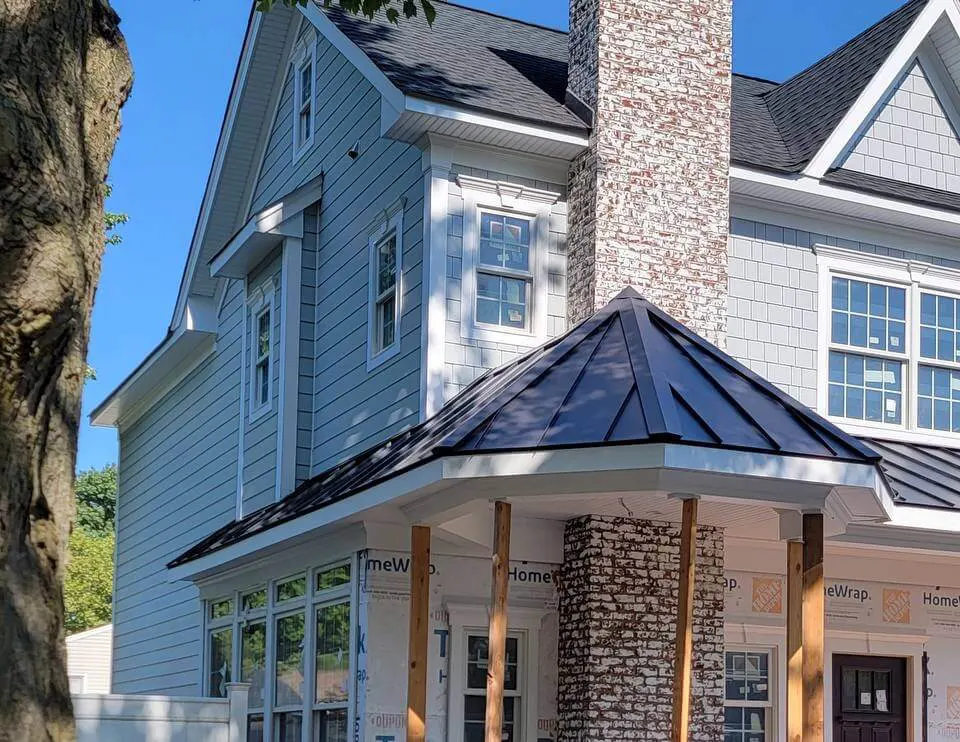
The main metal roofing systems used on homes are standing seam panels, exposed-fastener panels, metal shingles and shakes, slate-look roofing, and metal tile. Each comes with its own attachment methods, styling, and maintenance needs.
At Yukor Construction LLC, we recommend standing seam when durability, appearance, and protection from rain and snow top your list. Its raised seams and hidden attachments offer real advantages for long-term ownership, as long as the system suits your roof and budget.
Standing Seam: Concealed Fasteners and Clean Lines
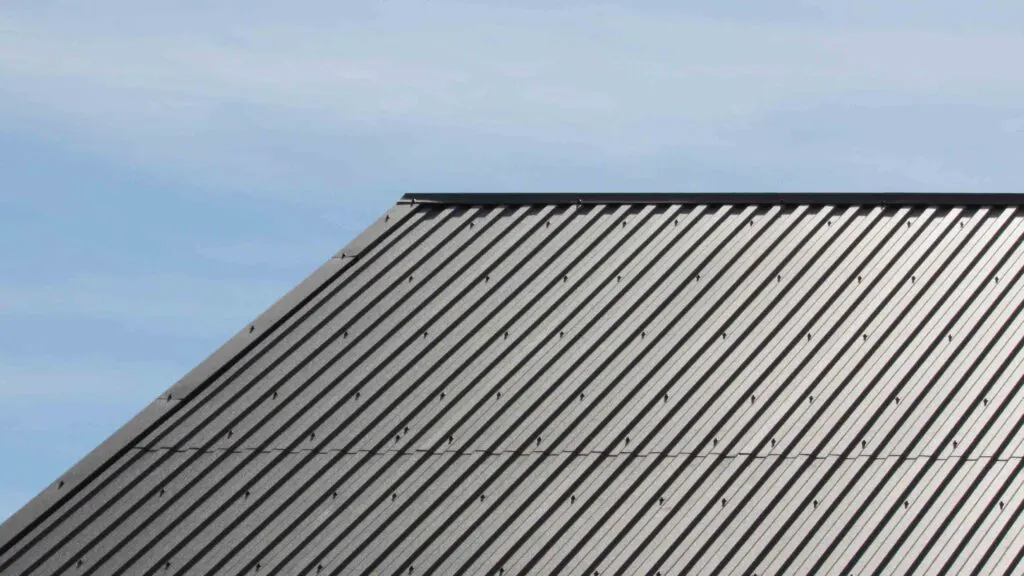
Standing seam roofs have long panels with raised seams running down the slope, usually from the ridge to the eave. Neighboring panels connect at their edges, raised above the broad, flatter areas where water drains.
How Hidden Attachments Help
In clip-fastened systems, hidden metal clips secure the panels to the roof structure, and the next panel or seam covers the attachment. Some profiles attach through a panel edge instead, which the next panel then covers.
The main panel surface doesn’t need rows of visible screws and sealing washers. The attachments stay beneath the finished covering, out of direct reach of rain and snow.
Metal expands and contracts as its temperature changes. Sliding clips or other manufacturer-approved attachments allow for that movement while holding the panels in place. But just hiding screws isn’t enough. Locking down panels where they need to move can put stress on the roof.
Snap-Lock vs. Mechanically Seamed Panels
Snap-lock panels have edges that click together without mechanically folding the entire seam on site. They can simplify installation where the profile is approved for the roof’s slope and conditions.
Mechanically seamed panels have edges folded closed with specialized tools. A double-lock seam receives an additional fold, creating a more tightly interlocked joint. Certain mechanically seamed profiles are designed for lower slopes and demanding weather conditions.
The correct choice depends on the specific system, roof geometry, slope, and manufacturer requirements. A snap-lock profile approved for one roof is not automatically suitable for a shallow porch roof. Likewise, double-lock construction does not make a roof suitable for standing water.
Why We Recommend Standing Seam for Many New Jersey Homes
- Fewer exposed fasteners to maintain. Hidden attachments reduce the number of open screw holes and sealing washers that need attention across the roof. Seams, flashing, and roof openings still need periodic checks.
- A roof designed for temperature changes. Properly selected attachments let panels expand and contract, reducing stress on connections as the metal heats up and cools down.
- Protection where water drains. Raised seams keep panel joints above the main runoff surface. Combined with well-built flashing around walls and openings, they help keep rain and snowmelt outside.
- A cleaner roofline. Continuous panel lines and concealed hardware give the home a neat architectural finish. Panel width, color, and seam style can be chosen to complement the exterior.
- A system worth considering for long-term ownership. Suitable metal, a durable finish, and sound installation can support decades of use. Fewer exposed fastening seals can also make ongoing care less demanding than with a comparable exposed-fastener roof.
Limitations to Consider
- Higher upfront cost: Fabrication, detailing, and skilled installation generally cost more than basic exposed-fastener systems.
- Specialized workmanship: Clip placement, movement allowances, seam closure, and flashing require experience with the selected profile.
- Oil canning: Flat panel areas may show visible waviness, especially in certain light. Panel design and installation can reduce its appearance, but complete prevention cannot be promised.
- More involved panel repairs: Depending on the seam design, replacing a damaged panel may require opening neighboring connections. Ask how the proposed system can be serviced.
- Sliding snow: Smooth panels can release snow and ice above entrances, walkways, and driveways. Where needed, snow retention must be designed for the roof and expected loads.
Exposed-Fastener Panels: A Lower-Cost Option
- Generally lower initial cost than standing seam.
- Straightforward installation on suitable, uncomplicated roof shapes.
- A practical appearance for rustic homes, garages, and outbuildings.
- Screws and washers remain exposed to weather.
- Fastener movement, deteriorated washers, and panel laps need inspection.
- Visible hardware may be less appealing on prominent residential rooflines.
Metal Shingles, Shakes, and Slate-Look Roofing
- Familiar textures for Colonial, Craftsman, and other traditional homes.
- A lighter alternative to natural slate in many product comparisons.
- Concealed attachment options without long vertical panel lines.
- Some products have minimum slope limits that rule out shallow roof sections.
- Interlocking pieces need product-specific repair methods; replacing damage is not automatically the same as replacing an asphalt shingle.
- Replacement panels must match the original profile. Before choosing a product, ask how compatible pieces are supplied and how repairs are priced.
Metal Tile and Stone-Coated Steel
- A distinctive look for Mediterranean, Spanish-inspired, or other tile-style homes.
- Lower weight than many clay or concrete tile roofs.
- A choice of smoother finishes or textured stone-coated surfaces.
- Some tile profiles require battens, adding materials and installation steps compared with direct-to-deck products.
- Raised shapes limit where service workers can safely step without risking panel damage; the manufacturer’s walking instructions matter.
- Repairs to stone-coated finishes require suitable touch-up materials. Ordinary roofing sealant is not a substitute for restoring a damaged surface.
Residential Metal Roof Systems Compared
| System | Main advantages | Main drawbacks | Relative upfront cost | Best fit |
|---|---|---|---|---|
| Standing seam | Concealed attachments; clean lines; accommodates movement when correctly designed | Skilled installation; oil canning; potentially involved panel replacement |
Higher |
Long-term owners prioritizing weather protection and appearance |
| Exposed-fastener panels | Economical; straightforward on simple roofs | Exposed screws and washers need attention; visible hardwareRoofing material, weather, and damage |
Lower |
Budget-conscious projects, rustic homes, garages |
| Metal shingles, shakes, and slate-look | Traditional appearance; many concealed-fastener options | Product-specific slope limits, repairs, and replacement pieces | Midrange to higher | Homes where a familiar roof texture matters |
| Metal tile, including stone-coated steel | Tile styling; lighter than many traditional tiles | Battens for some profiles; restricted foot placement; finish repairs | Midrange to higher | Homes where owners prefer a tile-style roof |
These are broad comparisons within metal roofing, not quotes. Metal choice, roof complexity, tear-off, deck repairs, and installation requirements can change the order.
Choosing Steel, Aluminum, Copper, or Zinc
Once you’ve chosen a roofing style, the next step is selecting the metal. Standing seam panels, for example, can be made from coated steel, aluminum, copper, or zinc.
Coated steel often offers an economical starting point. Galvanized steel uses a zinc coating; Galvalume-type products use an aluminum-zinc coating. Protective coatings help resist corrosion, but damage, cut edges, and exposure conditions still matter.
Aluminum is lightweight and often favored near salt air because it does not develop the red rust associated with steel. It can still corrode under certain conditions, so the alloy, finish, compatible components, and coastal warranty restrictions need review. It generally costs more than basic coated steel.
Our aluminum standing seam installation in Montgomery shows this combination on a newly built home. That project included base preparation, aluminum panel installation, joint checks, and a final inspection.
Copper is a premium choice valued for its changing patina and architectural character. It requires compatible adjoining materials and skilled detailing. For homeowners caring for an existing copper roof, our copper roof repair and restoration services address that different need.
Zinc is another premium architectural metal that develops a protective patina. Its performance depends on a suitable roof assembly, including underside moisture control and compatible materials. It should be selected with specialist guidance.
For a coastal property, compare the proposed roof system and manufacturer’s exposure requirements before choosing by color or price alone.
How We Approach Standing Seam Installation
-
Inspect and measure
We assess the existing roof and discuss the homeowner’s goals, appearance preferences, and budget. -
Choose the system and details
We evaluate the deck, roof pitch, ventilation, and connections to walls or other roof sections. -
Remove old roofing where needed
We determine what needs to come off based on its condition and the planned work. -
Prepare the base
We inspect and prepare the deck or other specified support so the panels have a sound, even foundation. -
Install suitable underlayment
We select the protective layer beneath the panels for the chosen system and its requirements. -
Attach panels and close seams
We follow the selected system’s requirements for fasteners, clips, spacing, movement, and seam closure. -
Finish flashing and roof edges
We complete the connections around walls, roof openings, valleys, eaves, and ridges. -
Inspect and clean up
We check completed details and remove construction debris.
A Standing Seam Upgrade in Wall Township
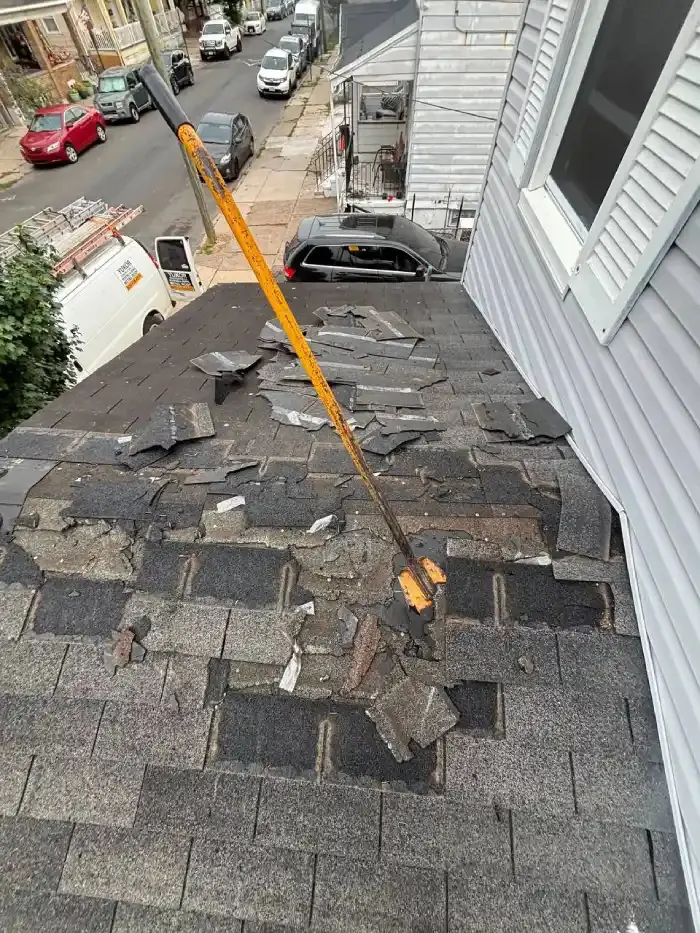
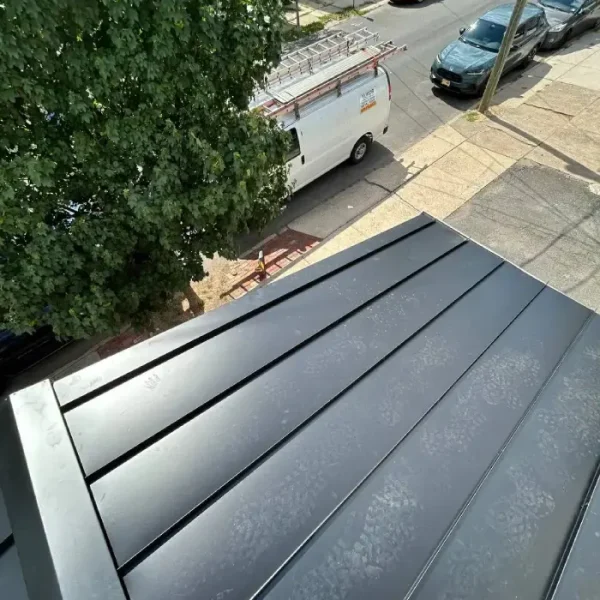
In our standing seam roofing project in Wall Township, the homeowner was dealing with a significant leak and deteriorated asphalt shingles. Worn granules and damaged, warped shingles had left the home without reliable weather protection.
We replaced the damaged roofing sections with matte black double-lock standing seam panels. We removed the deteriorated covering, cleaned and inspected the deck, installed waterproof underlayment, mechanically joined the panels, and completed the flashing and trim. We paid close attention to the connections with the home’s vinyl siding, and finished by hauling away the old roofing materials and construction debris.
The completed work resolved the reported leak and gave the upgraded areas a clean, modern appearance. It illustrates why a successful replacement addresses the supporting layers and transitions along with the visible covering. The appropriate scope and schedule for another home require a separate assessment.
Is Standing Seam Right for Your Home?
Standing seam is a strong choice when you want concealed attachments, an architectural finish, and a roof built for long-term ownership. But a tighter budget, a preference for traditional textures, or an unsuitable roof configuration might point you toward another solution.
Contact Yukor Construction LLC to have your existing roof assessed and find out if standing seam is a good fit. We’ll go over the metal, color, panel style, and connections your roof needs, then explain the recommended work and what the estimate covers. Request a free estimate to get a clear scope of work and pricing for your project.