Home / Project / Roof Drain Repair and Flat Roof Membrane Restoration
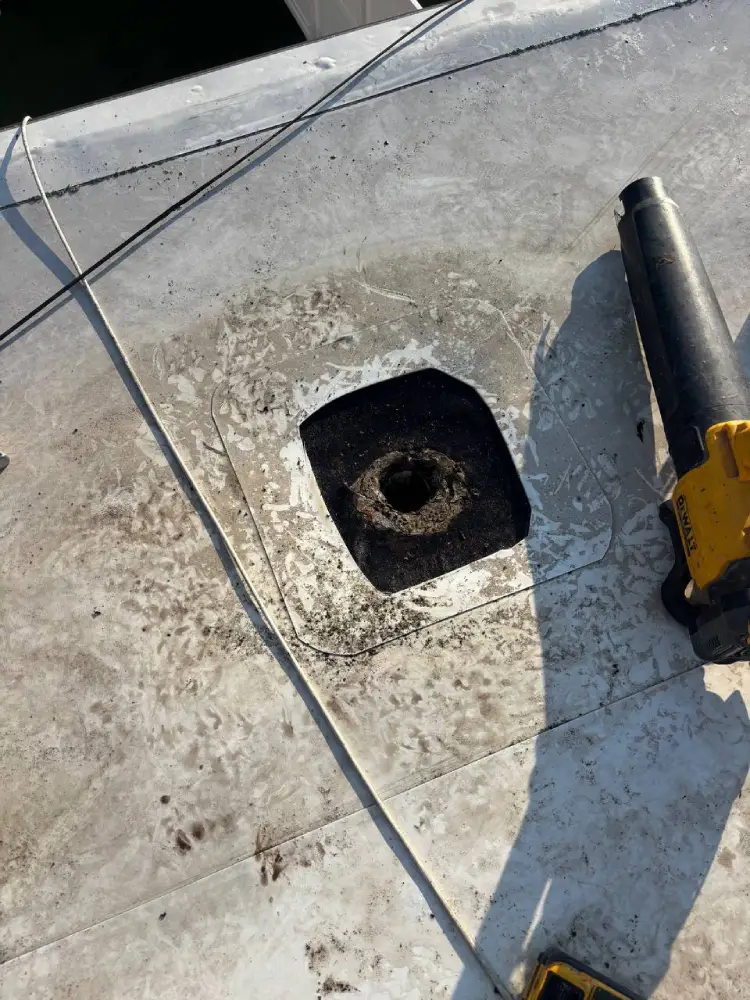
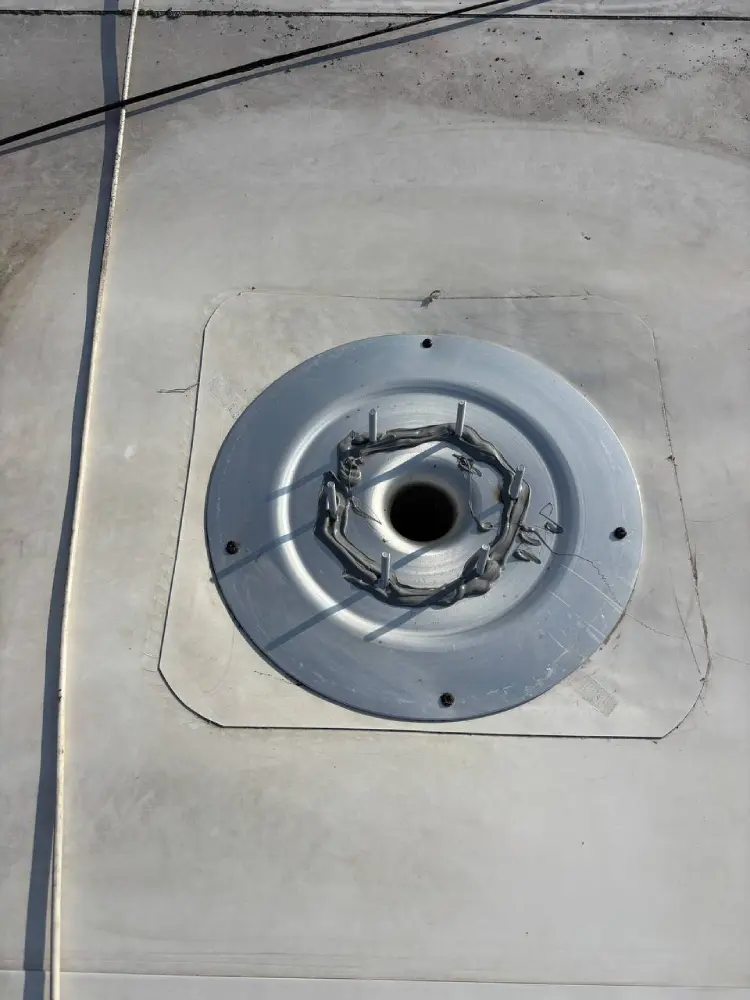
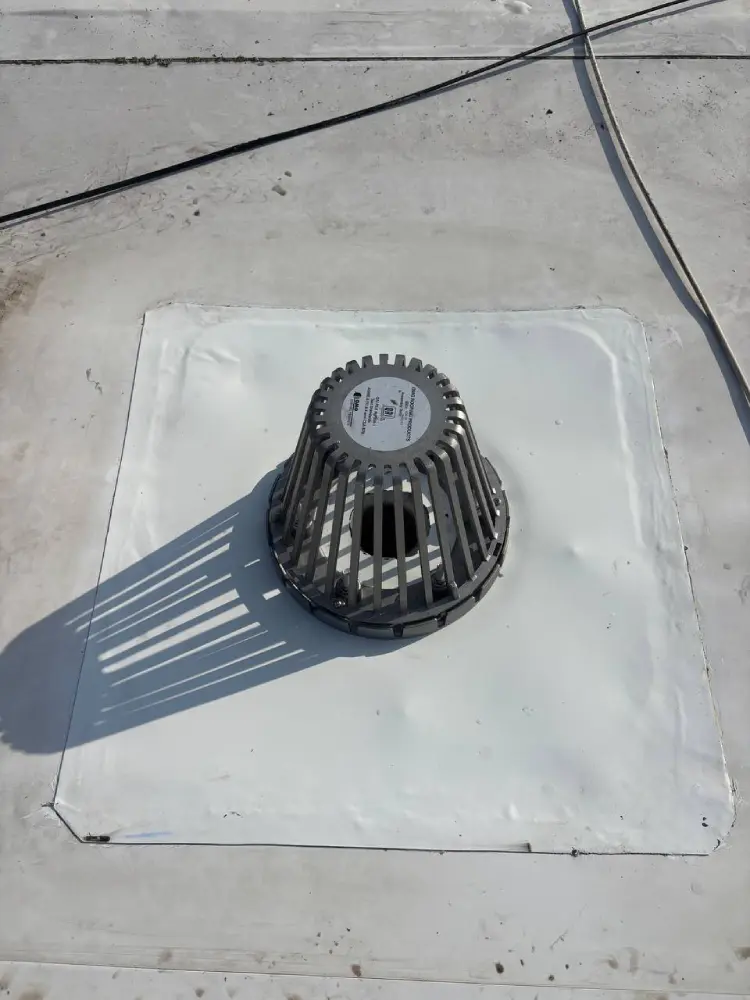
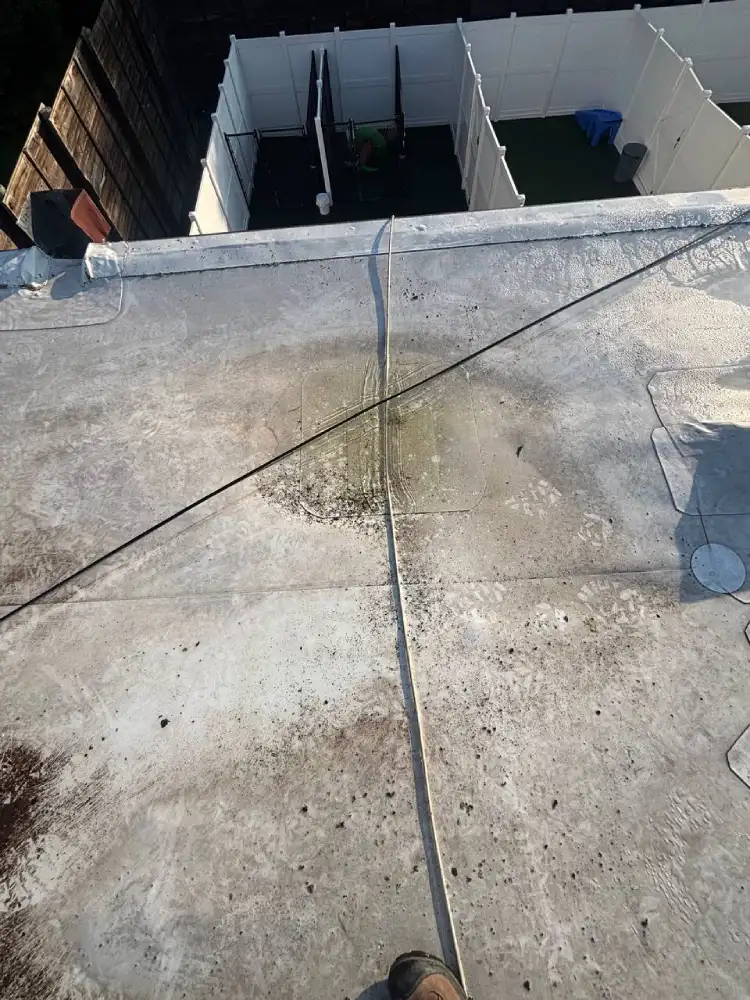
Flat roof repair area
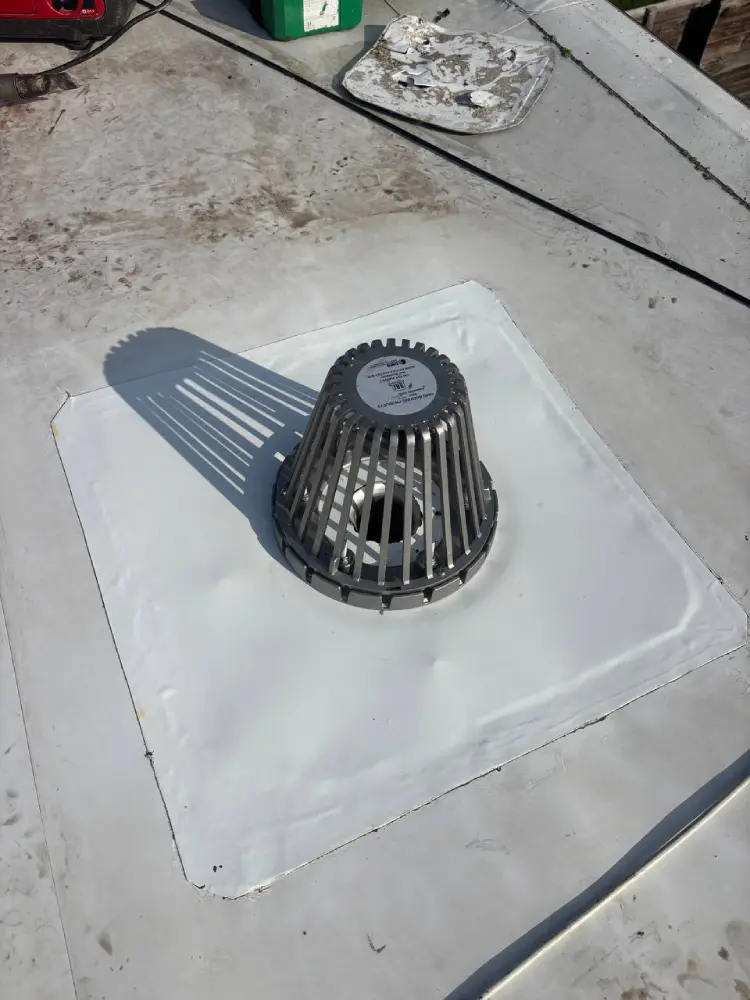
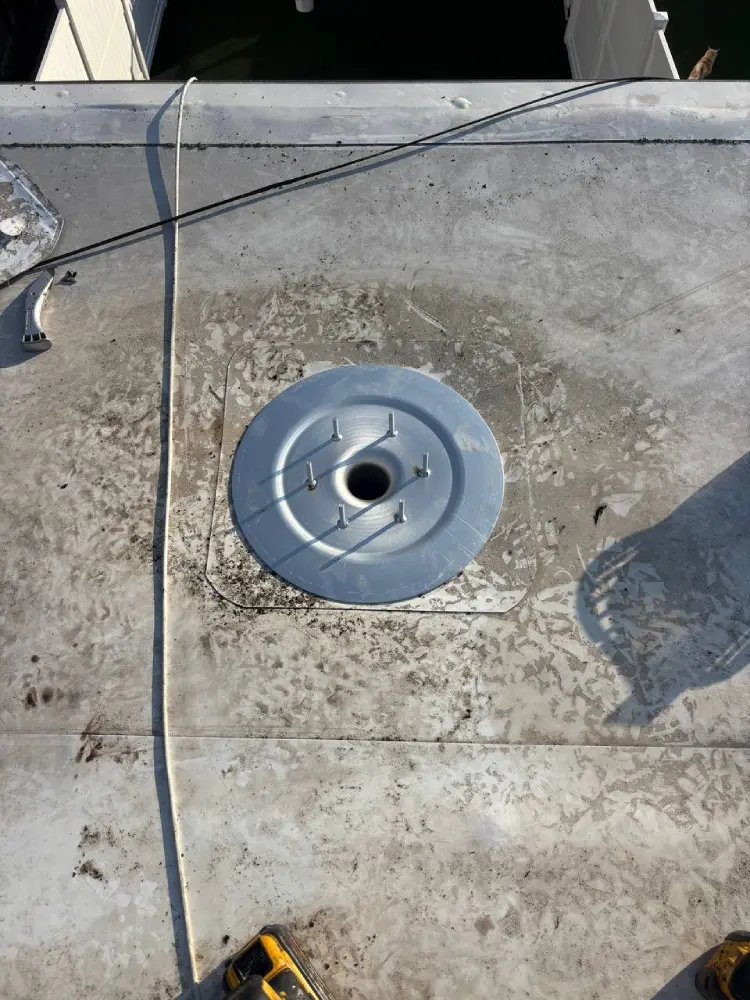
New roof drain flange

Roof Drain Repair and Flat Roof Membrane Restoration

Damage to a roof drain can allow water to penetrate beneath the membrane, resulting in leaks, trapped moisture, and gradual deterioration of the roofing system. To address this, our team completed a localized flat roof repair around an internal roof drain.

The work included removing the old drain components, cleaning and preparing the substrate, restoring the waterproofing membrane, installing a new drainage assembly, sealing all critical connections, and installing a protective metal strainer. Afterward, the work area was thoroughly cleaned, and all construction debris was removed from the roof.

Flat Roof Drain Repair Process

The primary objective was to restore a reliable, watertight connection between the flat roof membrane and the internal drainage outlet. This area is one of the most vulnerable parts of a flat roofing system because rainwater is directed toward the drain. Even minor damage or separation around the drainage opening can lead to recurring leaks.

To reinforce the damaged area and create a continuous waterproof layer around the drain, a new membrane patch was installed. The material was selected for compatibility with the existing single-ply roofing system. This approach allowed us to restore the affected area without removing or replacing a large section of the roof.

The new drainage assembly included a metal flange, compression and fastening components, roofing sealant, and a protective strainer. Together, these components create a secure connection, prevent water from entering beneath the membrane, and protect the drainpipe from leaves and larger debris.

Roof Drain and Membrane Repair Steps

1

Roof Drain Area Inspection

Our technicians inspected the existing drainage assembly and the surrounding roof membrane to identify damaged, contaminated, loose, or improperly sealed areas.

2

Removal of Existing Drain Components

The protective cover and upper components of the existing roof drain were removed. This provided access to the drainage opening and the original connection beneath it.

3

Surface Cleaning and Preparation

Dirt, loose material, old sealant, and construction debris were removed from the repair area. Proper substrate preparation is essential for strong material adhesion and a watertight repair.

4

Drain Opening Preparation

The roof opening was inspected and prepared for the installation of the new metal flange and fastening components.

5

Membrane Patch Installation

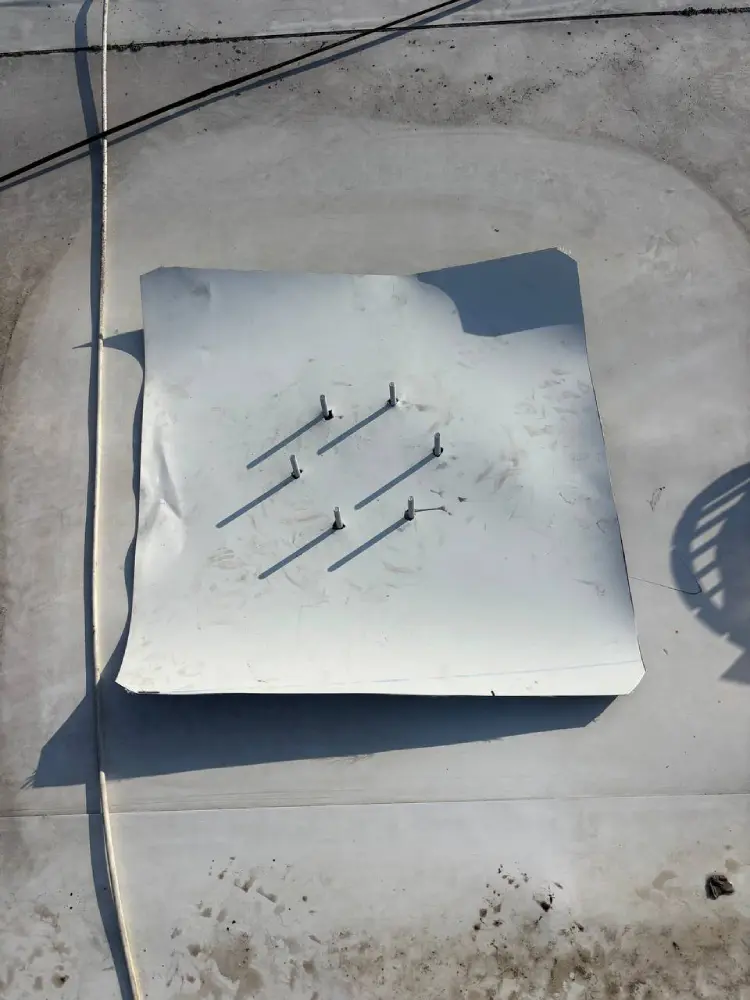
A large square patch made from a compatible roofing membrane was installed around the drainage opening. The patch covered the damaged area and provided sufficient overlap onto the existing membrane.

6

Metal Flange Installation

A new metal flange with fastening studs was positioned over the drain opening. This component creates a rigid base and helps fasten the membrane securely around the roof drain.

7

Waterproofing and Sealant Application

Roofing sealant was applied around the central opening and at other critical connection points. This provided an additional layer of protection against water intrusion beneath the membrane.

8

Final Roof Drain Assembly

The upper components of the drainage system were installed and securely fastened. This created a tight connection between the drain, the membrane patch, and the metal flange.

9

Protective Drain Strainer Installation

A metal strainer was installed over the drain to prevent leaves, branches, and other large debris from entering and blocking the drainage pipe.

10

Final Inspection and Roof Cleanup

After installation, our technicians inspected the repaired area to verify the quality of the connections and waterproofing. All removed materials, packaging, dirt, and construction debris were collected and taken off the roof.
Key Features of This Flat Roof Solution

  • The repair was completed around an internal roof drain, one of the most vulnerable areas of a flat roofing system.
  • The damaged section was restored without replacing the entire roofing system.
  • A membrane patch compatible with the existing roof covering was used to reinforce the waterproofing layer.
  • The new metal flange provided a strong and stable base for the drainage assembly.
  • Critical connections were additionally protected with professional roofing sealant.
  • The protective strainer helps reduce the risk of blockages in the internal drainage system.
  • The drain remains accessible for future inspections, cleaning, and maintenance.
  • All construction waste and removed materials were cleared from the roof after completion.

Flat Roof Repair Results

This flat roof repair restored a watertight connection around the internal drain and reinforced the surrounding roofing membrane. The upgraded drainage assembly now provides controlled removal of rainwater from the roof and reduces the risk of moisture penetrating beneath the roofing system.

The membrane patch, sealed metal flange, and protective strainer create a durable drainage assembly designed to withstand regular exposure to rainfall, temperature changes, standing water, and rooftop debris.

This project demonstrates how localized flat roof solutions can correct drainage and waterproofing problems without requiring the replacement of a large roof section. Routine drain cleaning and preventive roof inspections will help preserve the results of the repair and maintain proper drainage over time.

Flat Roof Repair Cost and Project Timeline

The total project scope included surface preparation, roofing materials, installation of the new drainage assembly, membrane restoration, waterproof sealing, final inspection, and cleanup.
Days of Work
0
$$$
0

Are you planning a roof upgrade or shingle repair?

We will help you restore the structure, protect it from moisture, and make the space comfortable for use. Contact us for a consultation and individual calculation of your project.