
Wood Deck vs Waterproof Vinyl Deck: Which Is Better for Balconies and Patios in New Jersey?
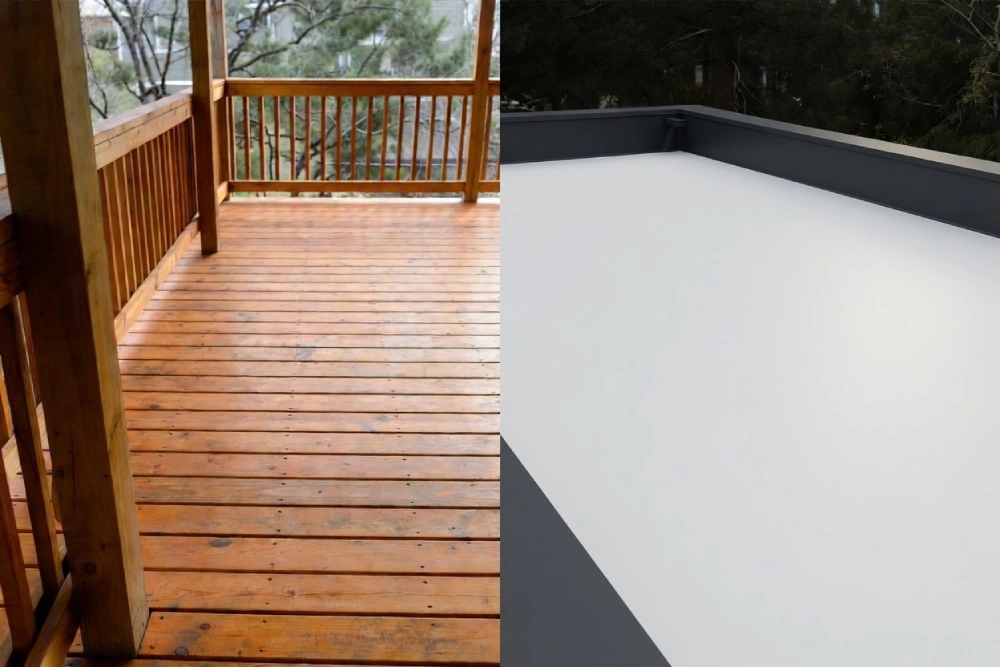
Choosing the right surface for your balcony or patio isn’t just about looks – it’s a decision that affects safety, comfort, and your family’s budget for years to come.
In New Jersey, where heavy rains, snow, coastal humidity, and brutal freeze-thaw cycles are the norm, ordinary materials break down fast. In this article, we’ll take a close look at two tough options built for real New Jersey weather: traditional wood decks and waterproof vinyl deck systems.
Why Deck Material Matters in New Jersey’s Climate
New Jersey is tough on anything left outside:
- Hot, humid summers with sudden downpours
- Cold winters full of snow and freezing temperatures
It gets even worse with elevated decks and second-story balconies
Water that leaks through doesn’t just vanish – it soaks into joists, ledger boards, and the floor structure of your house.
The result? Hidden damage that only shows up when repairs cost a fortune.
That’s why the right decking choice matters so much: it decides how often you’ll be fixing things and whether leaks will ever reach your living spaces.
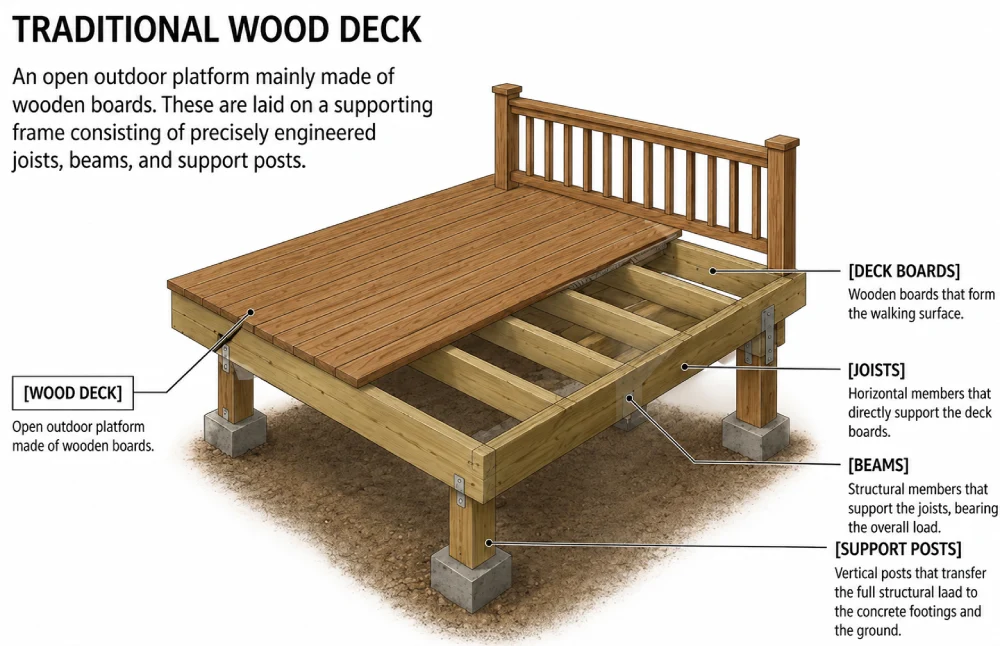
What Is a Traditional Wood Deck?
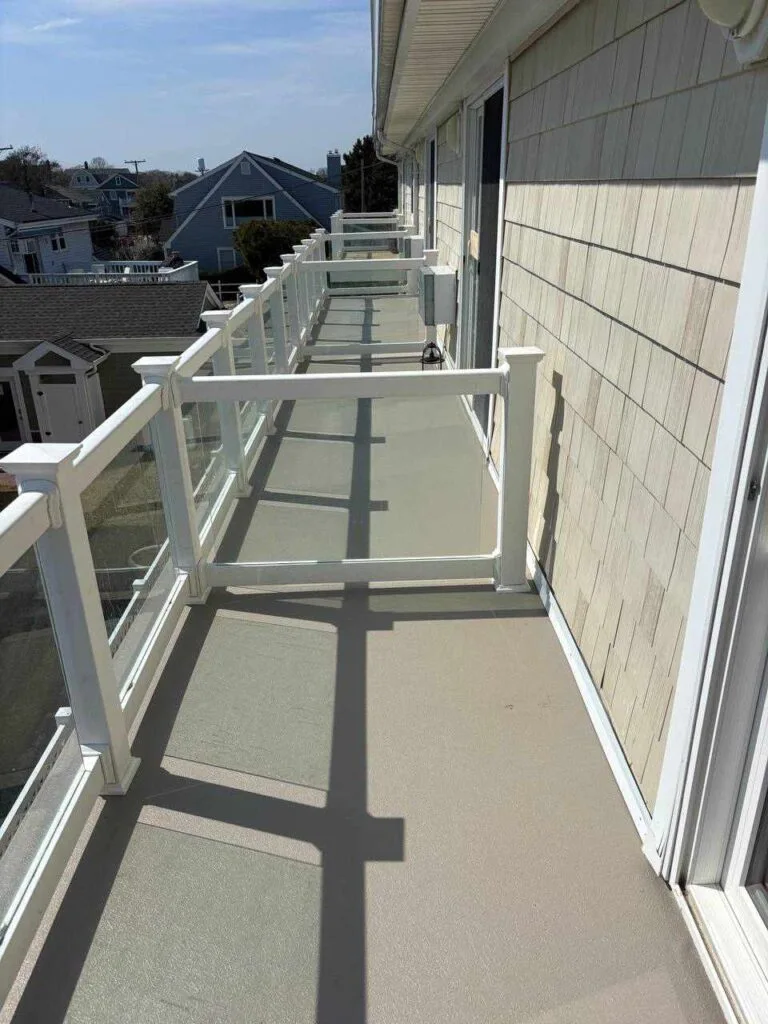
When Vinyl Decking Is the Right Choice
Natural look and that classic outdoor feel
Fun fact:
Wood species
- Cedar – naturally resistant to moisture and bugs, beautiful reddish tone, nice scent. Costs more but lasts longer with less work.
- Tropical hardwoods (ipe, tigerwood, cumaru) – incredibly dense and heavy. On the Janka hardness scale they’re 4–8 times tougher than pine. They handle New Jersey’s wet climate extremely well, don’t warp or crack easily, and can last 25–40 years. They’re pricey, though.
Important note:
Staining, sealing, and maintenance
- Clean it (pressure wash or by hand to remove mold and dirt).
- Sand it every 2–4 years.
- Apply oil, stain, or sealer every 1–2 years (once a year in coastal areas like Monmouth or Ocean County).
Real 2026 cost estimate:
- DIY for a 200–300 sq ft deck: $400–800 per year (materials + your time)
- Professional crew: $1.50–$3 per sq ft for a full clean + sand + seal job
What Is a Waterproof Vinyl Deck System?
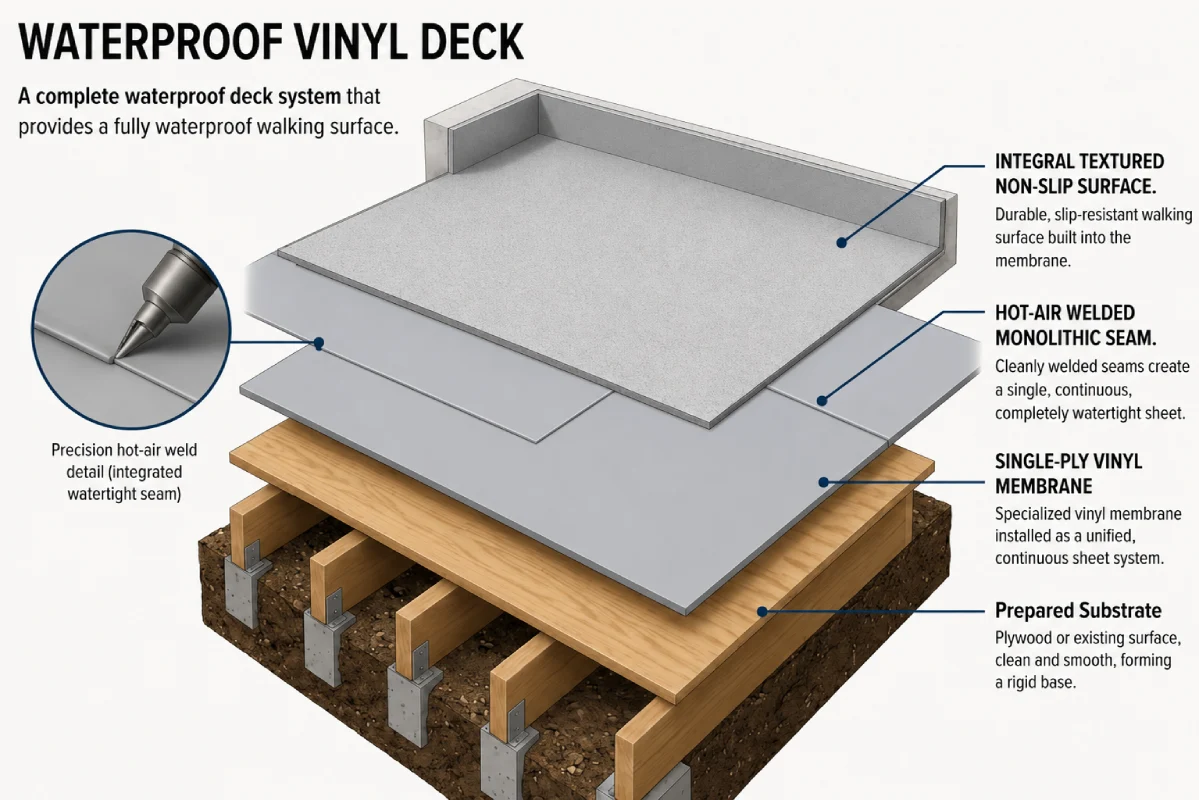
A waterproof vinyl deck is a complete waterproofing system that also serves as a finished walking surface.
- Prepared base (plywood or existing surface)
- Special vinyl membrane laid in one continuous sheet
- Seams are heat-welded for a completely watertight surface
- Textured, non-slip top layer
Want to know if this system is right for your balcony or patio?
Wood Deck Advantages and Common Limitations
Advantages of wood decks:
- Beautiful natural look and feel
- Lower upfront cost for materials and installation
- Easy to replace individual boards if needed
Common problems in New Jersey:
- Wood soaks up water – swelling, cracking, and rot
- Splinters and chips appear over time (not great with kids or older family members)
- Needs regular sanding and sealing
- High risk of mold and mildew in our humid climate
- On elevated decks, leaked water often damages joists and the house structure below
Benefits of Waterproof Vinyl Decking for Balconies and Patios
Vinyl is hydrophobic – water can only get through seams. In modern systems those seams aren’t glued; they’re heat-welded at around 500°C, creating one solid, leak-proof sheet.
The PVC membrane acts as both the walking surface and a certified roofing membrane. When installed over living space, it meets U.S. and Canadian pedestrian roof standards (AC39 and CAN/CGSB 37.54). It’s officially approved to keep the rooms below completely dry.
The surface gets a deep heat-embossed texture during manufacturing. Independent tests show a dynamic coefficient of friction (DCOF) above 0.60–0.65 when wet – well above the 0.42 safety minimum for public areas.
Just hose it down with soapy water 1–2 times a year. No sanding, no staining, no chemicals. Wine, BBQ grease, and juice wipe right off because there are no pores.
Quality vinyl contains stabilizers (including titanium dioxide) that prevent brittleness. After 10 years you might notice a slight loss of shine, but the material stays flexible and waterproof.
Properly installed systems last 20–30+ years. This technology has been used across the U.S. and Canada since the 1970s. Some of the very first Duradek installations from over 40 years ago are still performing perfectly.
Need reliable waterproofing without hidden future costs?
Why Waterproof Vinyl Decks Work Better for Second-Story Decks
A vinyl membrane solves the problem at the physics level:
- It works like a single-piece roof. Sheets are heat-welded together at 500°C into one continuous, gap-free “cocoon.” Water physically cannot go down.
- It’s installed with a gentle slope so water runs straight into the drains instead of pooling.
- The wooden frame and fasteners stay completely dry – no conditions for rot, mold, or rust.
Bottom line:
Wood Deck vs Waterproof Vinyl Deck Comparison
|
Criteria |
Wood Deck |
Waterproof Vinyl Deck |
|---|---|---|
|
Waterproofing |
Water passes through gaps and wood pores |
100% barrier – one solid heat-welded sheet |
|
Protection below |
Needs separate hidden roof (double expense) |
Certified pedestrian roofing (AC39/CAN standards) |
|
Frame protection |
Joists rot from trapped moisture |
Frame and floor structure stay completely dry |
|
Annual maintenance |
Sand + oil/seal every 1–2 years |
Hose off with soapy water 1–2× per year |
|
Stain resistance |
Soaks in grease, wine, juice (porous) |
Zero porosity – everything washes off cleanly |
|
Slip safety (wet) |
Slippery when wet, especially with moss/debris |
Deep texture, DCOF > 0.60 even when wet |
|
UV & freeze-thaw |
Cracks, warps, loses seal |
Stays flexible down to -40°C (ASTM G154 tested) |
|
Lifespan |
10–15 years before major repairs |
20–30+ years with no major work |
|
Cost in NJ (per sq ft, installed) |
$35–$55 (basic) / $55–$80+ (premium) |
$15–$22 (membrane only) / $25–$40 (full turnkey) |
The Hidden Cost of Water Damage Under Wood Decks
The most expensive problem isn’t the deck itself – it’s what happens underneath.
Water trapped between boards and joists in New Jersey weather leads to:
- Rotting structural framing
- Corroded metal fasteners
- Mold and mildew growth
- Stains and leaks on ceilings below
- Having to tear out part of your floor structure
We’ve seen jobs where just replacing the deck cost a few thousand dollars, but fixing the rotted framing and mold damage underneath ran into the tens of thousands.
A waterproof vinyl deck usually prevents these scenarios entirely.
Best Applications for Waterproof Vinyl Deck Systems
These systems shine wherever a regular deck creates risks or too much maintenance:
-
Second- and third-story balconies over living areas – eliminates risk of flooding rooms or hidden mold.
-
Rooftop decks – replaces bulky roofing + pavers with a lightweight, fully waterproof walking surface.
-
Coastal and high-humidity zones – vinyl doesn’t care about salty air or constant fog.
-
Rental or commercial properties – perfect when you don’t have time for yearly maintenance.
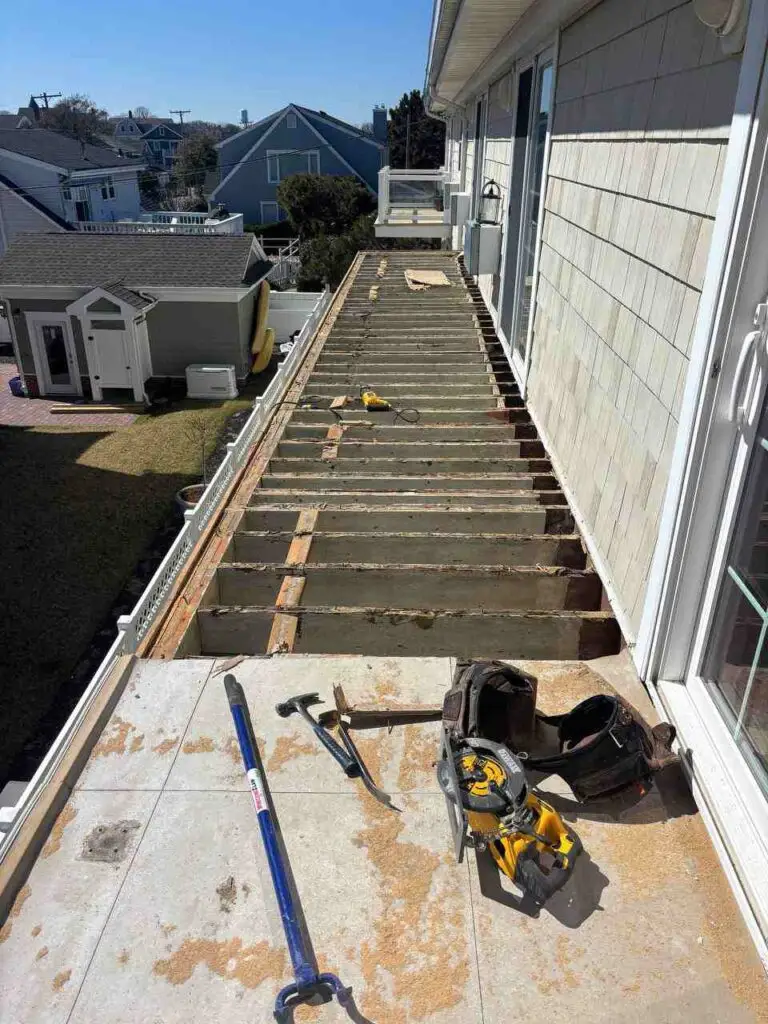
A homeowner in the coastal zone was watching their wooden balcony frame slowly rot from constant ocean moisture. Leaks into the living area were becoming a real threat.
What we did:
Removed the old decking completely, reinforced the joists, and created proper drainage slope.
Installed a solid layer of moisture-resistant tongue-and-groove plywood, countersinking every fastener.
Heat-welded the vinyl membrane into one continuous waterproof sheet, sealing every edge to the house walls.
Result: A beautiful, monolithic waterproof terrace that’s protected from leaks for 20+ years, laughs at salty air, and never needs annual staining or sanding.
Signs Your Existing Deck Needs Waterproof Protection
Check your deck or balcony against this list:
-
Paint or sealer is peeling
-
Soft spots when you press down
-
Leaks or stains on the ceiling below
-
Water pooling after rain
-
Cracks or warping in the boards
-
Visible mold or dark spots
-
Water stains on the underside of the decking
Why Many New Jersey Homeowners Choose Waterproof Vinyl Decking
-
Cut way down on time and money spent on maintenance
-
Get real protection against leaks
-
Enjoy a beautiful, functional space for 20+ years
-
Protect not just the deck but your entire home
Professional Waterproof Vinyl Deck Installation in New Jersey
Even the most expensive PVC membrane will leak if the seams are welded at the wrong temperature or the edges aren’t properly sealed to the house walls.
At Yukor Construction LLC, we don’t just lay down a surface – we build a complete engineered protection system for your home. We carefully control every critical detail.
We check the strength of all load-bearing beams, look for any hidden rot in the framing, and measure the remaining moisture content in the wood.
We create or adjust the slope of the base (minimum 1–2%) so water never pools. It has to run off right away.
We install the vinyl deck membrane by heat-welding the sheets with industrial heat guns at 500°C. This molecular bond makes the seams even stronger than the material itself.
We meticulously seal every vulnerable spot – where the membrane meets the siding, door thresholds, corners, railing posts, and drain connections.
We only hand over the finished deck after running a full-load water test on every connection.
Contact us today to obtain an up-to-date price for materials and schedule an on-site visit from an engineer.
FAQ
Still have questions about your specific project? Give us a call – we’re happy to help you figure out the best solution.
Yukor Construction LLC
Phone: (609) 516-6573
Serving Ewing, Trenton, Princeton, Asbury Park, and all of New Jersey.
Choosing the right decking is an investment in peace of mind and protecting your home. Make it a smart one.