

Hidden Waterproof Balcony Problems That Lead to Costly Structural Damage
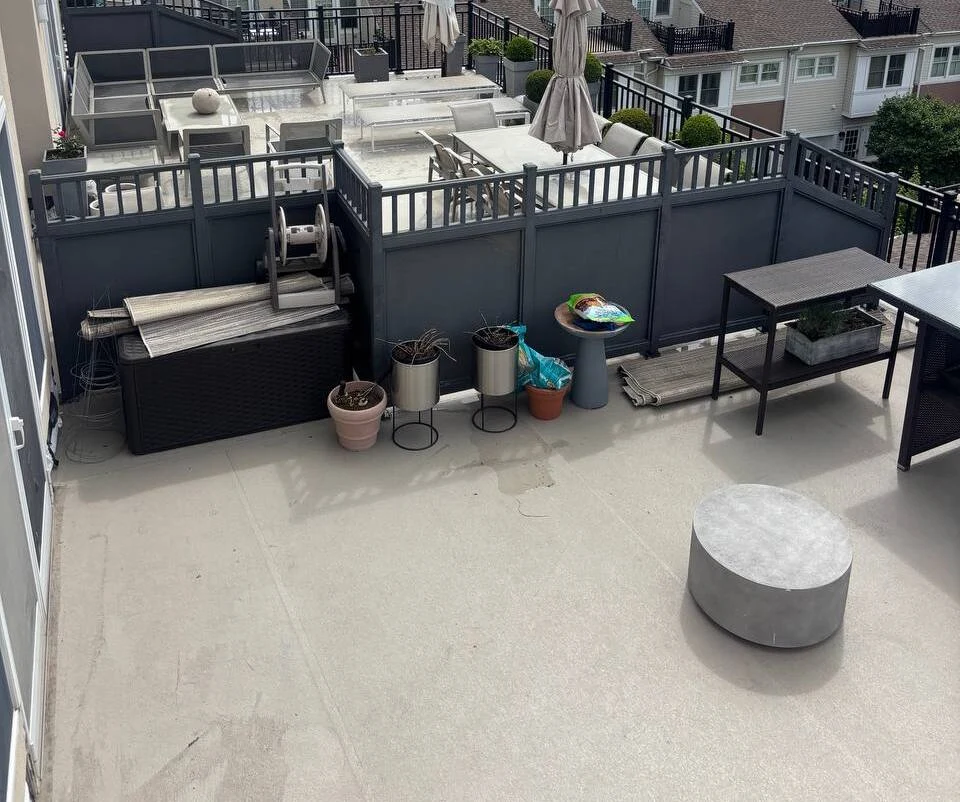
A beautiful outdoor balcony adds comfort, curb appeal, and usable living space to any home. It creates a place to relax, entertain guests, or simply enjoy fresh air after a long day. But while homeowners often focus on flooring, railings, or furniture, the most important part of any balcony usually stays hidden – the waterproofing system underneath.
Because balconies are constantly exposed to rain, snow, UV rays, humidity, and temperature swings, even a small waterproofing failure can gradually turn into major structural damage. In New Jersey especially, freeze-thaw cycles, coastal moisture, and heavy seasonal storms place enormous stress on outdoor structures year-round.
The problem is that balcony leaks rarely start with dramatic visible damage. Most waterproof balcony issues begin quietly beneath the surface. By the time stains, soft spots, or mold become noticeable, water may already be damaging the subfloor, framing, insulation, and surrounding walls.
Understanding the early warning signs can help homeowners avoid expensive repairs and protect the long-term safety of their property.
5 Warning Signs of Balcony Water Damage You Shouldn’t Ignore
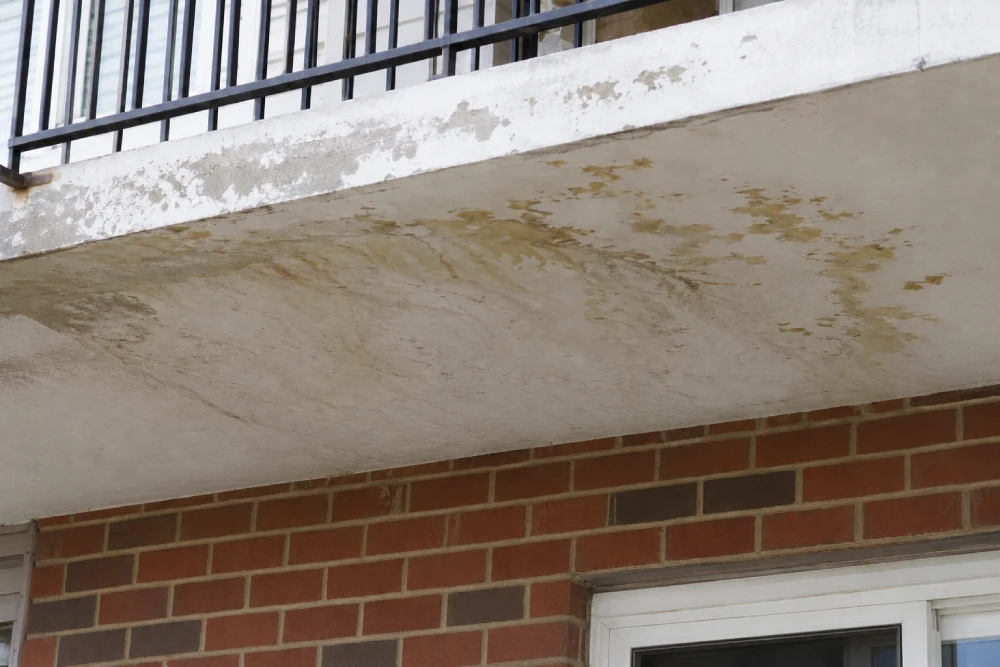
1. Water Stains and Discoloration
- yellowish-brown rings
- dark streaks
- bubbling paint
- white chalky residue
These signs indicate that moisture is moving through the balcony assembly and carrying minerals through the material layers.
White powdery residue, commonly known as efflorescence, is especially important to watch for. It forms when water travels through concrete or masonry and leaves salt deposits behind as it evaporates. While the powder itself is harmless, it confirms ongoing moisture migration inside the structure.
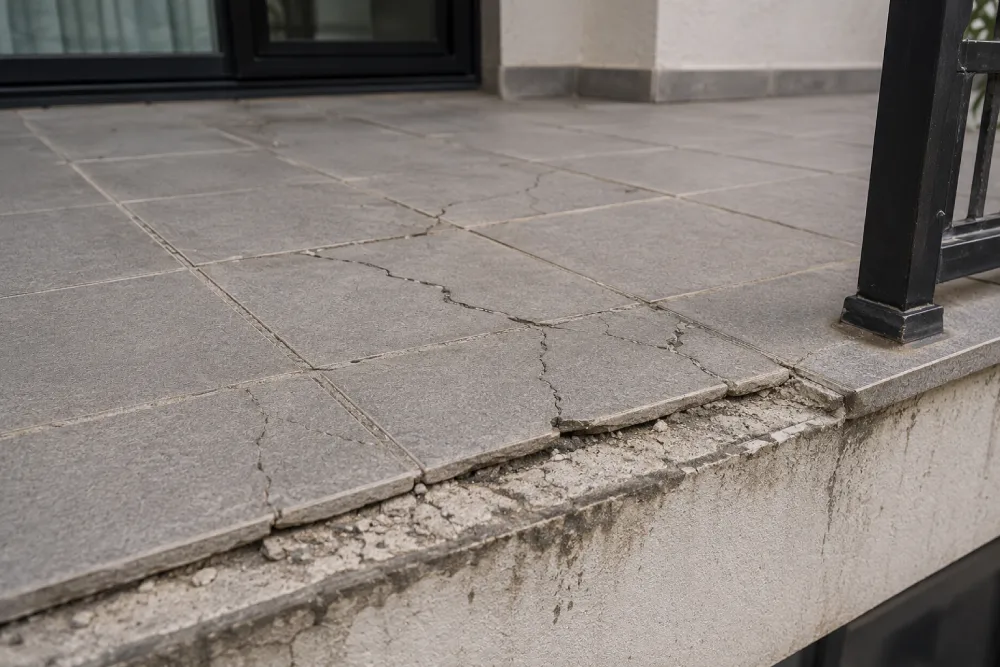
2. Cracked Concrete, Loose Tile, or Damaged Grout
- concrete spalling
- loose tile systems
- failing grout joints
- surface separation
- weakened waterproof layers
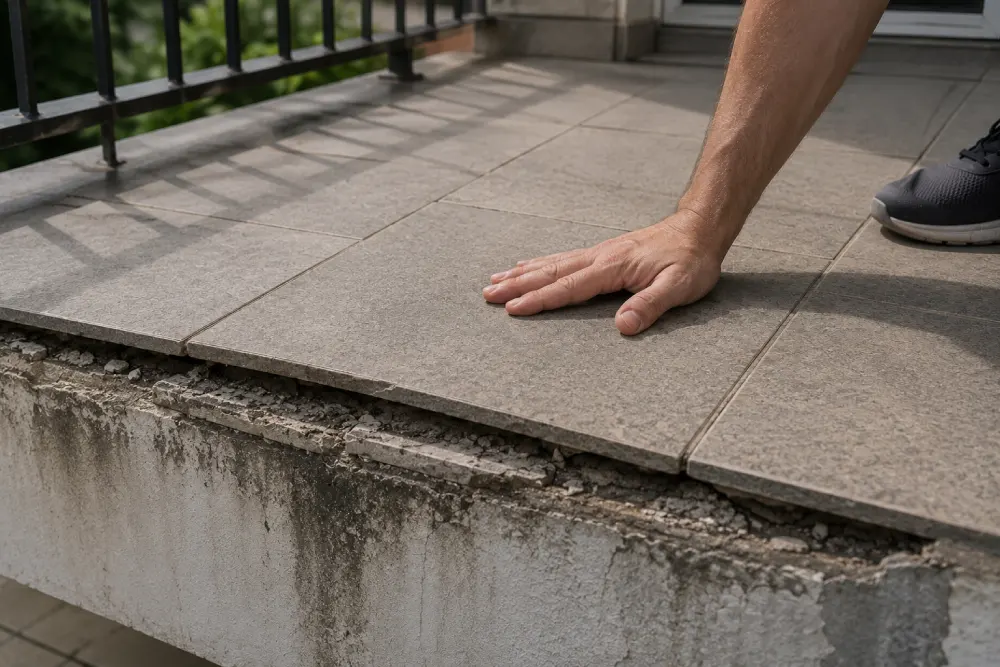
3. Soft or Spongy Areas Underfoot
A balcony should always feel solid and stable.
If certain areas flex, feel soft, or produce a hollow sensation while walking, there may already be advanced balcony deck rot beneath the visible surface. This usually means moisture has penetrated the plywood subfloor and surrounding framing materials for an extended period of time.
Soft spots are not cosmetic problems. They are structural warning signs.
The longer moisture remains trapped inside the assembly, the greater the risk of:
- framing deterioration
- weakened fasteners
- railing instability
- unsafe load-bearing conditions
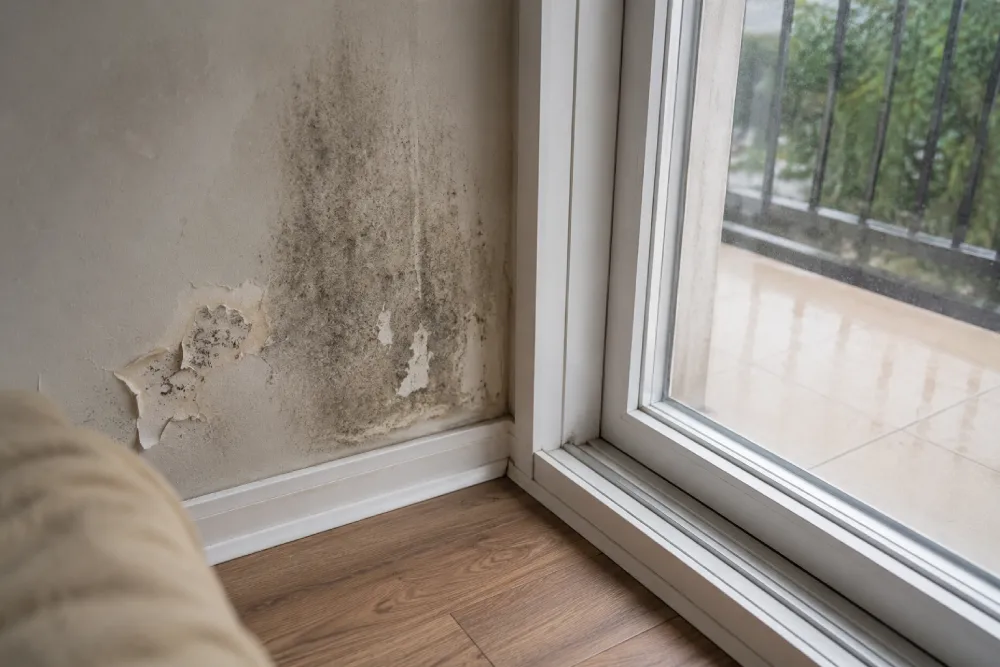
4. Mold Growth and Persistent Musty Odors
Balcony leaks often create hidden damp environments behind stucco, beneath tile systems, or inside wall cavities.
If you notice:
- a stale smell near patio doors
- recurring mold spots
- moisture around interior walls
- peeling paint indoors near the balcony area
- water may already be spreading beyond the exterior structure itself
5. Rust Around Railings and Metal Fasteners
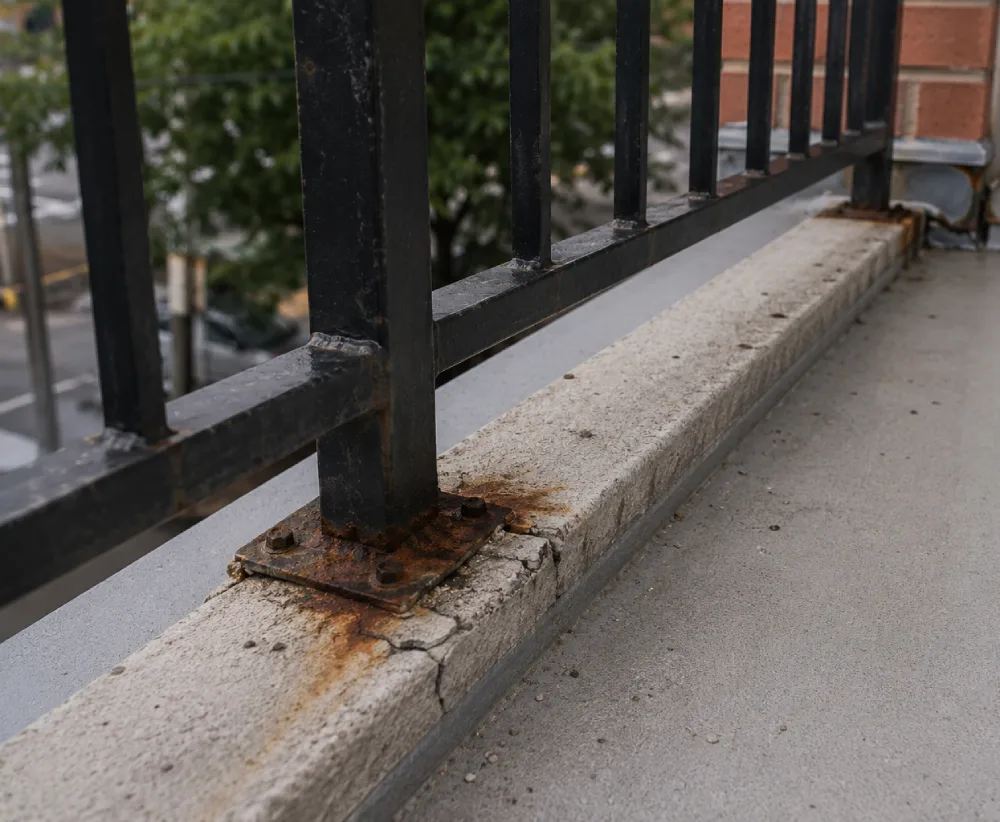
Balcony railing penetrations are one of the most common failure points in waterproof deck systems.
If rust appears around:
- railing posts
- mounting brackets
- screws
- flashing transitions
there is a strong chance that water has already reached the internal waterproofing layers.
As metal corrodes, it expands and places pressure on surrounding concrete or wood. This often creates additional cracks that allow even more water to enter the structure.
Ignoring rust around balcony railings can eventually create serious safety hazards.
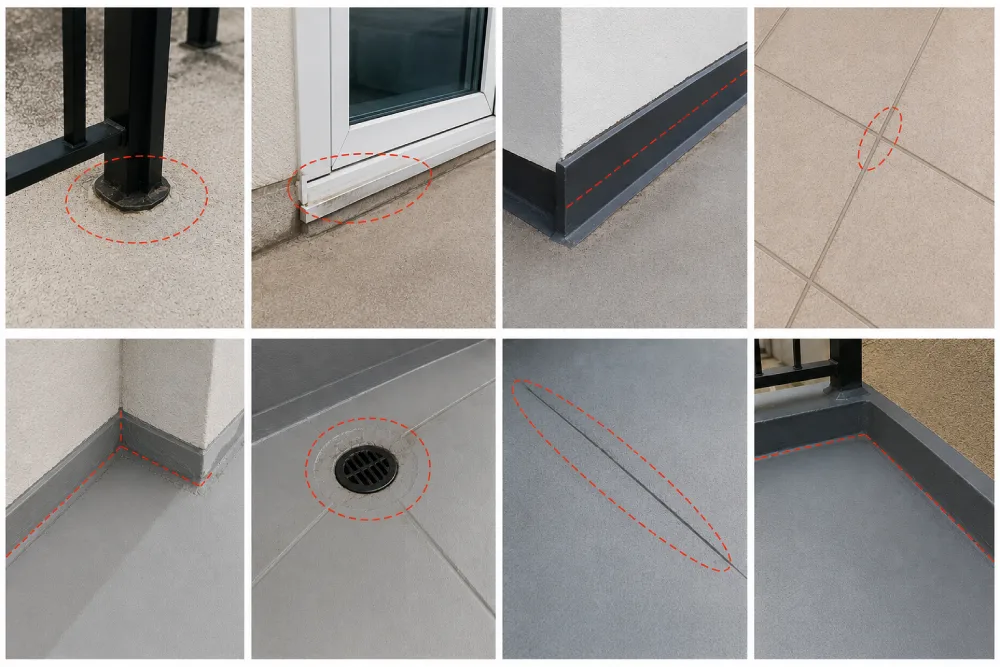
Areas Where Balcony Leaks Usually Start
- railing penetrations
- door thresholds
- flashing transitions
- tile grout joints
- balcony-to-wall intersections
- drainage outlets
- seam connections
- corners and edges
Why Balcony Leaks Become Much Worse Over Time
Outdoor leaks behave differently than plumbing leaks inside the home.
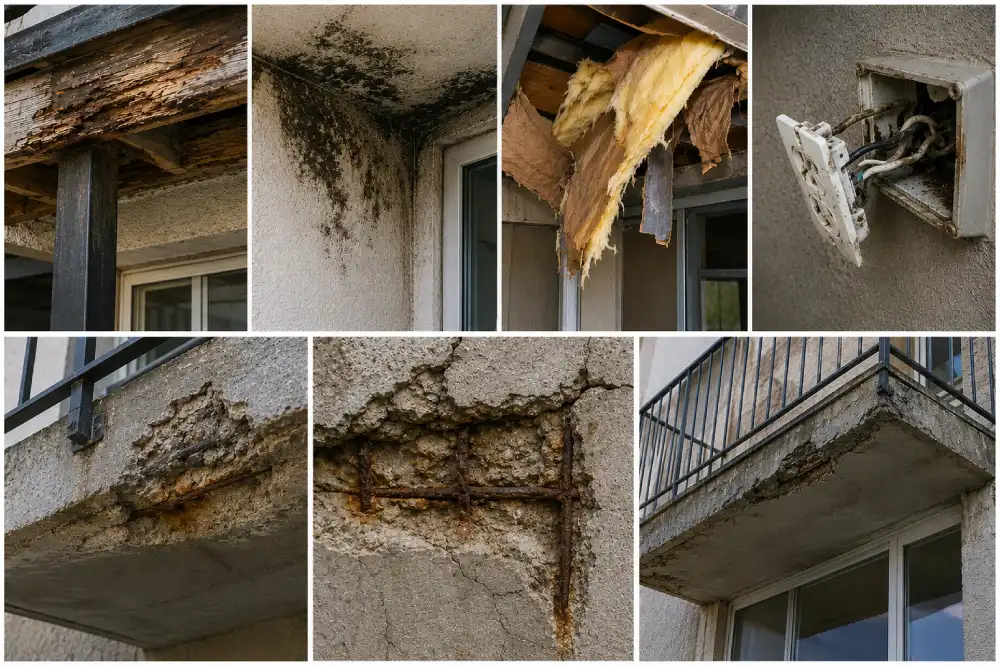
Instead of causing immediate flooding, balcony moisture damage develops slowly over months or even years. Water continuously seeps into hidden structural layers and weakens materials from the inside out.
Over time, this can lead to:
- wood rot
- mold growth
- insulation damage
- electrical problems
- concrete deterioration
- corroded reinforcing steel
- structural instability
In concrete balcony systems, long-term moisture exposure can trigger rebar corrosion, sometimes called “concrete cancer.” As steel reinforcement rusts and expands internally, the surrounding concrete begins cracking and breaking apart.
Eventually, neglected balcony leaks may require complete structural reconstruction instead of basic waterproofing repair.
How New Jersey Weather Accelerates Balcony Damage
Seasonal weather patterns regularly expose balconies to:
- heavy rain
- snow accumulation
- ice formation
- rapid freeze-thaw cycling
- coastal humidity
- summer UV exposure
That is why many homeowners eventually search for:
- “balcony waterproofing in New Jersey”
- “leaking balcony repair near me”
- “waterproof deck contractors near me”
- “waterproof vinyl balcony systems”
Temporary Repairs vs Permanent Waterproofing Solutions
Many balcony leaks are temporarily patched using:
- caulking
- liquid waterproof coatings
- roof cement
- surface sealers
- tile repairs
Most temporary repairs eventually fail because:
- moisture remains trapped underneath
- coatings crack during seasonal movement
- seams reopen over time
- hidden structural damage continues spreading
Why Waterproof Vinyl Balcony Membranes Perform Better
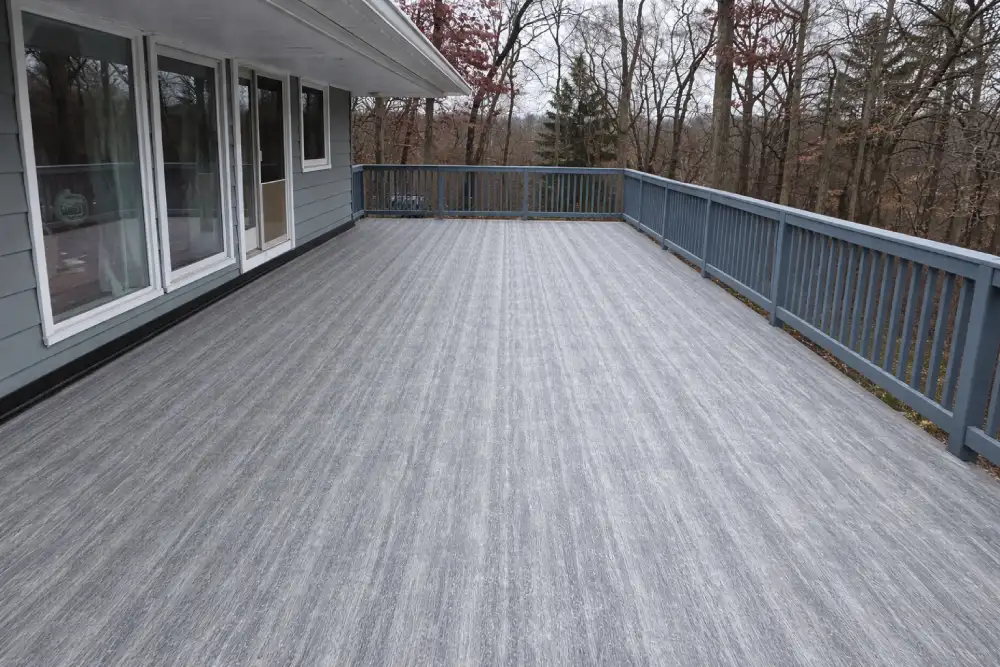
A professionally installed waterproof vinyl membrane provides one of the most reliable long-term solutions for elevated decks and balconies.
Unlike rigid coatings or traditional tile systems, heavy-duty vinyl membranes remain flexible during seasonal expansion and contraction. Hot-air welded seams create a continuous waterproof barrier that prevents moisture intrusion even during severe weather conditions.
Benefits of Waterproof Vinyl Deck Systems
-
Fully waterproof surface
-
Flexible during temperature swings
-
Slip-resistant finish
-
Minimal maintenance requirements
-
Long lifespan
-
UV-resistant surface protection
-
Clean finished appearance
-
Strong resistance to cracking and separation
Vinyl Membranes vs Tile and Liquid Coatings
|
System |
Waterproof Protection |
Flexibility |
Maintenance Level |
Long-Term Durability |
|---|---|---|---|---|
| Tile Systems | Moderate | Low | High | Moderate |
| Liquid Coatings | Moderate | Moderate | Medium | Moderate |
| Waterproof Vinyl Membrane | Excellent | High | Low | Excellent |
Why Professional Installation Matters
Even the best waterproofing materials can fail if installed incorrectly.
Professional waterproof balcony contractors evaluate:
-
drainage slope
-
flashing integration
-
seam placement
-
railing penetrations
-
substrate condition
-
moisture damage beneath existing surfaces
Proper slope is especially important. A balcony should direct water away from the home instead of allowing standing water to collect on the surface.
Experienced waterproof deck contractors also ensure compliance with local building requirements and structural safety standards.
When Should You Schedule a Balcony Inspection?
You should schedule a professional balcony inspection if you notice:
-
recurring leaks
-
soft areas underfoot
-
rust near railings
-
loose tile systems
-
peeling paint below the balcony
-
visible staining
-
mold growth
-
recurring moisture smells